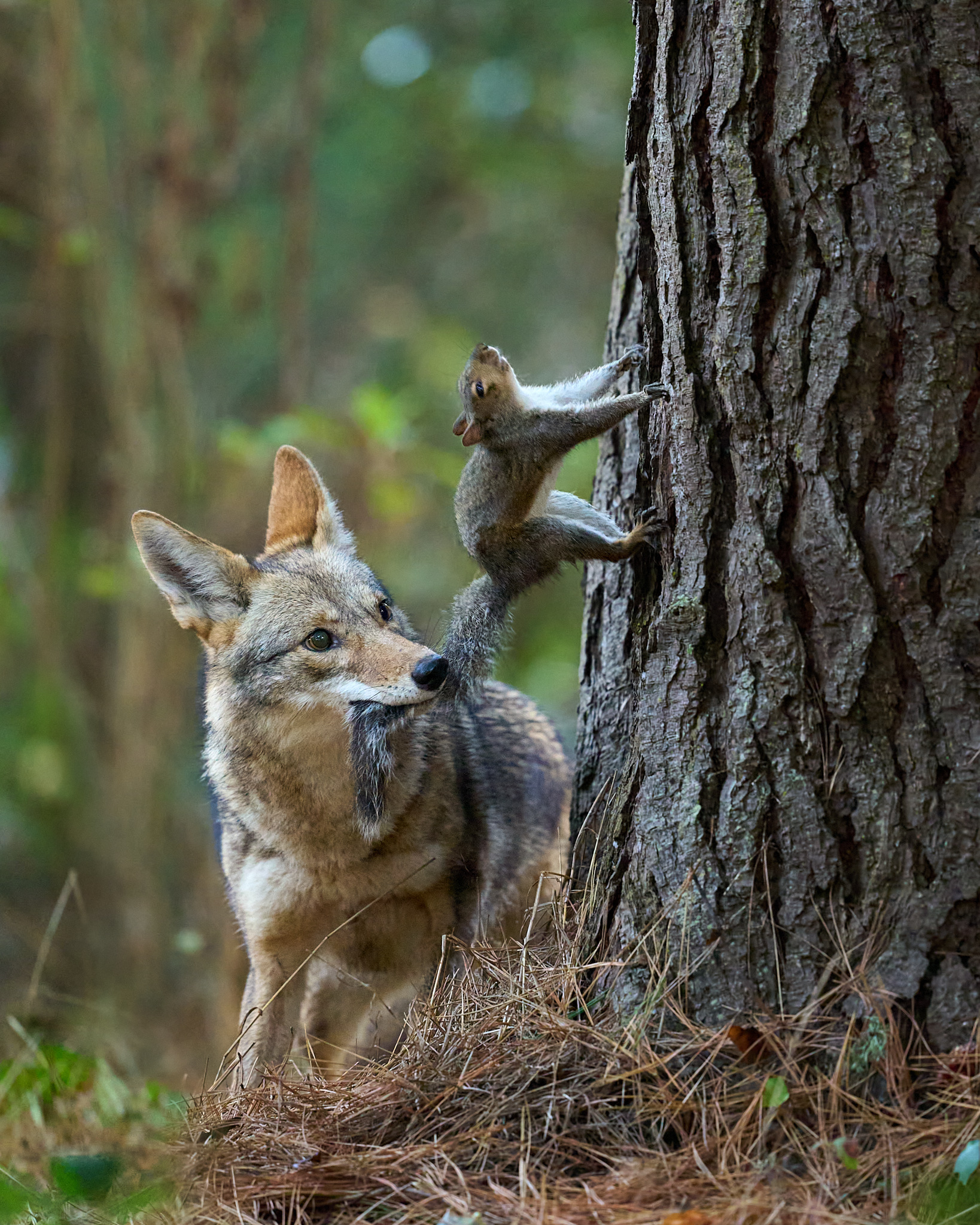
My photo of a coyote grabbing a squirrel got a lot of traction. That photo took a lot of hard work. Getting up early over and over to track and observe the coyote family. Getting to know individual coyotes. Letting go of good shots for an opportunity at great shots. Heartbreak when multiple members of the family were shot in a disproportionate response to a preventable incident. Many days coming away empty-handed.
But. Once all that work came together, there wasn’t much to the shot. See the situation start to unfold. Adjust settings for the best chance at freezing action in the low light. A few steps to get in position. Lock on focus then spray and pray to get one useable shot. None of it easy, but it’s almost an out of body experience when it happens.
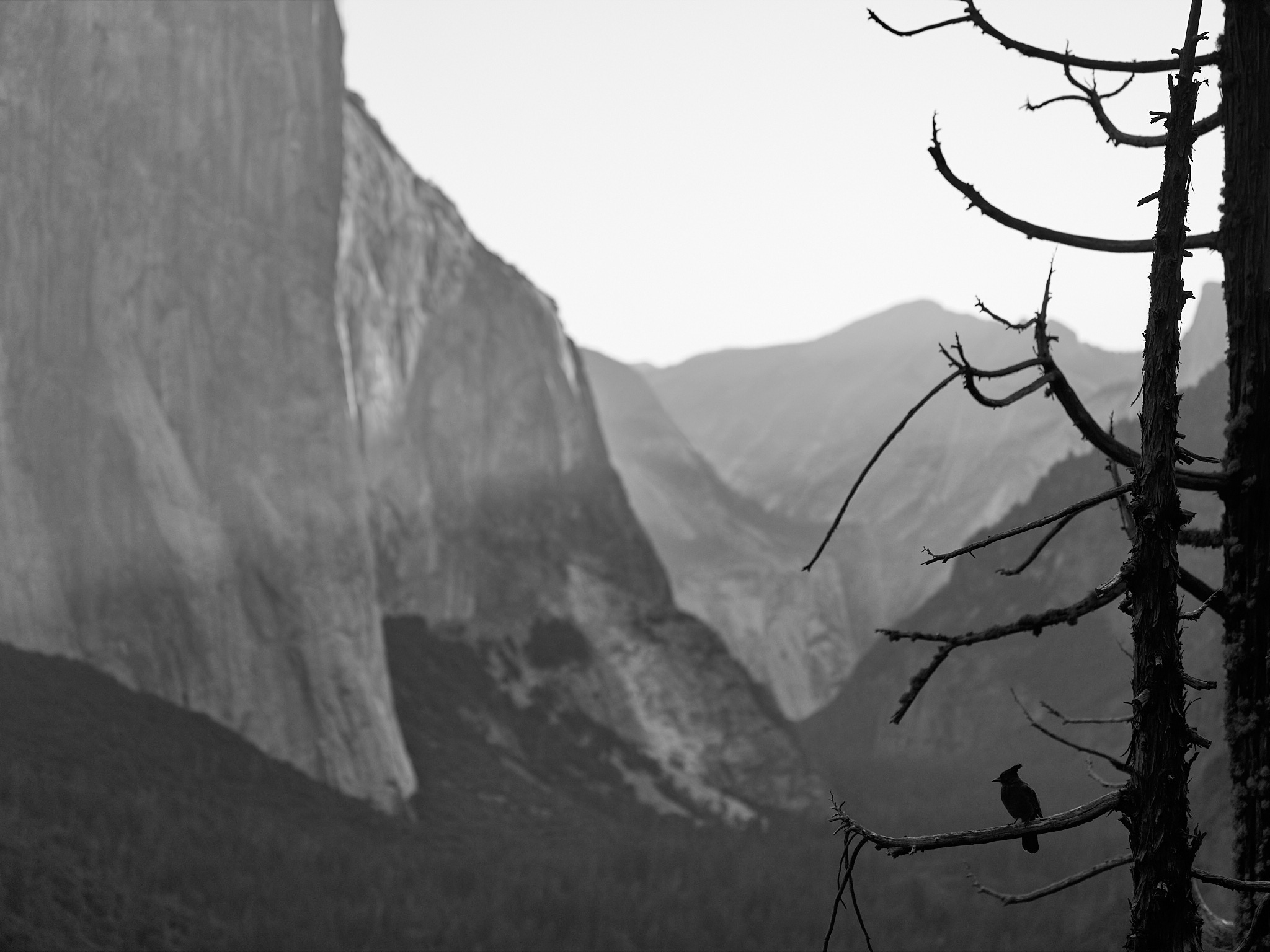
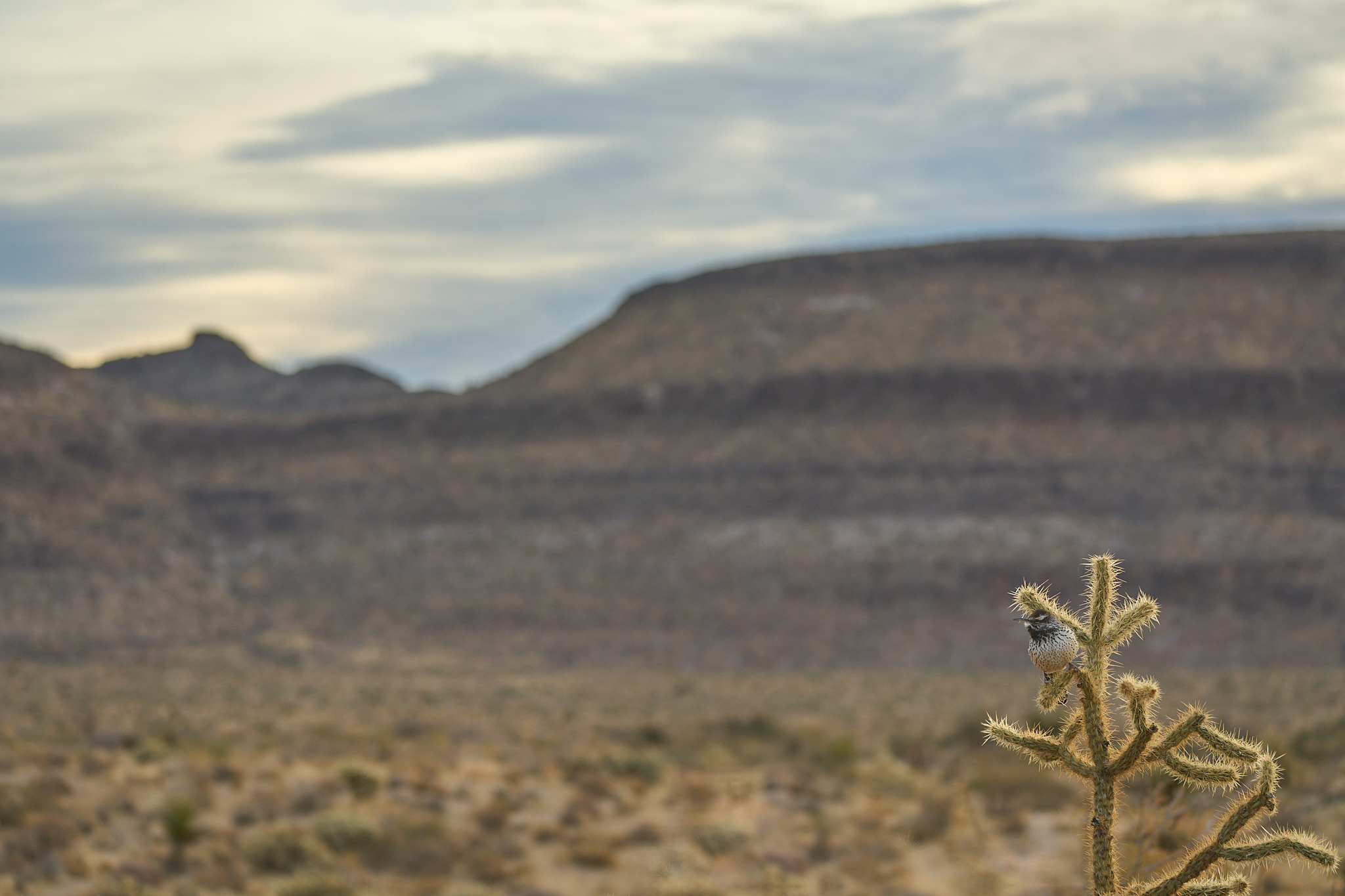
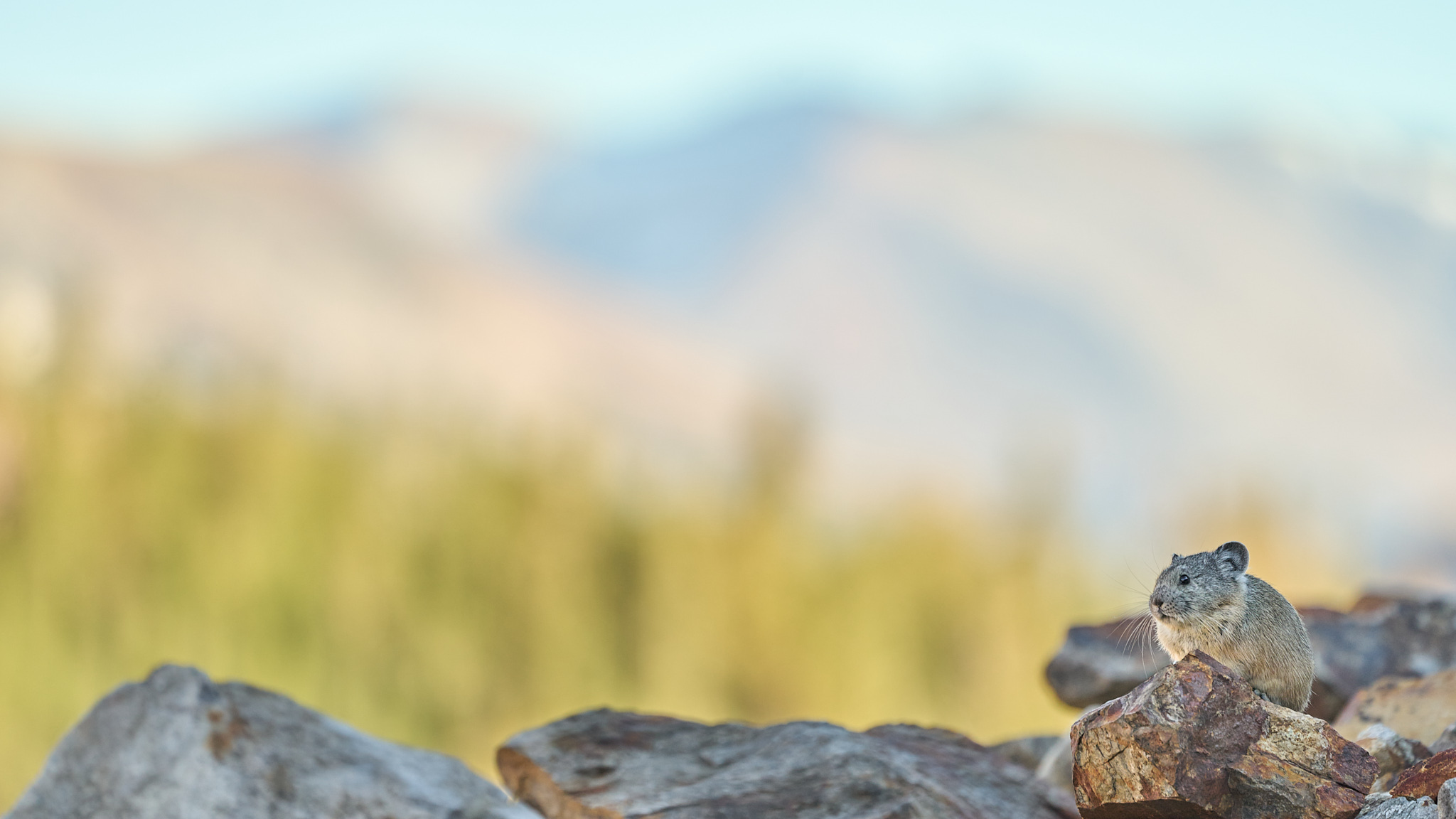
This shot on the other hand. Research to find a scenic spot with good potential wildlife sightings. An hour hike in the pre-dawn light. Considering the scene, finding a composition, and then gingerly scrambling down to get myself into position. Waiting for my nemesis bird to throw me a bone and perch in the composition. Repeating all over again when the first day didn’t work out.
This photo isn’t perfect. I wanted the jay silhouetted against the sky where it would really stand out. The light is verging on unusably harsh. I wish that one branch didn’t extend down into the scene. I should have dropped the shutter speed and closed the aperture to get the mountains more in focus. The location itself is kind of a cliché. Still, it probably represents who I am better than the epic action shot.
If you made it this far, thank you for coming to my TEDx talk. I know this photo won’t have the reach of the coyote shot. And that’s okay. I like a fun action shot from time to time. I hope you enjoy the slower photos too.
I camped at Mojave National Preserve for the first time the week before Thanksgiving. This post is a companion to my Exploring Mojave National Preserve post, which focused on the photographic aspects. I did this trip at the end of November, the weekend before Thanksgiving
To maximize my time in the backcountry, I left San Francisco Friday evening after work and got a hotel halfway between the city and the preserve. I opted to stay in Wasco, which is home to a state prison and not much more. The Best Western did not have a lot of recommend it. It was clean and safe, but very noisy. Doors started banging at 5 am. At 6 am, a central bathroom fan system kicked on. The fan motor happened to be right above my room’s ceiling, which ended all hope of sleeping. So, I filled up on fuel and hit the road.
There are two options for camping at the preserve: staying at an official campsite, or camping at one of the dispersed campsites. The official campsites are Hole-in-the-Wall, which is easily accessible via a paved road, and Mid Hills, which requires a nine mile trip down a dirt road. (There’s also a group campsite across the main road from Hole-in-the-Wall, but it’s basically the same campground). Hole-in-the-Wall was fairly busy when I visited at the end of November. Most of the campsites appeared taken, but there were some free sites.
I chose to do dispersed roadside camping. This is a bit of unique option for a National Park Service property. Before the establishment of the Preserve in 1994, campers would pull off the road and set up camps in informal sites allowed under BLM regulations. These campsites disturbed the fragile desert ecosystem, so while NPS doesn’t allow backcountry camping in general at Mojave National Preserve, they continue to allow allow it at existing disturbed sites.
Dispersed camping is on a first-come, first-served basis. There’s no signage, you just have to find an existing site (look for packed soil and a fire ring). Doing that can be a challenge if you arrive after dark. I did a few hours of internet sleuthing to come up with a list of about 20 possible sites.
I arrived at noon on a Saturday and found most campsites unoccupied. I think most people arrive in the evening, set up camp, and then move on in the morning. I did see a few sites that were occupied by RVs that appeared to be on multi-day stays. My first choice was a mile off a main road, and it was unoccupied when I arrived. I had rented a Jeep, so it was pretty easy for me to access a campsite secluded from the main road.
While water is available at Hole-in-the-Wall campground, it doesn’t taste very good. Packing in your water is highly recommended, but it’s good to know there’s a backup option if you need it. I brought two gallons of water per day, which was more than I needed in November, even when doing multi-hour hikes.
There are obviously no bathroom facilities at the dispersed sites. It was easy enough to schedule my major calls of nature for a quick drive to the Hole-in-the-Wall visitor center (much nicer than the vault toilets in the campgrounds). Bringing a camp toilet is also an option. Using a cat-hole is a last resort: most of the soil is very rocky. The washes are easier to dig in, but pooping in a wash just seems rude, despite all the animal dung littering the preserve. If you go with the cat-hole option, pack out your toilet paper. It takes forever to break down in the desert environment, as can be observed from all the petrified animal dung.
Wind was a major factor. I only camped for two nights. The first was very windy, and the incessantly intermittent flapping of my tent kept me awake. I ended up retreating to the back of the Jeep for the remainder of the night. The second night was calmer and I slept without a problem. November is considered a relatively low wind month. Next time I go, I will probably leave the rainfly off the tent to see if that helps with the wind. Or just resign myself to sleeping in a car.
The Preserve is bracketed by I-15 and I-40, and traffic was visible from my campsite about 10 miles from Hole-in-the-Wall. It wasn’t audible, however. With Las Vegas less than 100 miles to the north and Los Angeles 200 miles west, commercial flights crisscrossed the preserve pretty regularly. Still, light pollution was limited to a few distant glows and the night skies were quite enjoyable.
Hiking was pleasant in late November. It was cold in the morning and more than tolerable at mid-day. I hiked one of the few established trails. The trail wasn’t always clear, but it was well-signed. Next time, I’ll try exploring off trail.
My original plan was to camp for four nights. On my second morning in the Preserve, I ran into car trouble when my Jeep wouldn’t start. I was lucky enough to have parked near Hole-in-the-Wall campground when it happened, and got help from a more prepared Jeep driver who had jumper cables. It would have been a much bigger hassle to have had that happen at my campsite, a mile off the main road on 4×4-only unmaintained roads. I had enough food and water to not be in major danger, but it would not have been fun at all. As it was, I decided against staying in the desert with a flaky car and cut my trip short. Next time I visit, I’ll bring jumper cables and a jump starter.
While it was a challenge, I had a great time at Mojave National Preserve. If you haven’t camped in the desert before, it’s totally doable. Start with a visit in the cooler months, and come over-prepared. You’ll be rewarded for the hassle with a relatively solitary experience in a unique and beautiful ecosystem.
Lately, I’ve been connecting my photography more with adventures. Ever since I visited Joshua Tree National Park at the end of last year, I’ve wanted to return to the Mojave to try to capture Cactus Wrens in desert vistas. When I saw a photo by Adam Elliott of Mojave National Preserve, I knew I had to find a way to add birds into those amazing lanscapes.
So, at the beginning of my Thanksgiving week break, I loaded backpacking gear into a rented Jeep and headed out to the preserve.
As I’d been led to expect, the preserve was vast and mostly empty. There are two campgrounds with a few dozen spots. There are also a number of unofficial dispersed campsites that predate the establishment of the preserve in 1994. The Park Service allows continued use of the existing dispersed sites; camping in undisturbed areas is not allowed. I’d mapped out a couple dozen potential sites, and found my first choice unoccupied when I arrived around noon.
After setting up camp, I headed to my first photography spot. I found the vista I was after, and a fair number of cholla cacti, but no Cactus Wrens. There were horses wandering around. Given how friendly they were, I suspect they belonged to the ranch across the road from the wilderness area.
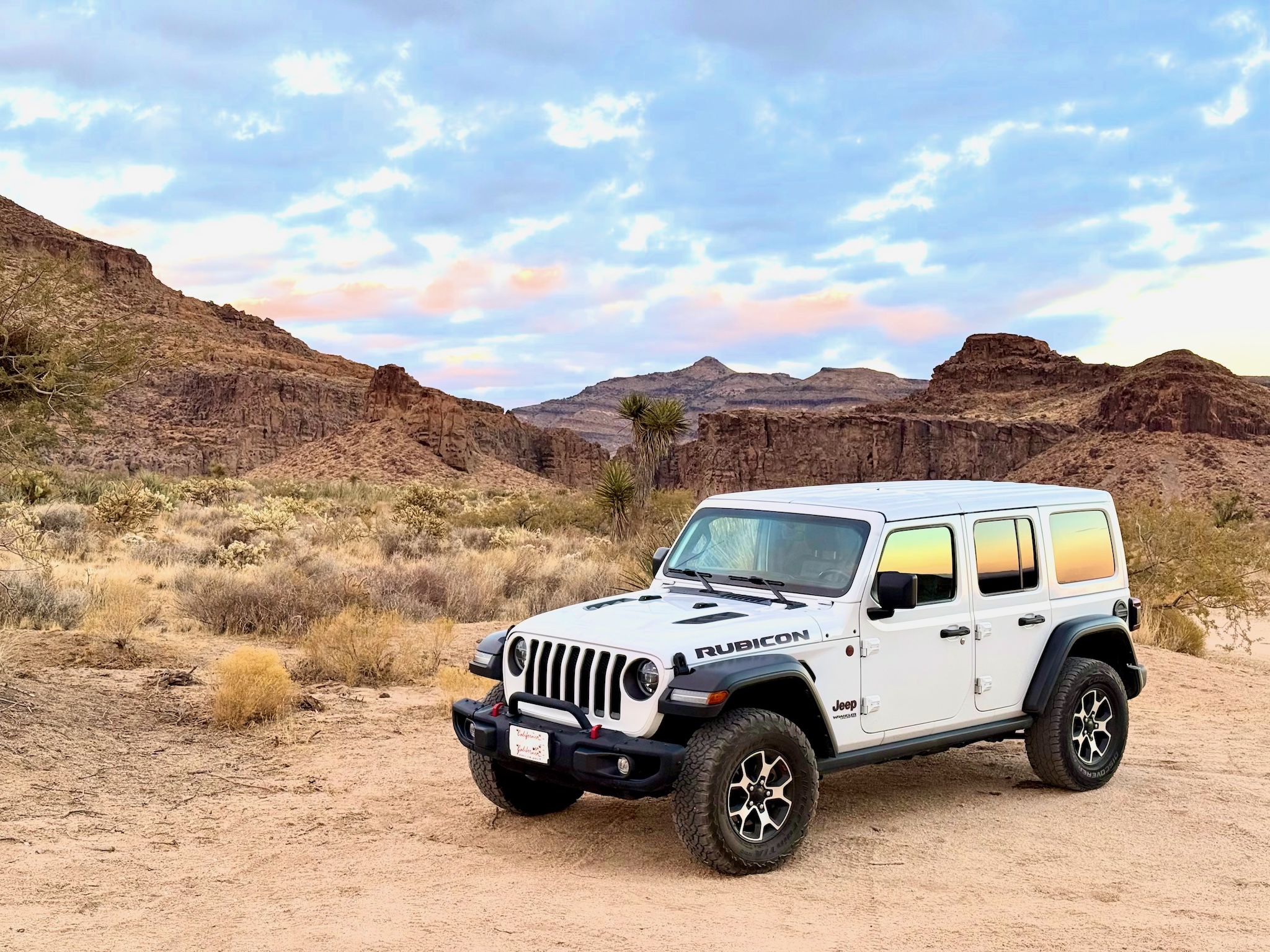
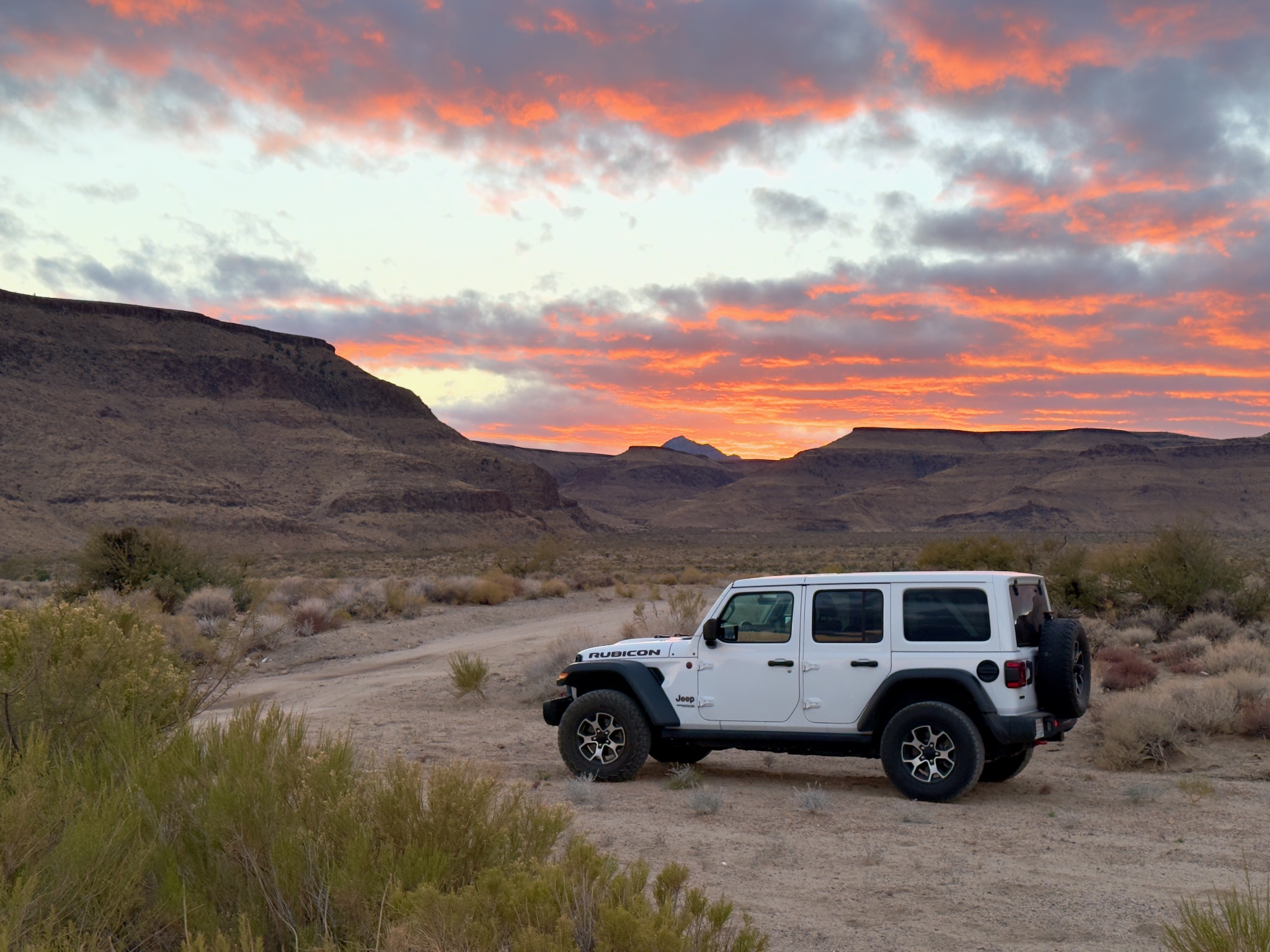
With the sunset popping off and no wildlife deigning to pose in front of my lens, I ended up switching to Jeep photography.
After sunset, I headed back to camp, made dinner, and then tried to sleep in the howling wind. Around midnight, I gave up trying to sleep with the tent flapping nonstop and moved into the back of the Jeep.
The next day, I did a 6 mile hike to try to track down better wildlife spots. Right at the outset, I found a Bewick’s Wren and a Cactus Wren, but they were very shy. I saw a number of Ladder-Backed Woodpeckers, but I’ve yet to figure out how to work with them, so I snapped some quick photos and kept going.
After a few hours, I came across a couple of Cactus Wrens in a spot with some promising landscapes. I had a feeling, being a pair, that they would exhibit classic wren curiosity and territory defense. Sure enough, they hung around and gave me a few good looks. The light was very harsh, but there were good possibilities for a future shoot.
Towards the end of the hike, I heard the ping of a Rock Wren’s call. It was at a perfect spot, with a collection of boulders to perch on and a distant vista. I resisted the urge to do portraits, put on my 24-105 mm lens, and worked on bird landscapes.
This might be the first time I’ve photographed birds at 70 mm. It felt like a good initial attempt, but there are definitely things to improve. For one thing, my natural instinct was line up a distant background and rely on distance to clean up any distractions behind the bird. That works great at 400 mm. At 70 mm, there’s only going to be so much blurring, so it’s better to pick a cleaner near background than a messier distant one.
Those clouds behind the wren looked poised to pop off at sunset, but with a ways to go on an unfamiliar trail, I opted to keep going instead of waiting for the really good light.
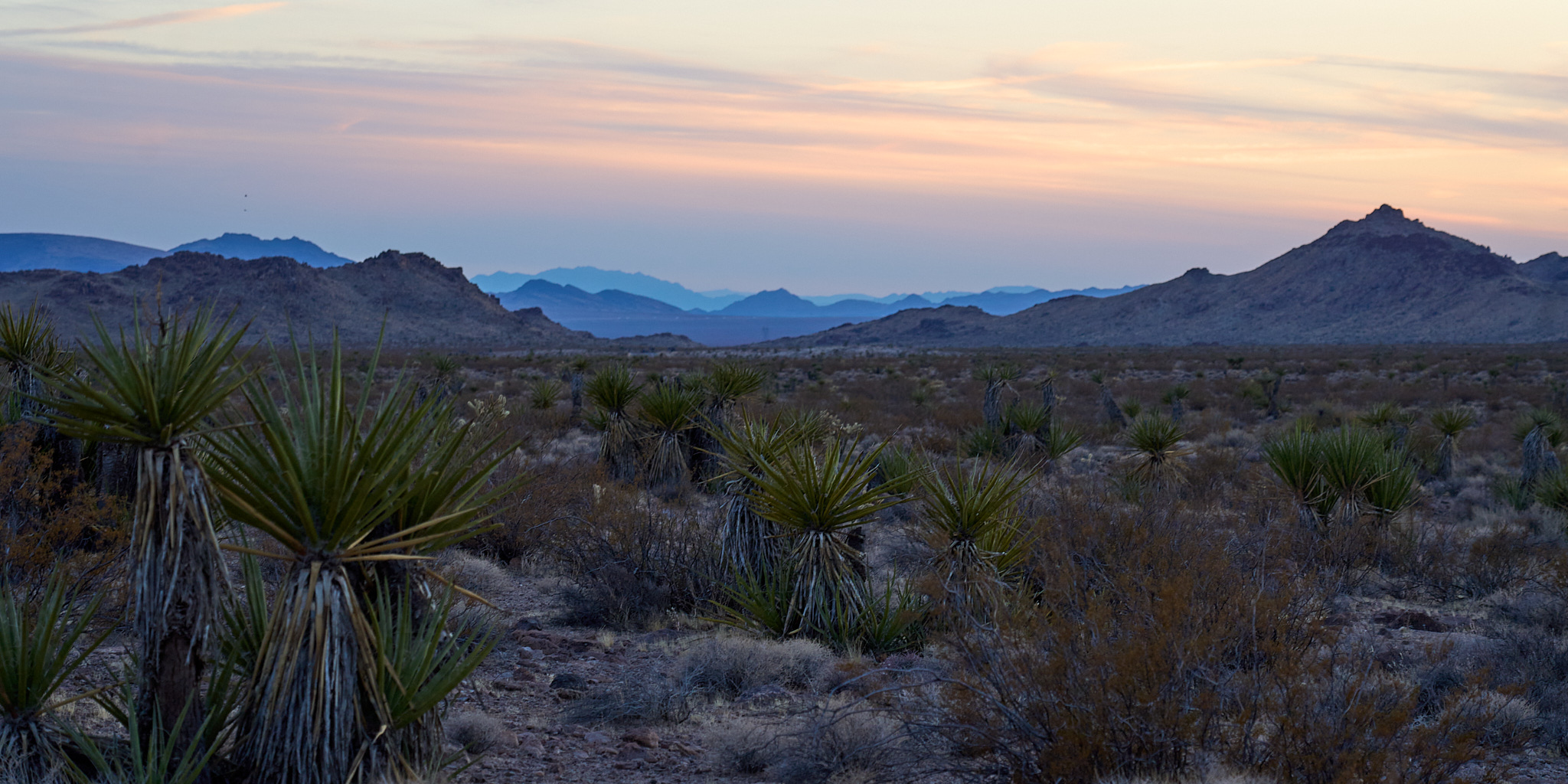
I heard plenty of cactus wrens towards the end of the hike, but the scenery wasn’t all that inspiring. After a full day of hiking and bird photography, I got back in the Jeep and headed back to camp. I made a quick stop on the way to photograph some distant mountains in the glow of blue hour. Just look at those layers!
I made a big mistake on my third day. After a couple nights without a ton of sleep, I checked the forecast, saw it called for a cloudy day, and decided to sleep in. When I was awakened 20 minutes before sunrise by a warm glow filtering into the tent, I realized my blunder. Clouds are rare enough in the desert that it’s worth being up at sunrise even on a cloudy day on the off chance the sun pokes through and creates some rare dramatic light.
I jumped into the Jeep and raced off to the Rock Wren spot. By the time I got there, the last colors were fading from the sky. I quickly looked around and spotted… wait a second, this isn’t a Rock Wren!
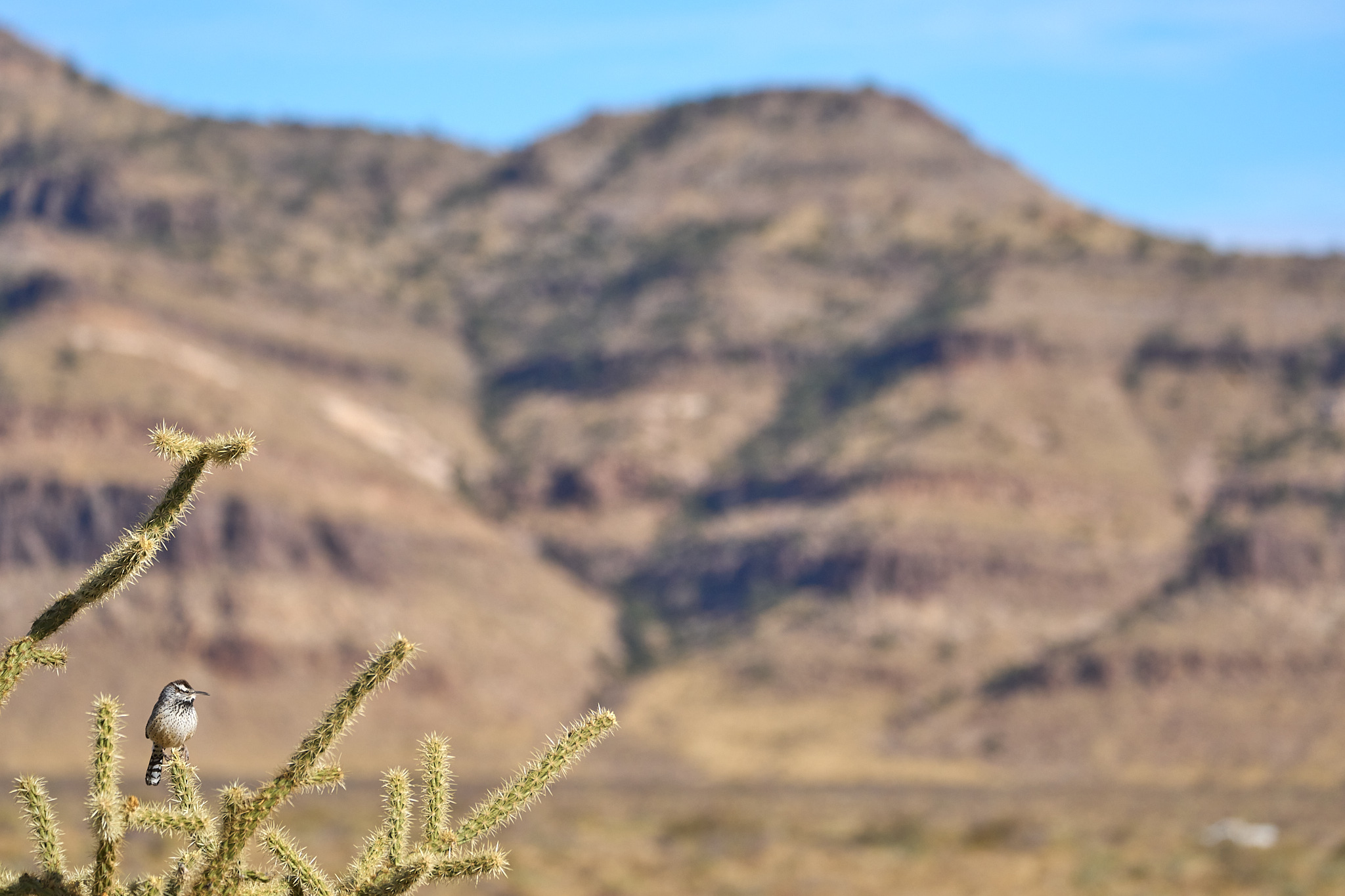
Apparently the wrens were on an exchange program that morning, but order was eventually returned to the universe as the Cactus Wren alighted on some Buckthorn Cholla. Sadly, it didn’t choose the top limb of the cactus, making the difference between an okay photo and a great photo.
After about an hour, the wrens got less active, so I headed back to the Jeep to go back to camp and make breakfast.
When I got back to the Jeep, I found myself in a real predicament. For whatever reason, I’d locked the Jeep, and the fob wasn’t working to unlock it. Even worse, the emergency key was an uncut blank, so I couldn’t use it to get into the car either. Luckily I was near a campground, so I was able to get help without too much trouble. As it turned out, the battery on the fob and on the Jeep had died simultaneously. This took a while to figure out, but eventually I combined a jump start with a borrowed fob battery to get the Jeep unlocked and running. A real freak incident that would have been a bigger deal if I’d been in a more remote part of the preserve.
Photography is a great motivator to get myself out of my comfort zone and into new experiences I wouldn’t otherwise try. While I enjoy pushing myself, I’m keenly aware that I’m relatively inexperienced in the outdoors. When that nagging voice in my head lets me know I’m getting in over my head, I always listen. While I had gallons and gallons of water, days of food, and high quality shelter, dealing with an unreliable Jeep in a vast and mostly empty desert was more than I was prepared to handle. So, I drove back to the campsite, left the Jeep idling to make sure I wouldn’t need a jumpstart at my much more remote campsite, packed up, and then drove back to civilization.
While the trip didn’t turn out quite how I’d hoped, it was overall a success. I made it for two nights in the desert, built valuable experience with backpacking-style camping, found some great photography spots, and added a few good shots to my portfolio.
I often see Coyotes chasing squirrels. I rarely see them catch them. I even accused this almost fully grown pup of being a little dim when it gave up on chasing squirrels and tried eating acorns instead. Maybe fully inhabiting the mind of a squirrel was just what it needed, because it’s had a lot of squirrel hunting success recently.
When Coyotes are being Coyotes, they’re very efficient rodent killers. While it’s sad to see a living being lose its life, western ecosystems with Coyotes are healthier than those without them. Research has shown that California Quail do better in parks populated by Coyotes, who keep populations of nest predators under control. The return of Coyotes to San Francisco are a big part of why the San Francisco Presidio is considering reintroducing California Quail to the city.
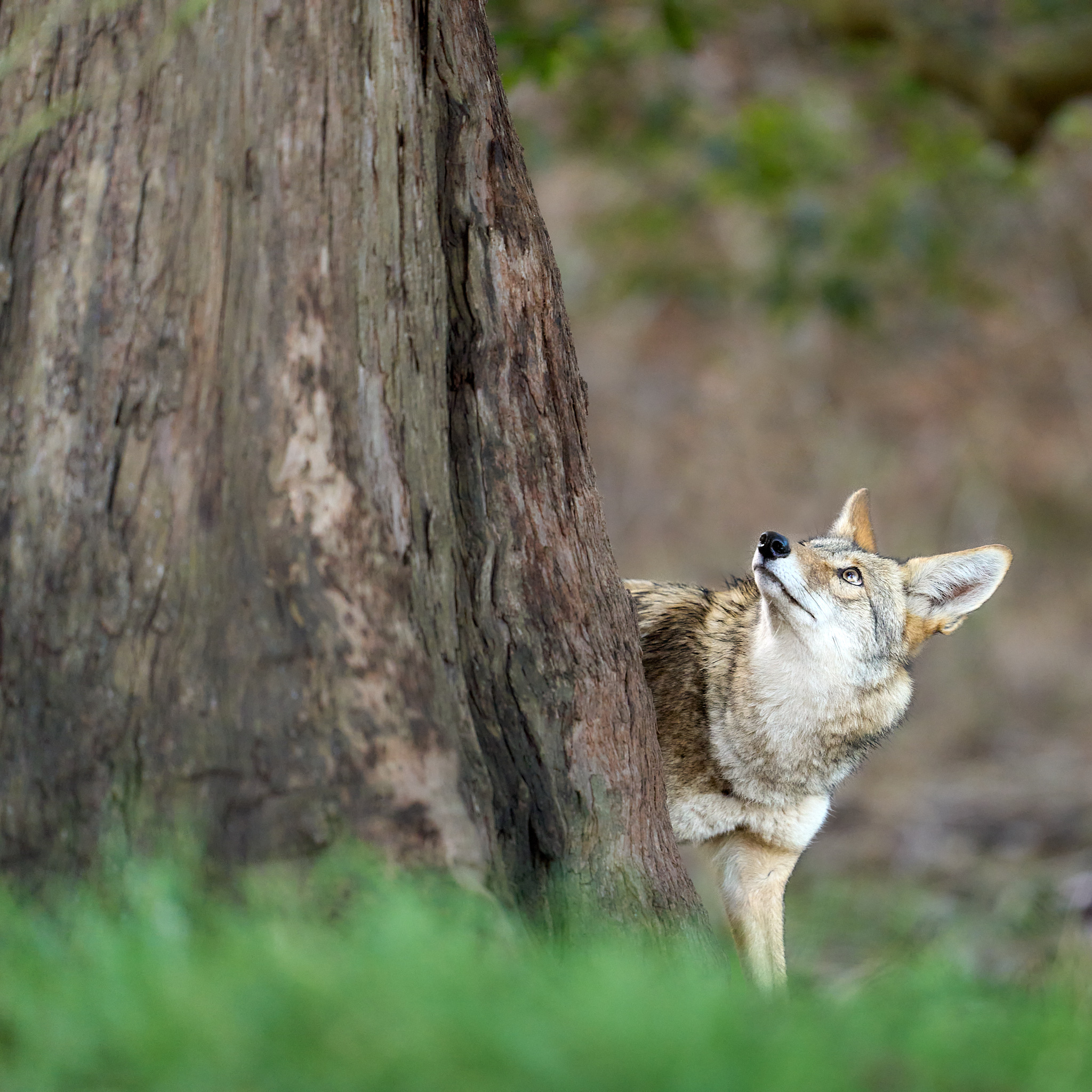
I saw this Coyote approaching a large tree and quickly composed a shot to catch it as it emerged from behind the tree. Ever hopeful, the Coyote looked to see if any squirrels were hiding behind the tree. Coyotes seem to love chasing squirrels, even though they have a much lower success rate hunting squirrels than gophers.