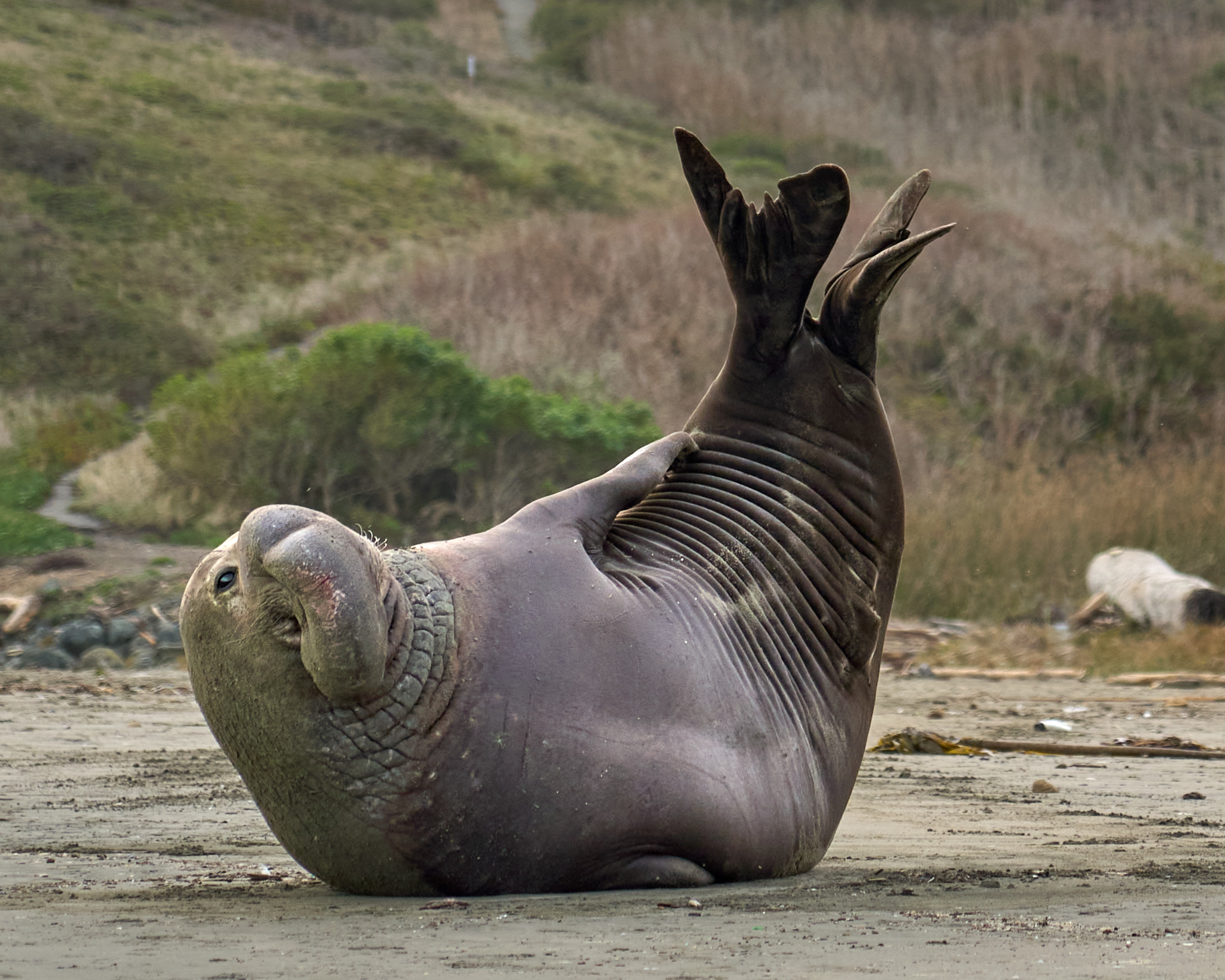
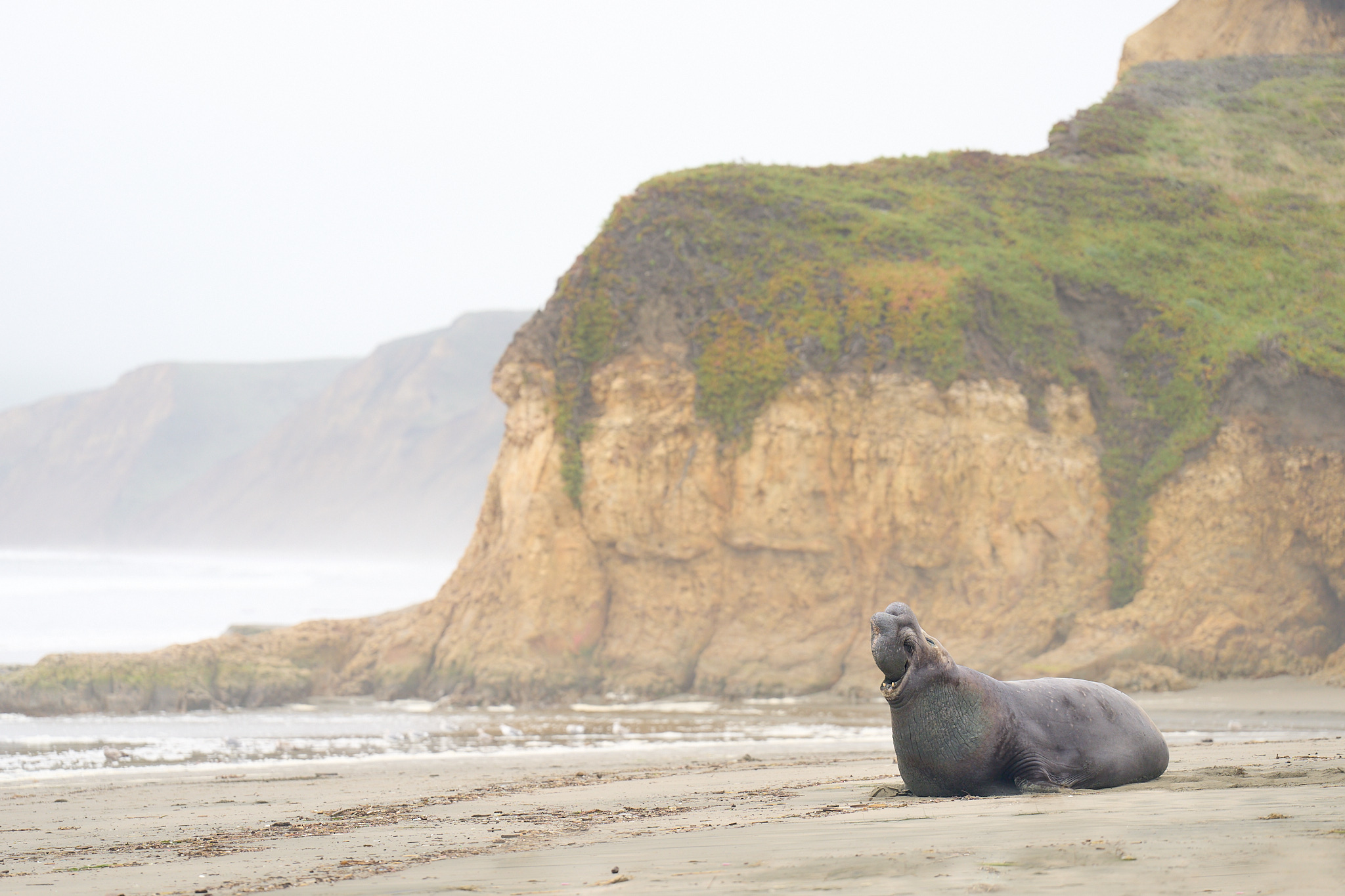
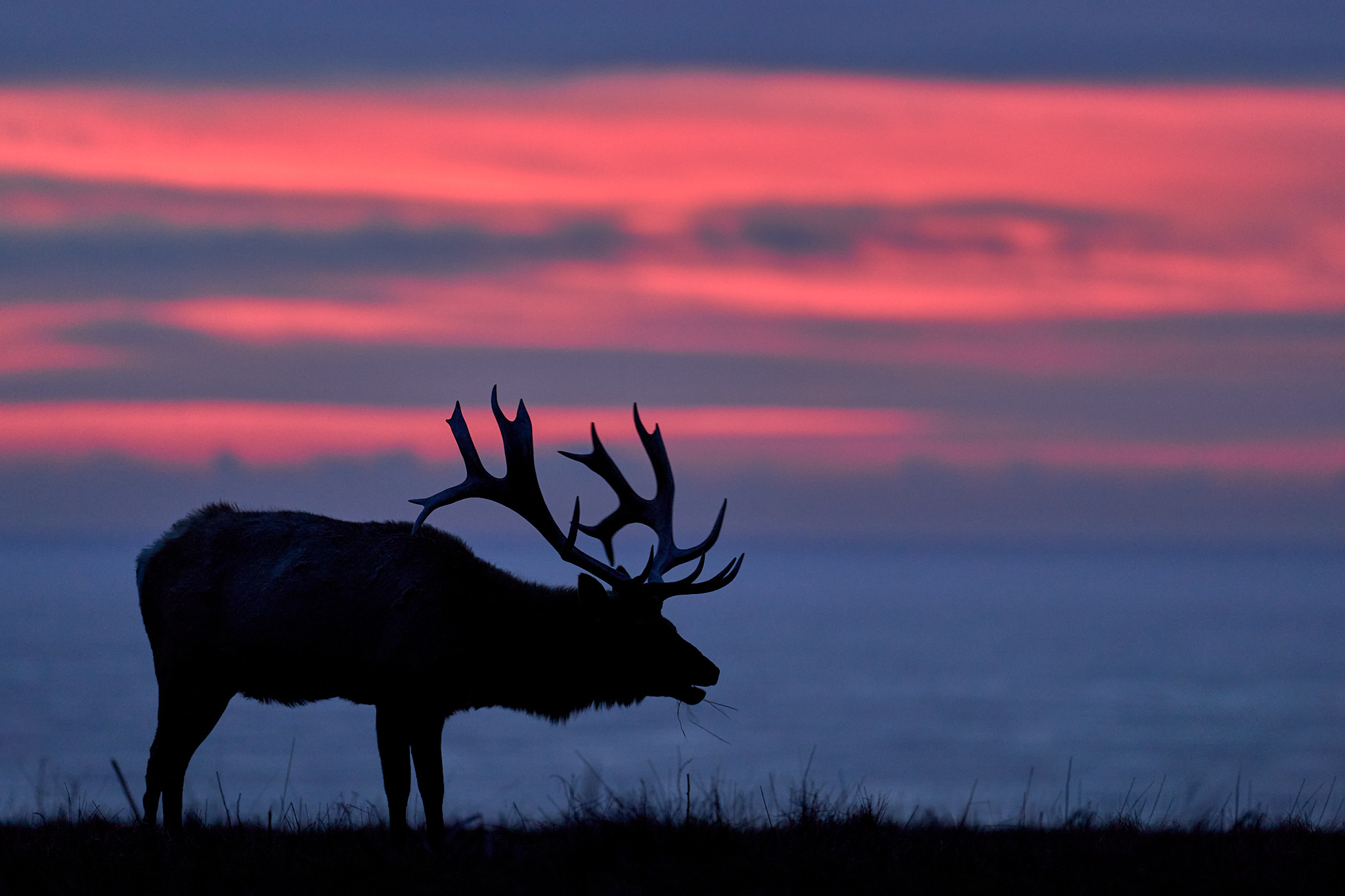
Ever locked eyes with a 4000 pound beast from the deep? Elephant seals are some of the deepest diving animals in the world, with a lowest recorded dive depth near 7000 ft below the surface. They’re outdone only by a couple of species of whales.
January is Elephant Seal Month, so get ready for lots of seal content over the next few weeks.
One of those moments that make you say “just give me any bird!” This gull was kind enough to oblige with a flyby (as a failed birder, I can’t be sure of the species but I think it’s a juvenile Western Gull).
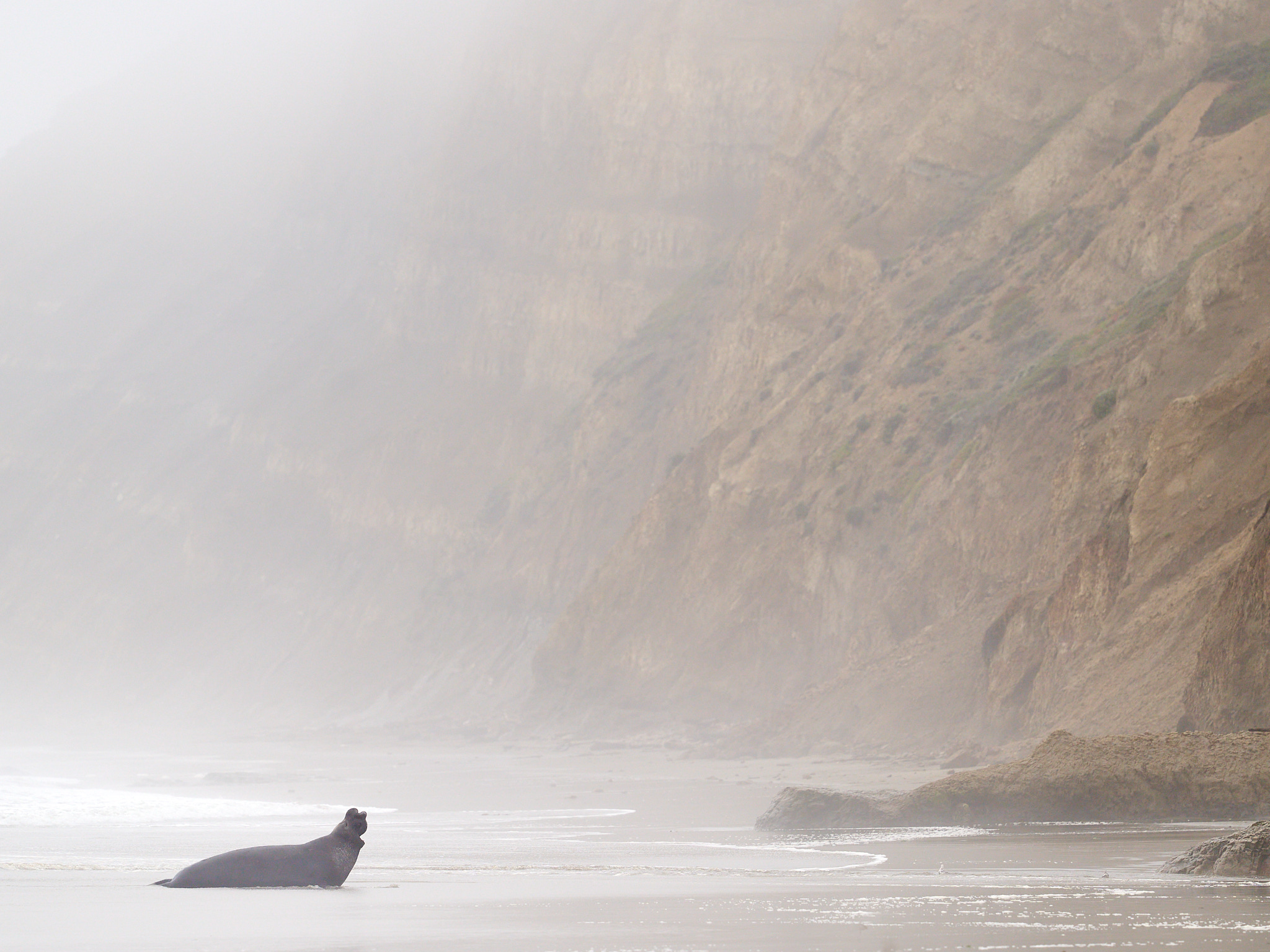
I went to the beach to photograph Northern Elephant Seals. It was a foggy day in between two storms. Another photographer I ran into called the conditions “hopeless”. I was beyond excited to have some moody weather to show off the seashore.
The elephant seals put on a great show for me.
In between breaks in the elephant seal action, I also got the opportunity to work on shorebird landscapes, including Marbled Godwits and Long-Billed Curlews. I loved the way the fog simplified the landscape behind the birds.
One of the curlews had an antenna sticking out from its back. This is from a satellite transmitter used to track birds’ movements and migration for scientific studies. The Smithsonian Zoo and Boise State (probably among others) have both done studies to track curlew migration. One of the cool things about these birds is that, while they’re considered shorebirds, they actually breed inland in grasslands. They come to the coast outside breeding season for the mild winter weather and plentiful food.
The one shot I really wanted to get was a bird in flight in front of the cliffs. By the end, I was thinking “just give me a bird, any bird!” Thankfully, a gull (I believe a Western Gull) was up to the challenge!
The place where I most reliably photograph Bobcats has become, frankly, a shit-show. More and more people are learning about it at the same time other locations that used to be reliable for Bobcats are drying out. Apparently Bobcats in other parts of the Bay Area are being affected severely by a mange epidemic. More photographers are trawling this spot, cats are sometimes getting unreasonably pressured when photographers converge from multiple directions, and I heard that a disagreement about photography ethics nearly came to blows a few weeks ago.
It’s not like it’s my special spot or anything. I learned about it (along with invaluable lessons in fieldcraft and animal behavior) on a tour with @danieldietrichphoto. But, given that I keep my visits to the area brief to avoid adding pressure to the cats and stick to the unofficial rule not to approach other photographers actively photographing a cat, on more and more of my visits I see a Bobcat or two that’s already being photographed and then continue on my way. No big deal. While I love Bobcats, I take satisfaction from photographing many different subjects. And it can be fun just to watch and study their behavior from a distance.
Yesterday, as I took a trip through Bobcat Alley, I came across a group with a cat. I gave them their space and worked on some mediocre scenic shots from a distance. After a while, one of the members of the group waved me in. It turned out it was cat whisperer and all-around good guy @pumapix. I spent a lovely 20 minutes with the group as everyone stayed closely bunched together, let the cat behave naturally, and waited for the cat to approach instead of chasing it around the field.
When it comes to wildlife photography, the animals’ wellbeing needs to be the first priority, followed shortly after by courtesy to other people observing or photographing the wildlife. Sometimes you get a shot, sometimes you don’t, and that’s okay. Besides, the best memories come from the friends we make along the way.
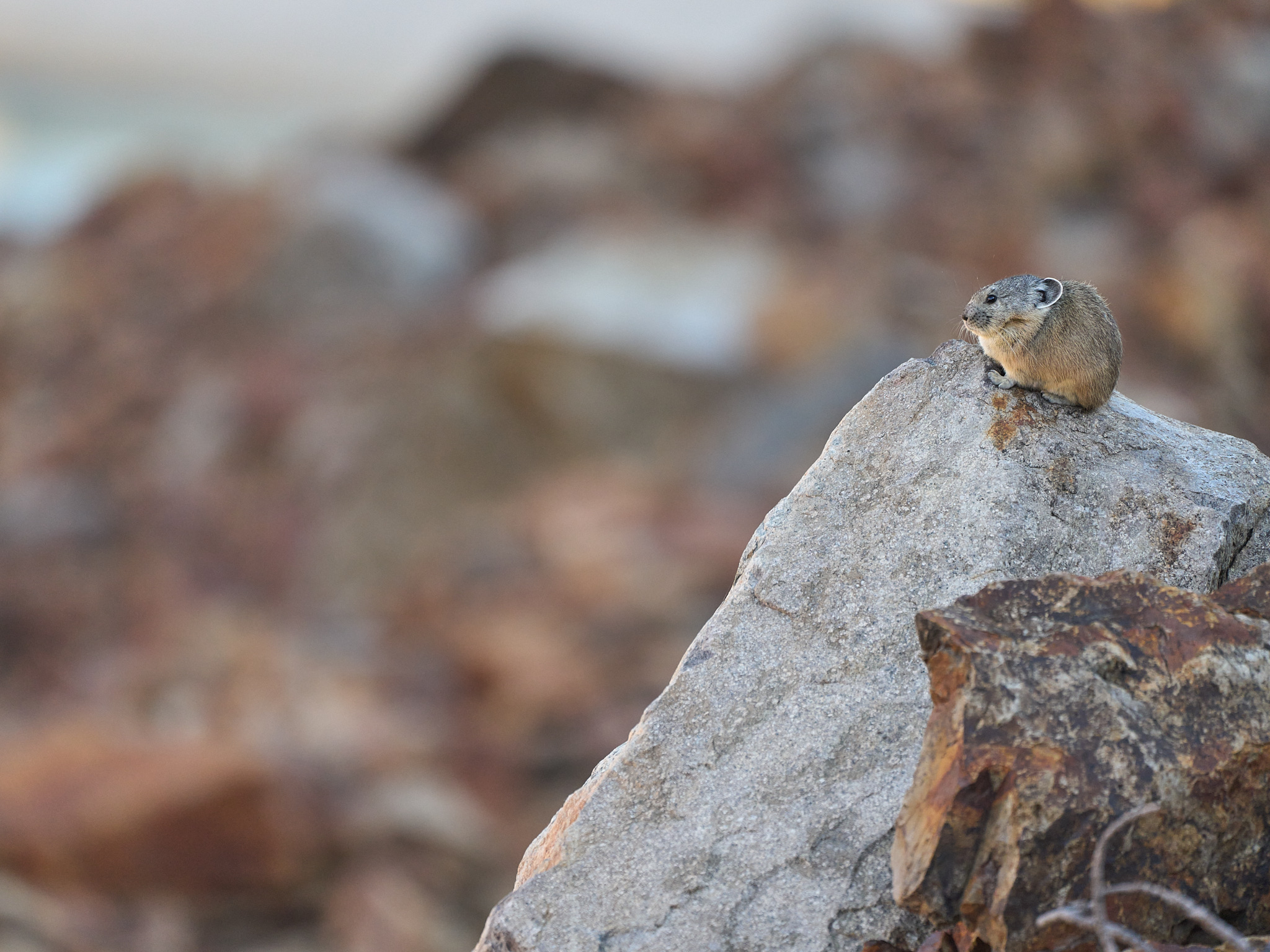
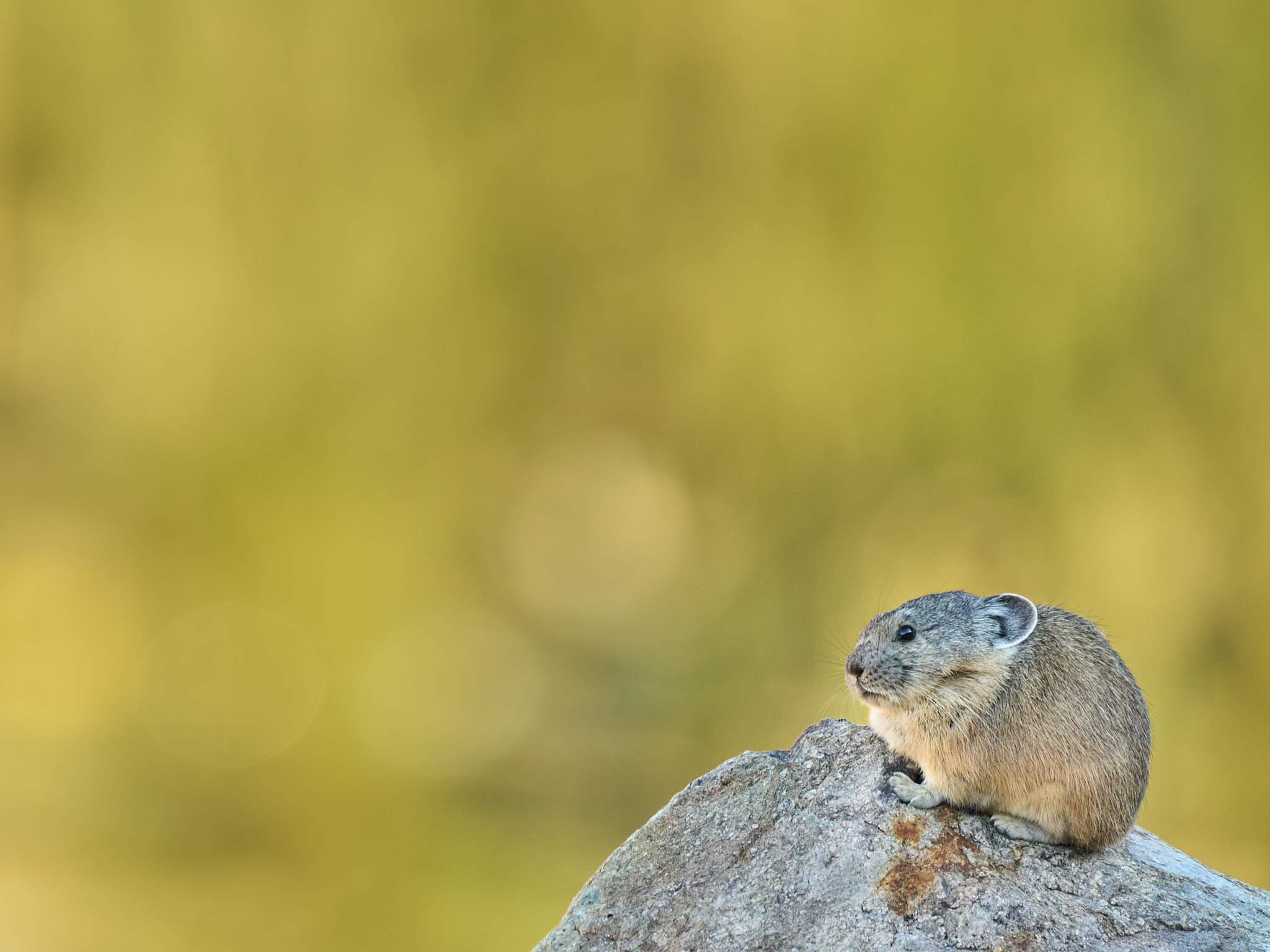
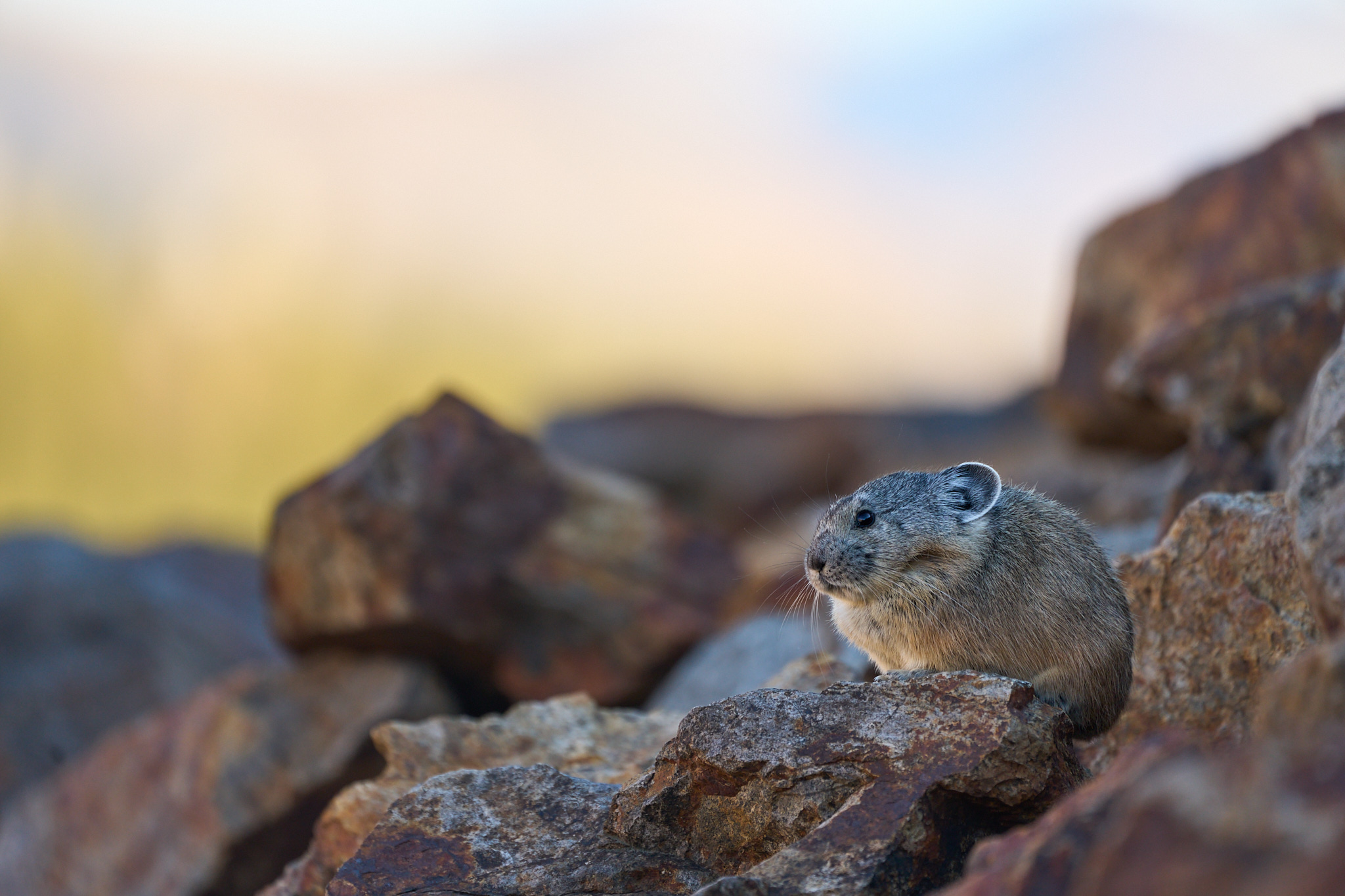
I’ve wanted to photograph American Pikas for a while now. If you aren’t familiar with them, pikas are close relatives of rabbits and hares. They prefer cold climates, which means living at very high altitudes (often above 10,000 ft) in the United States. Unlike many other cold climate mammals, pikas don’t hibernate. Instead, they spend most of the summer gathering hay piles from the meadows surrounding their burrows so that they have food for the long winter. Their preferred habit is rocky talus slopes, which gives them lots of nooks and crannies to create burrows in.
There are a few classic pika shots. It’s always fun to capture a pika peering down intently from a rock as it broadcasts its adorable high pitched squeaking call. Because of their unique hay collecting behavior, a pika carrying a big bundle of wildflowers is also a classic shot.
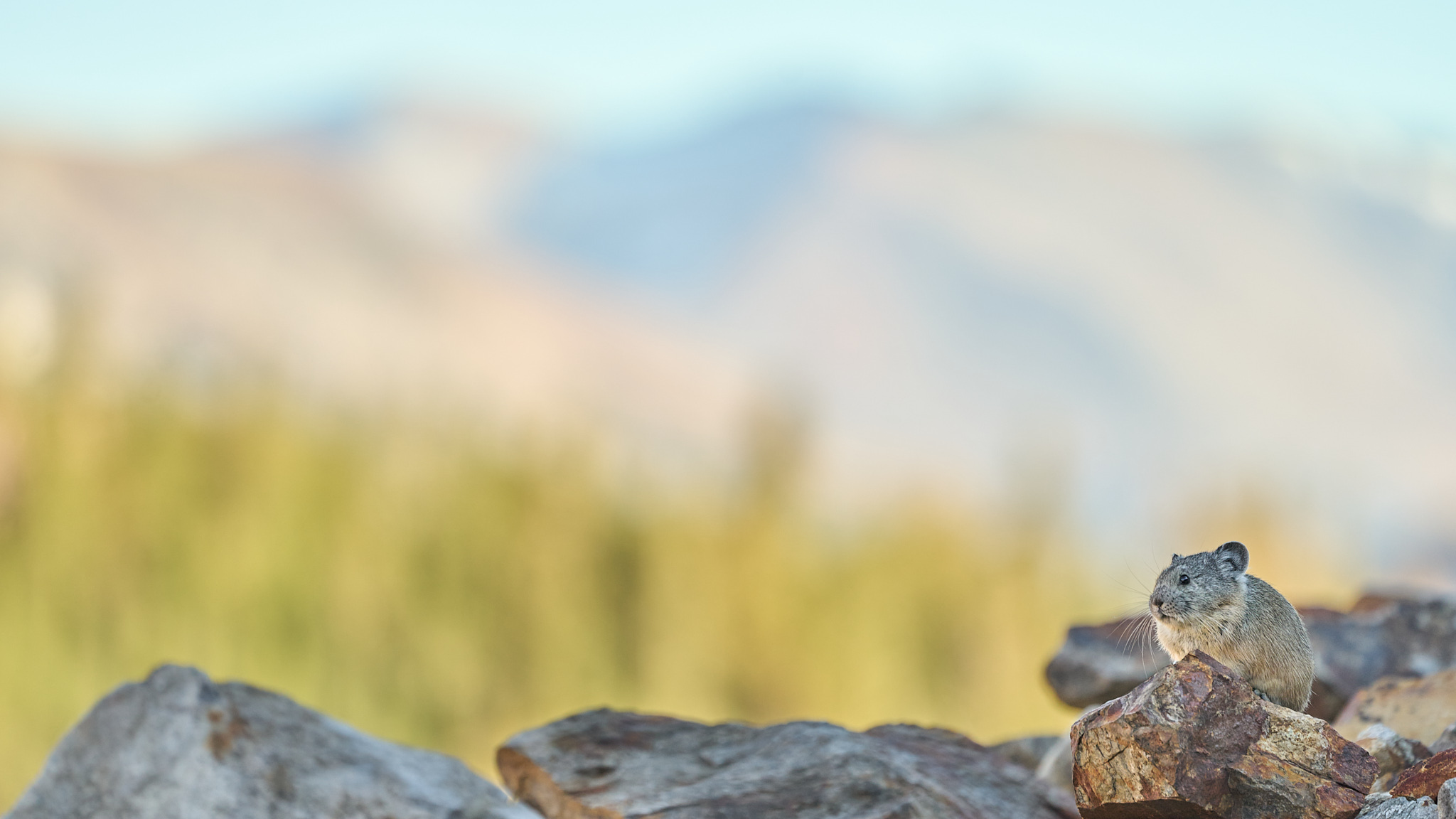
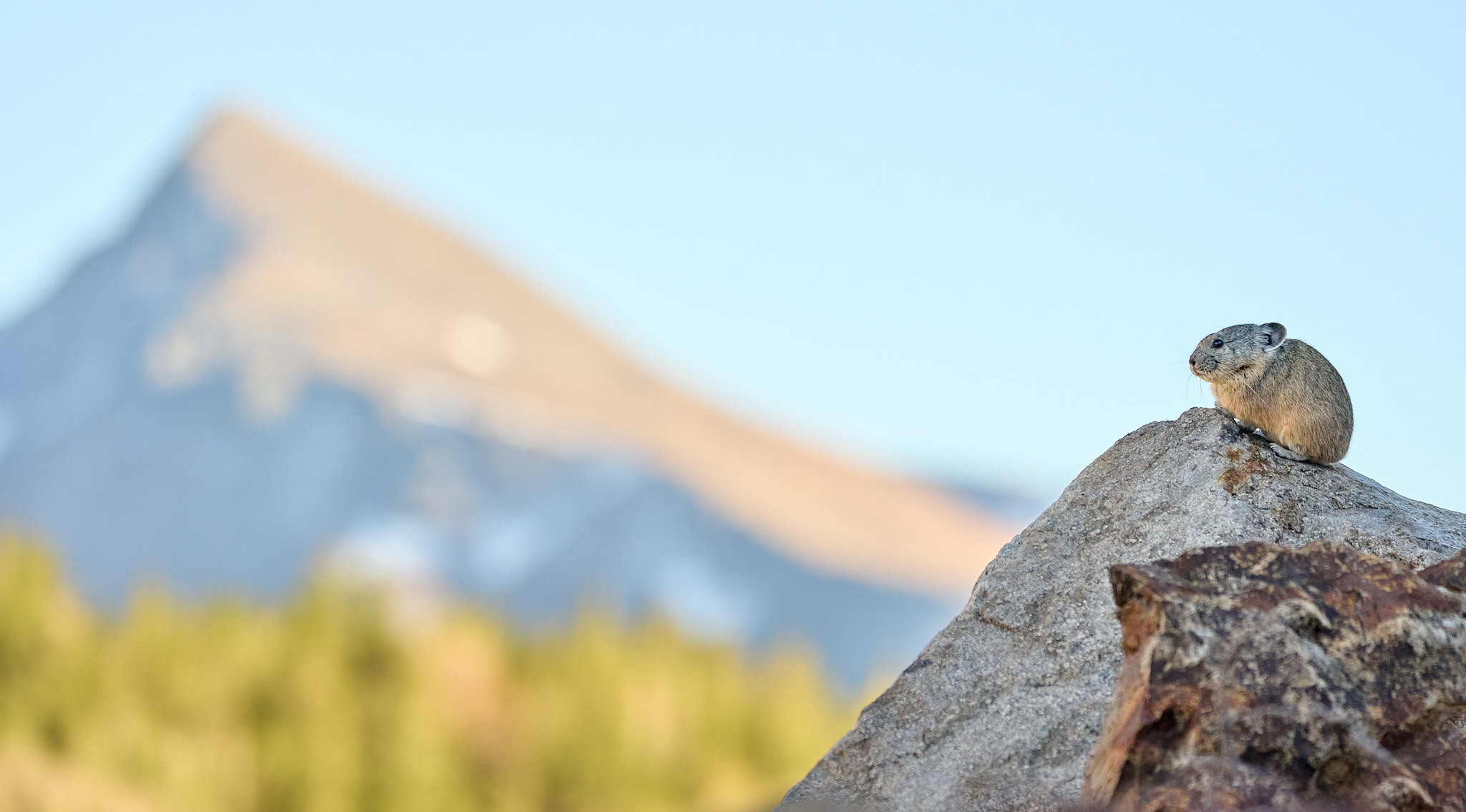
My goal was to do something a bit more unique: a scenic photo of a pika showing off its high alpine habitat. I haven’t seen many photos like this. A search on Instagram only turned up an epic photo by Deirdre Rosenberg, the undisputed queen of American Pika photography, and a great wide angle iPhone shot Ray Hennessy snagged on a whim. With most photographers focusing on portraits or action shots, there was room for me to stand out with a scenic shot.
Everyone I talked to about American Pika photography suggested a particular lake in Yosemite National Park. This was the go-to place for Bay Area wildlife photographers to shoot pikas. Everyone also warned me that the hike was a bit strenuous, ascending fairly steeply up to 10,000 ft.
I’d never been to Yosemite, and I’d never been up to 10,000 ft, so a plan came together. I’d spend a couple nights camping in Yosemite Valley to avoid doing the entire 10,000 ft elevation shift in one go, and then I’d spend a few nights at a hotel in June Lake to get access to the High Sierra. I’d never been camping before, so the Yosemite Valley portion of the trip was also an opportunity to learn how to camp in preparation for a trip to Alaska in 2025.
Yosemite Valley went pretty well. I stayed at Curry Village, which was much more glamping than camping. It was much too crowded for a truly satisfying nature experience. But, it didn’t take long to hike away from the crowds.
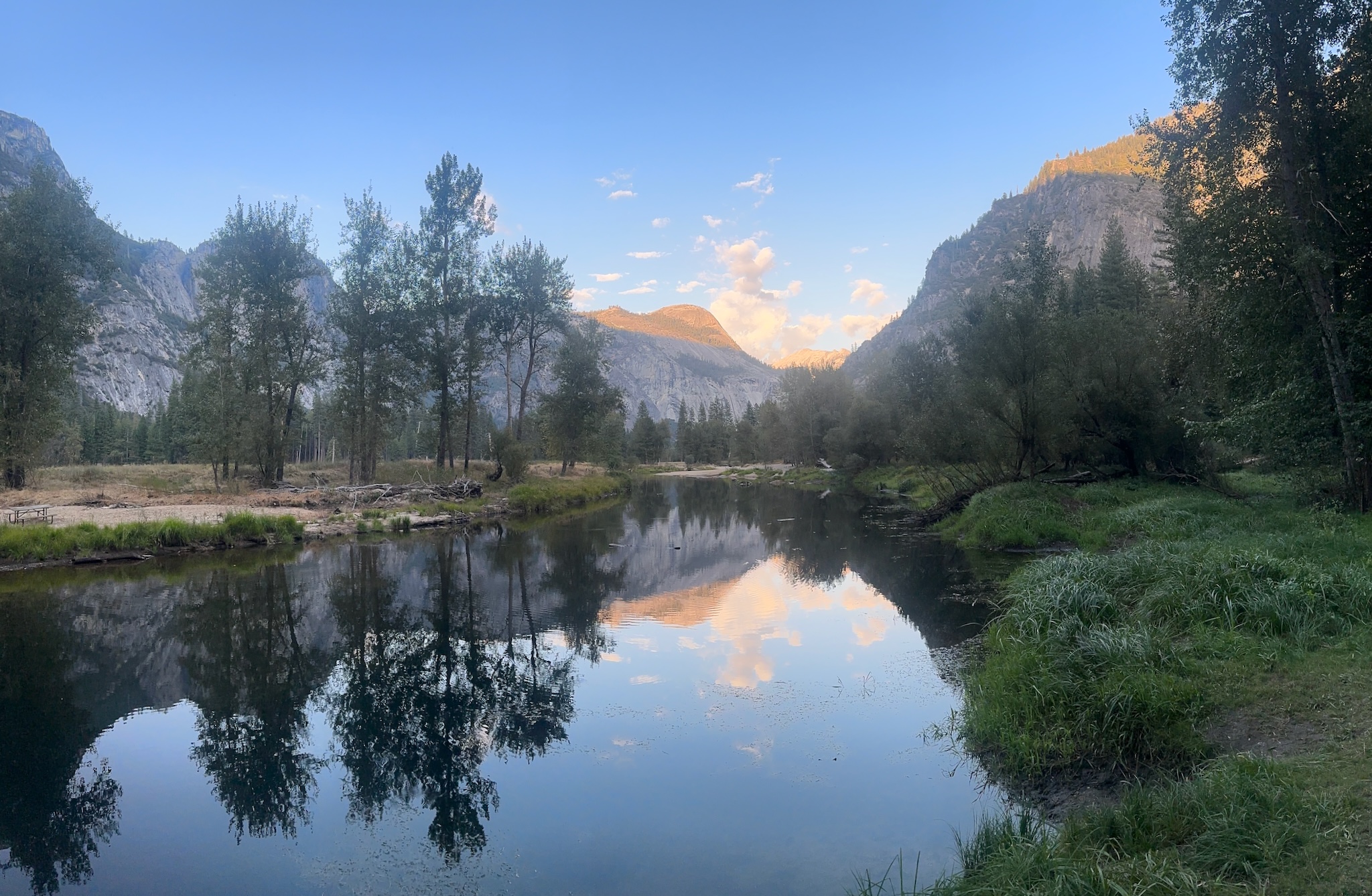
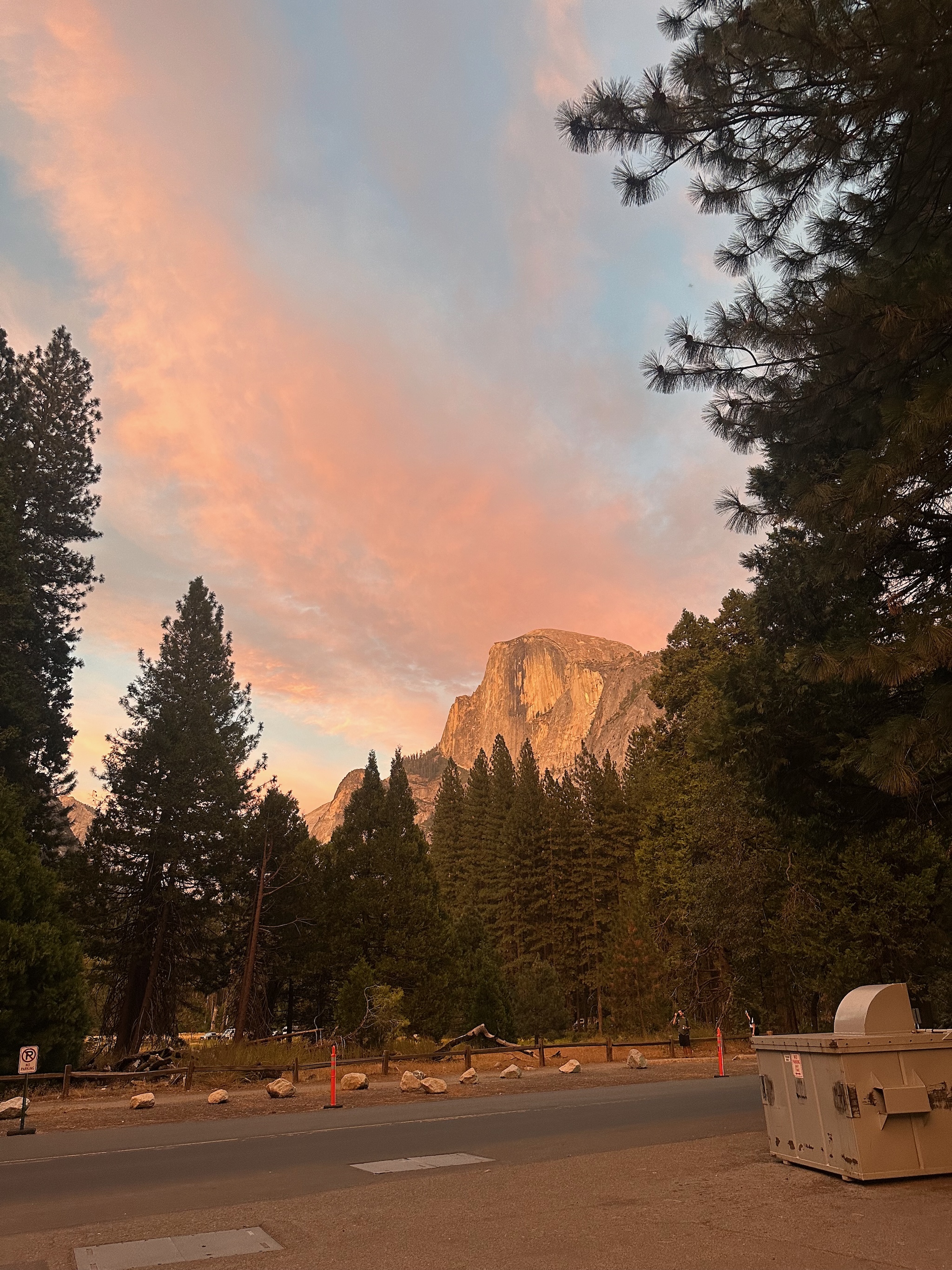
I got a few classic landscape shots, like the Merced River at sunset…
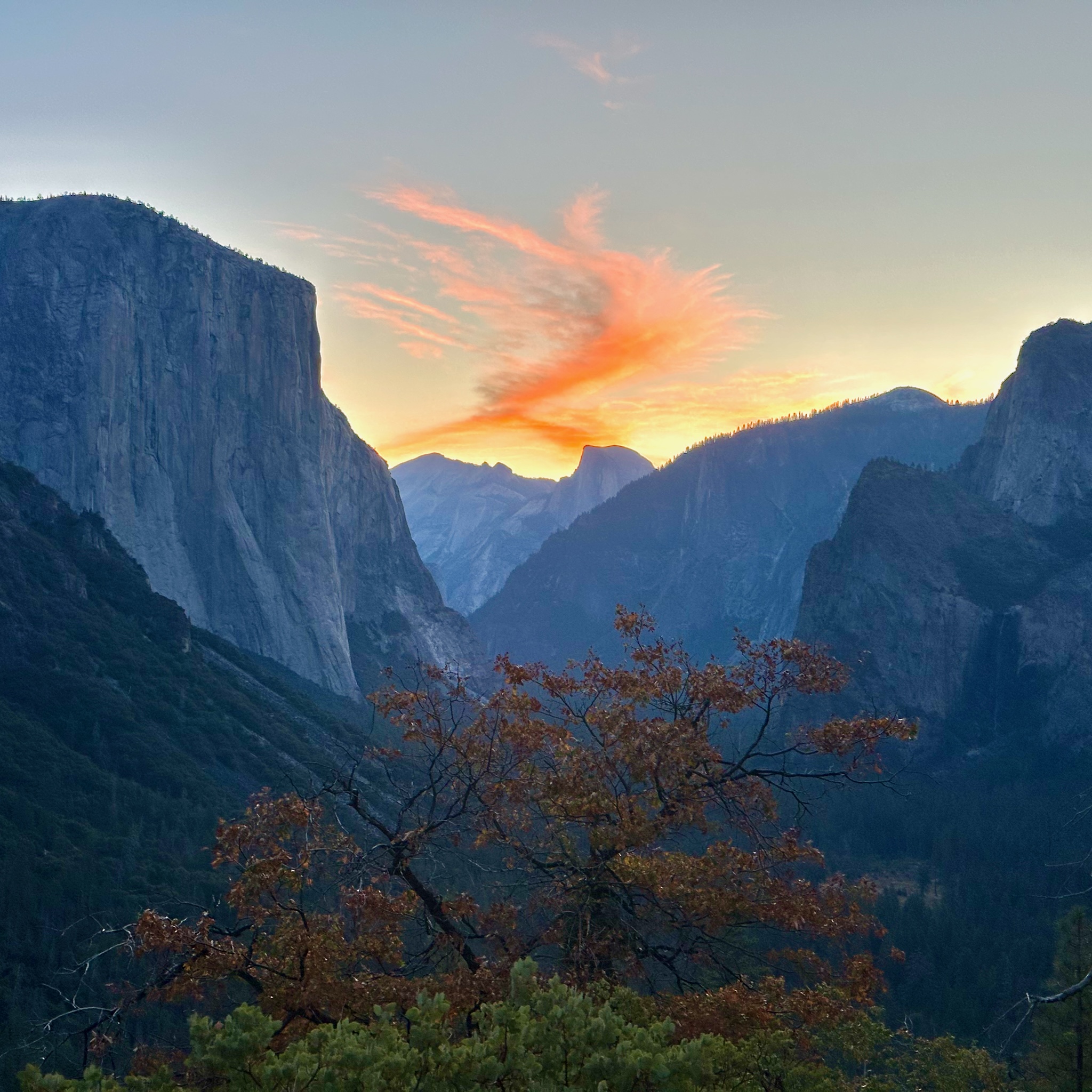
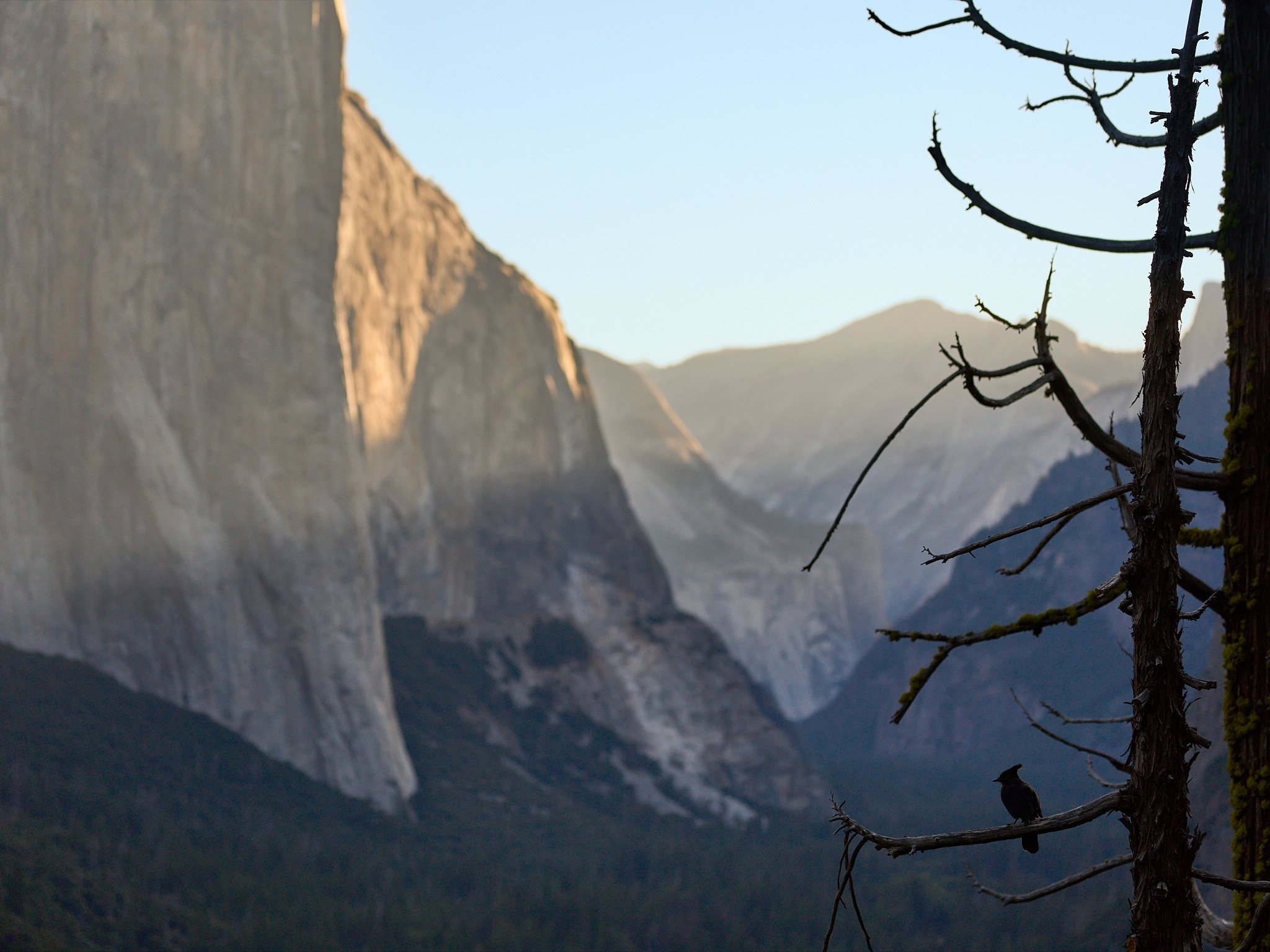
And a riff on the classic Tunnel View photo at sunrise, taken from a vantage point on the way up to Artist Point…
I’m not much of a landscape photographer, but if you spend enough time in Yosemite you’ll eventually manage to point your camera in the right direction and make a good landscape photo. Before I got too carried away, this photo of a “scenic dumpster” reminded me that you have to put a bit more thought into your compositions.
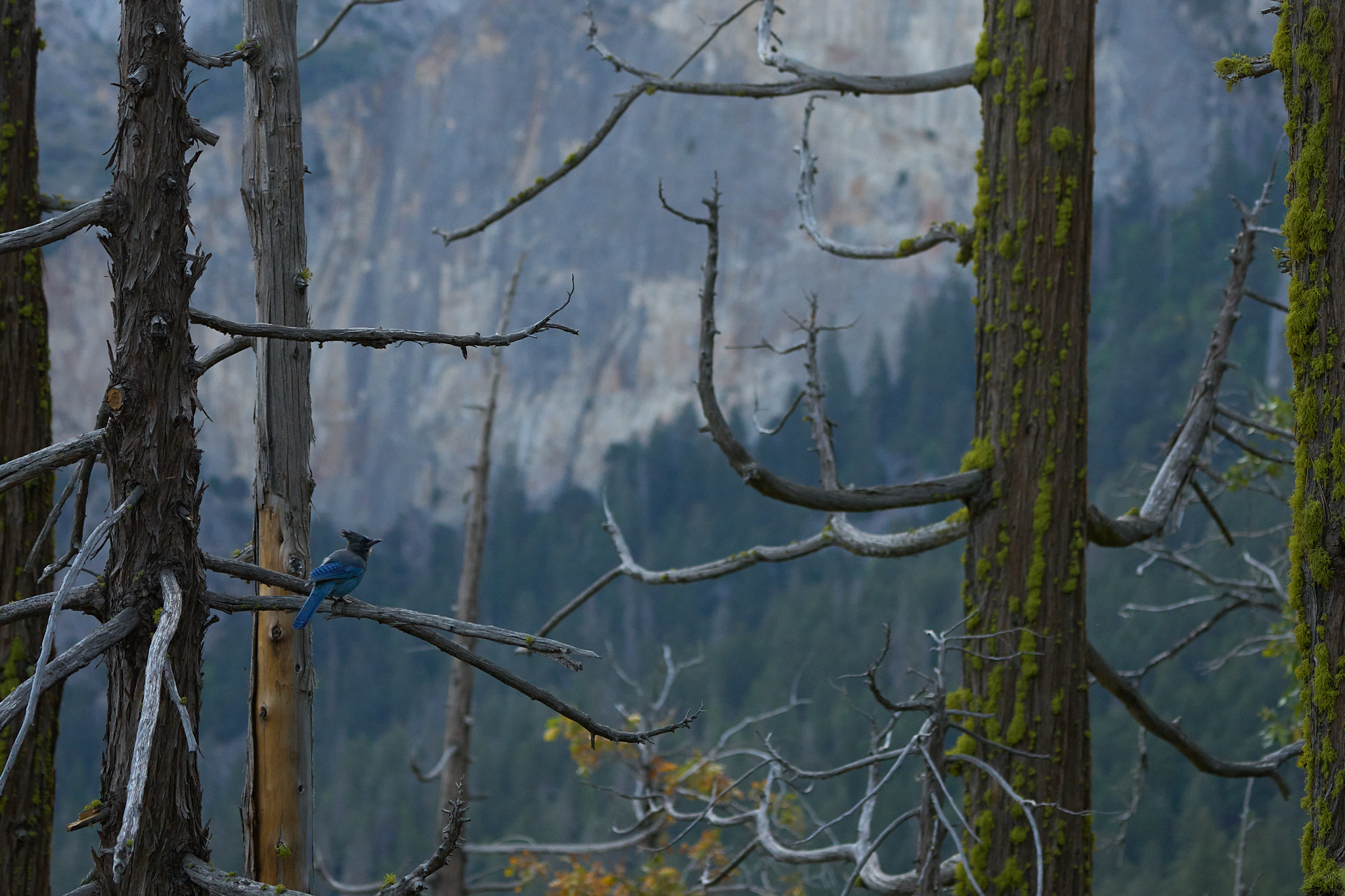
I didn’t see a lot of wildlife in the valley. I spotted a Black Bear running into the woods with a cub, a few mule deer, some Stellars Jays who didn’t fully cooperate with my plan to photograph them in front of Tunnel View, a very shy Belted Kingfisher, some hummingbirds, and that was about it.
After a couple of days at Curry Village, we packed up and drove to the east side of the park via Tioga Rd, and then onward to June Lake to set up our home base in the High Sierra.
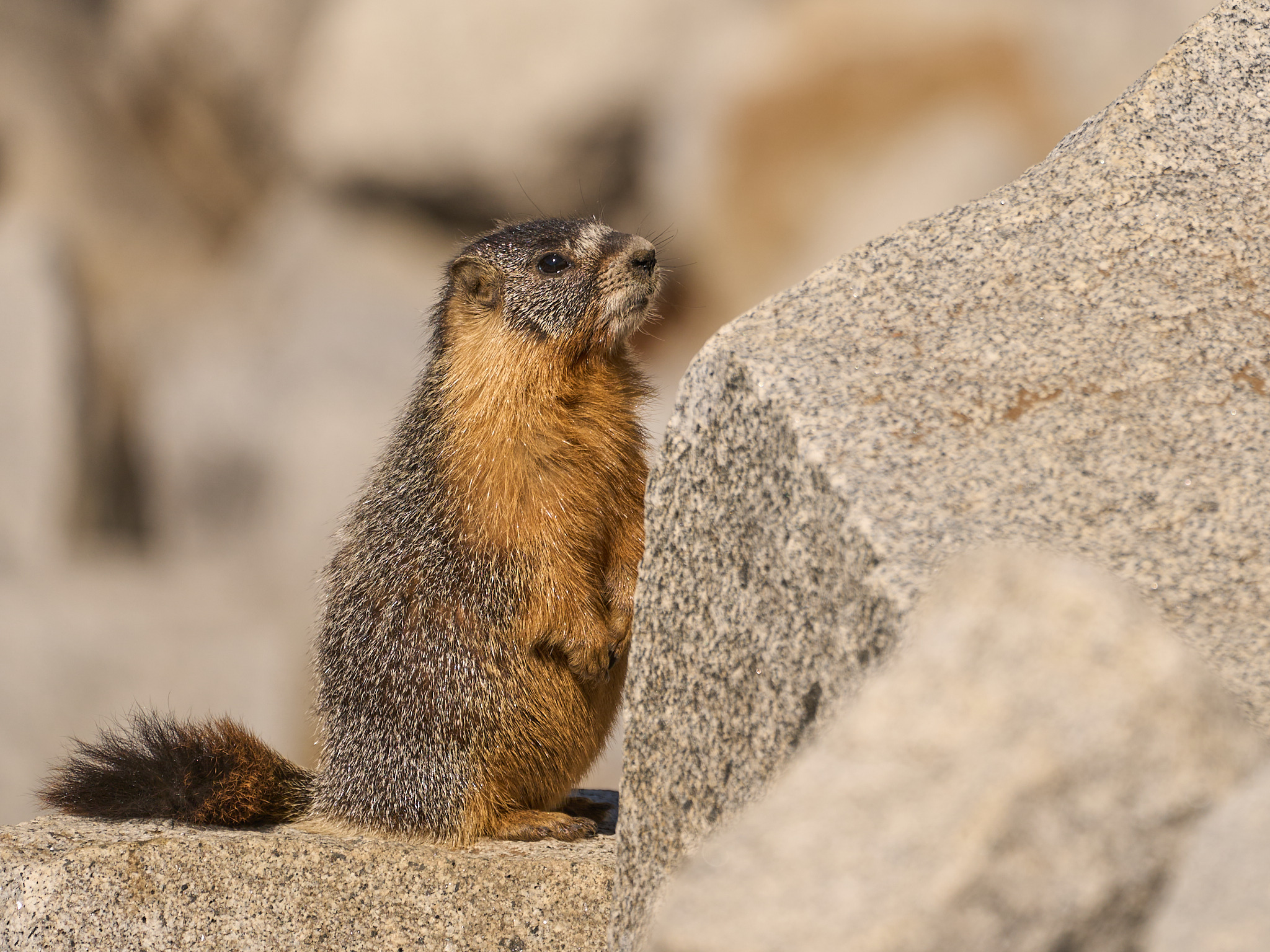
Along the way, we stopped at an overlook where I saw a Yellow-Bellied Marmot for the first time. I just got a quick snapshot, but I’ll have to spend some time with them the next time I’m in the Sierra.
As soon as we checked in in at June Lake, I grabbed my camera and set out for the pika spot. Alltrails described the hike as “moderately challenging” and suggested I’d need about 90 minutes to complete the round trip.
The hike absolutely kicked my butt. It took me 90 minutes just to make it through the first quarter, albeit the part with almost all the elevation gain. Starting at 10,000 ft and ascending 600 ft in a half mile (average grade 22%) was too much to ask for my first evening at high elevation. By the time I made it to the top, I was completely out of gas. I looked around for the pika for a bit, but I quickly realized I needed to descend soon. I was exhausted, sunset was near, and walking down a steep unfamiliar trail in the dark with legs that wanted to give up on me was a recipe for injury. So, I marked my location on the map and headed back down, determined to return the next day more acclimated to the altitude and with more time to make a gradual ascent.
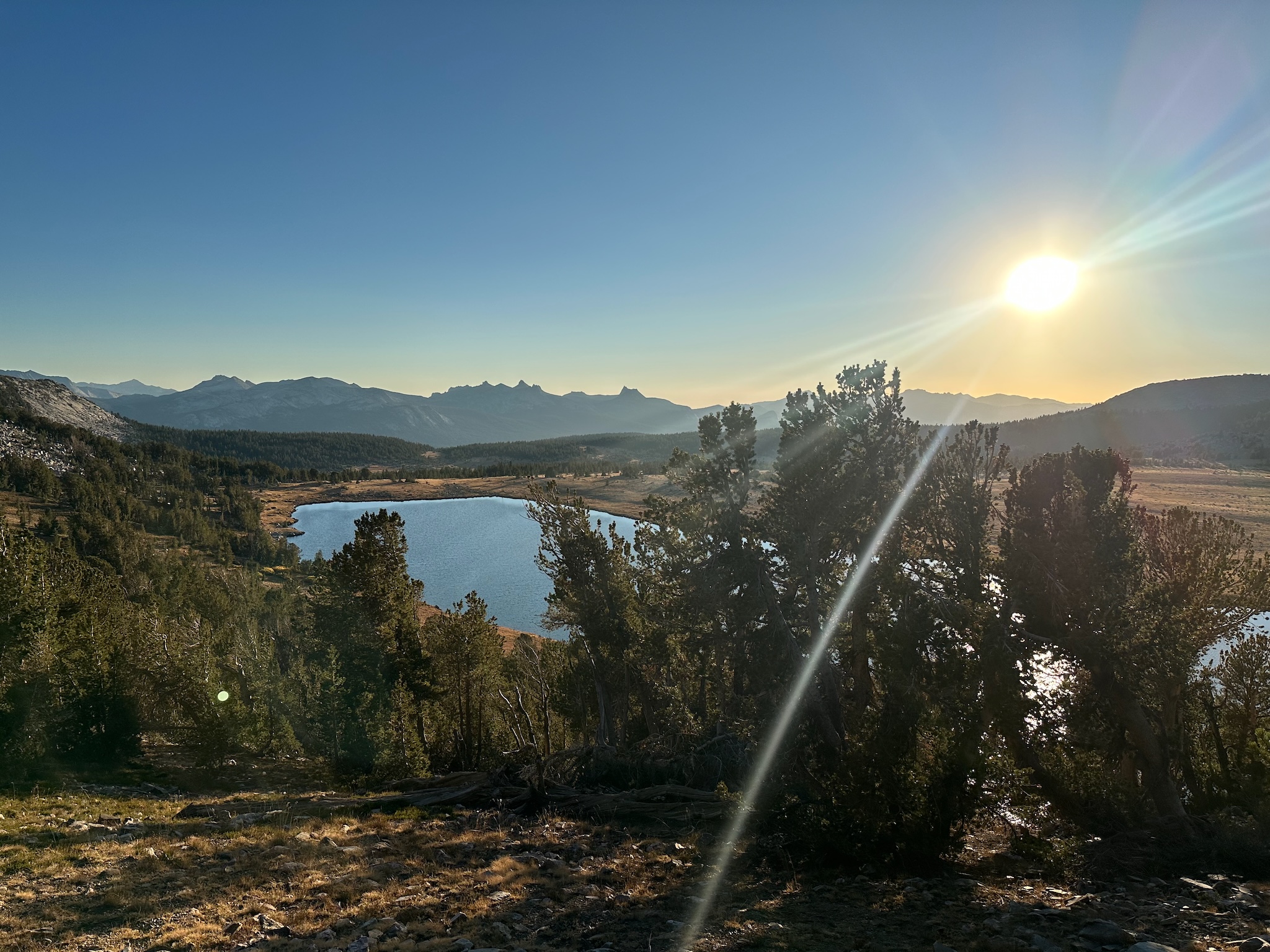
Before leaving, I got a serviceable iPhone shot of the lake. I also realized this wasn’t a great spot for the scenic pika photo I was after. With the way all the talus fields sloped, there wasn’t a good place to line up a pika in front of the landscape.
When I got back to the hotel, I found out I’d stopped about 200 yards from where most people spotted the pikas. I was so close when I turned around! It was still the right decision though; if I had pressed on to find the pikas and then stayed to photograph them, I’d have done the hike back in the dark, a very poor idea given the shape I was in.
That night wasn’t fun. I developed a splitting headache, which is an early sign of altitude sickness. My symptoms didn’t progress further, so I slept it off figuring that I’d already descended 2,000 ft from the trailhead to the hotel. But, when I woke up the next morning, I didn’t feel ready to do the hike again. So, I did some research and found a spot that looked likely for pikas where I could pretty much drive to their elevation and do a flat walk out to their habitat.
The new plan went much better. I drove to the trailhead, parked, walked 15 minutes, found some good pika habitat where the talus was mixed in with vegetation, and stopped to listen. Within a few minutes, I heard a pika call. This was a different call than I had heard during my research, consisting of a pair of descending notes instead of a single squeak, but it was clearly a pika.
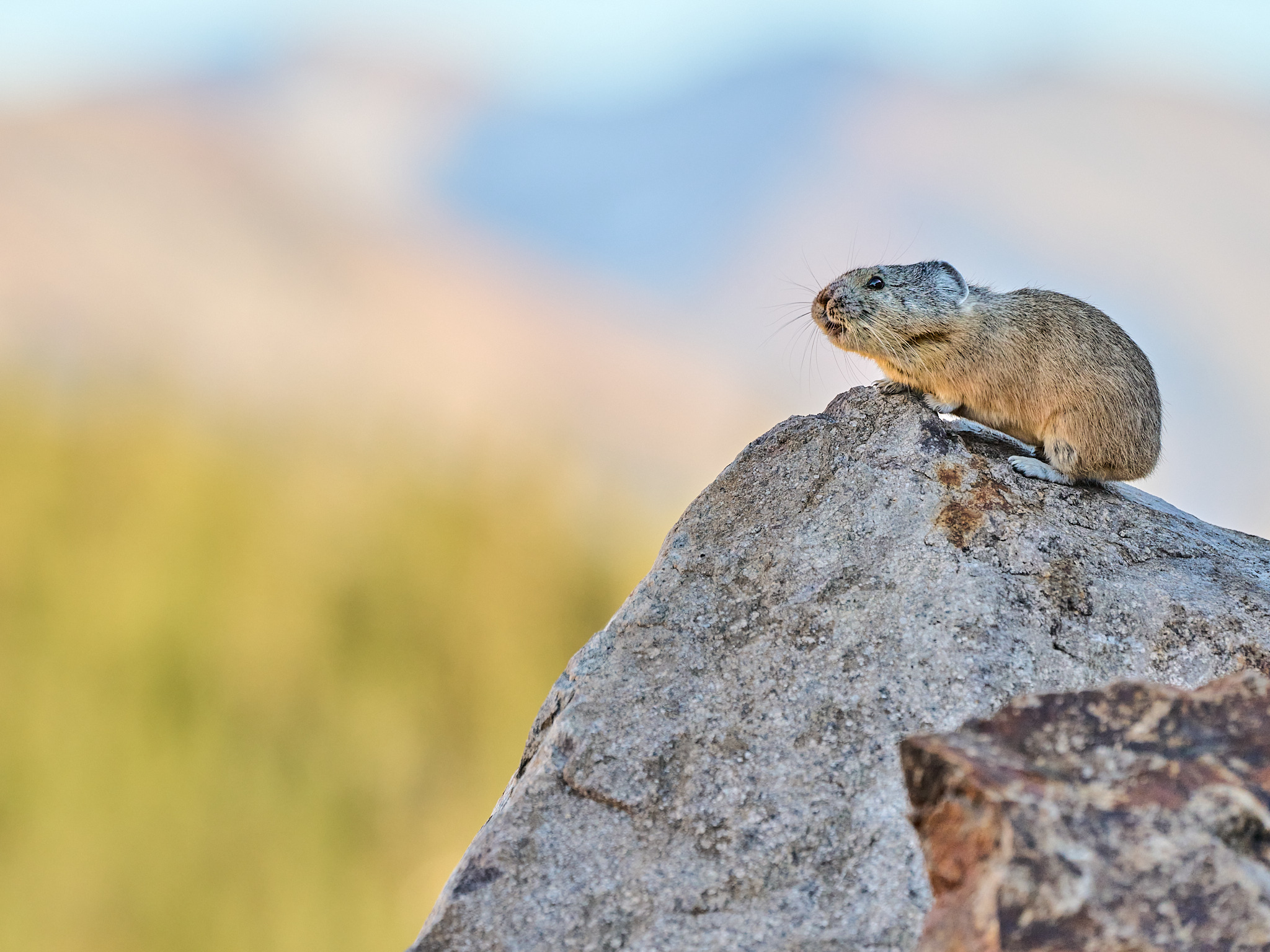
As I scanned the area looking for pikas, I took note of a prominent boulder on a small ridge. The boulder had a triangular profile and a great view of the surrounding mountains. If a pika were kind enough to perch on that boulder, I could line up exactly the shot I was after.
The first challenge was spotting a pika. A call would ring out every minute or so, but whenever I swiveled toward the source, I’d see nothing but rocks. This is pretty typical. Everyone I talked to said I would hear the pikas before I spotted them.
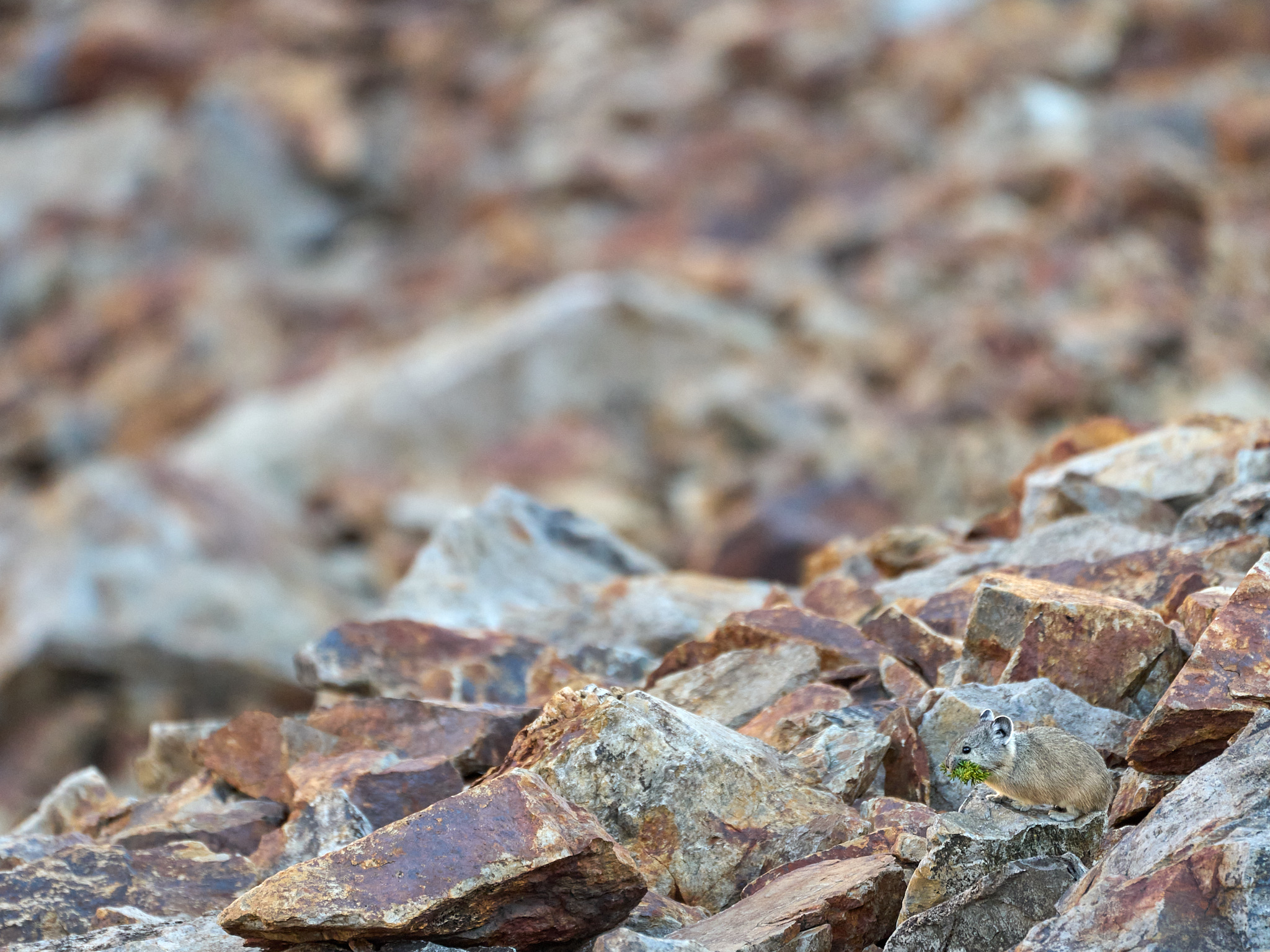
The calls seemed to be coming from up hill, so I scrambled up the talus slope, sat down, and waited for a pika to show itself. It took close to a half hour, but I eventually spotted movement nearby. My first pika sighting! The pika was carrying some freshly gathered Purple Mountain Heath to add to its hay pile.
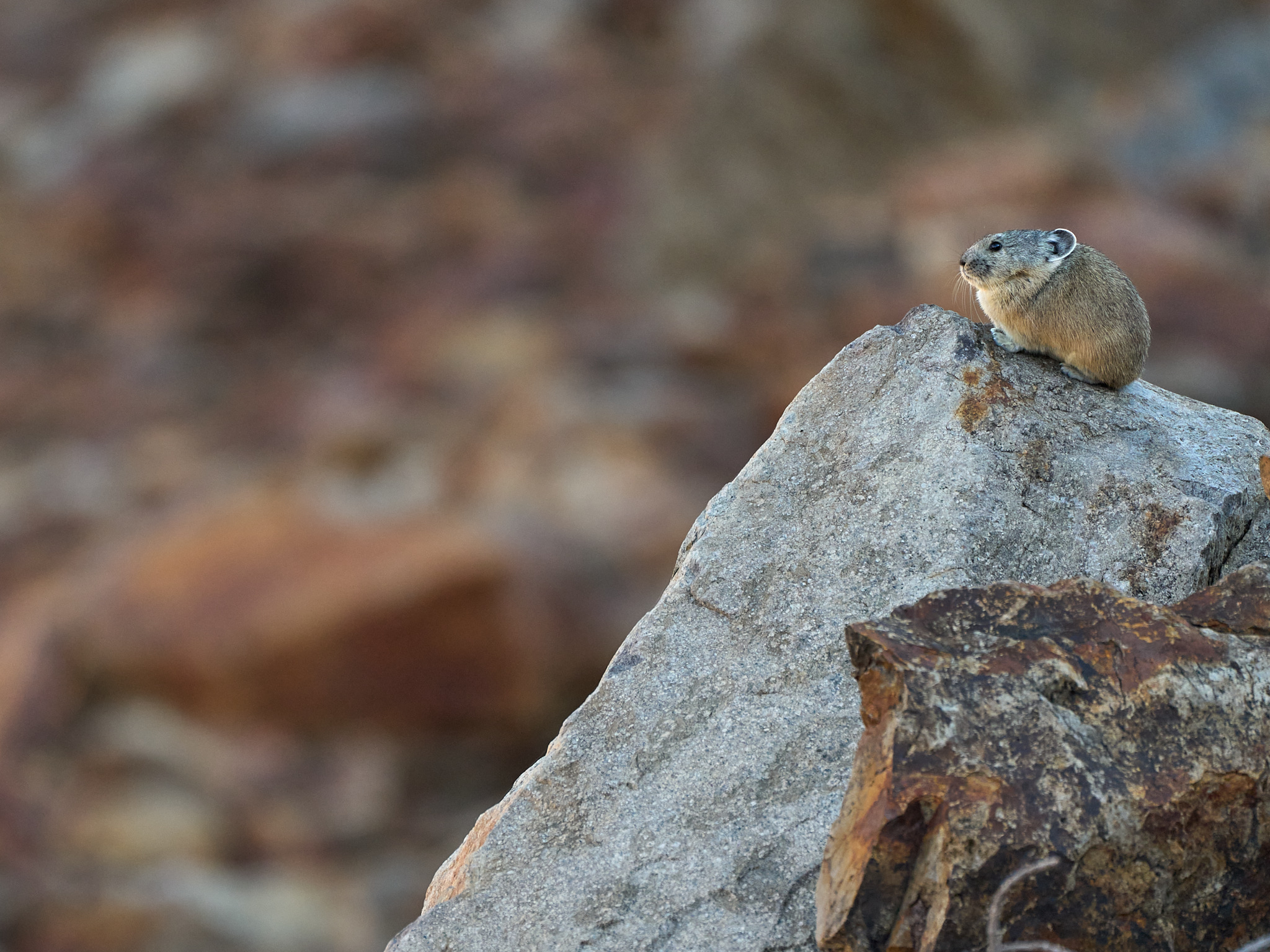
I watched in amazement as the pika made its way down the slope, heading right towards the boulder I had spotted earlier. After making a quick detour to deposit the harvest in its hay pile, the pika popped up on the prominent boulder!
Because I had climbed up higher when I first heard pikas upslope, I was no longer positioned to get the scenic shot I was after. My plan was to wait for the pika to make another foraging run, and then move into position while it was distracted.
After waiting for five minutes, it became clear the pika was settled in for a lengthy rest. So, I started a slow descent, making small moves down the slope with a couple minute pause between each move. I didn’t want to disturb the pika off that perfect perch. With each move I got a cleaner background behind the pika.
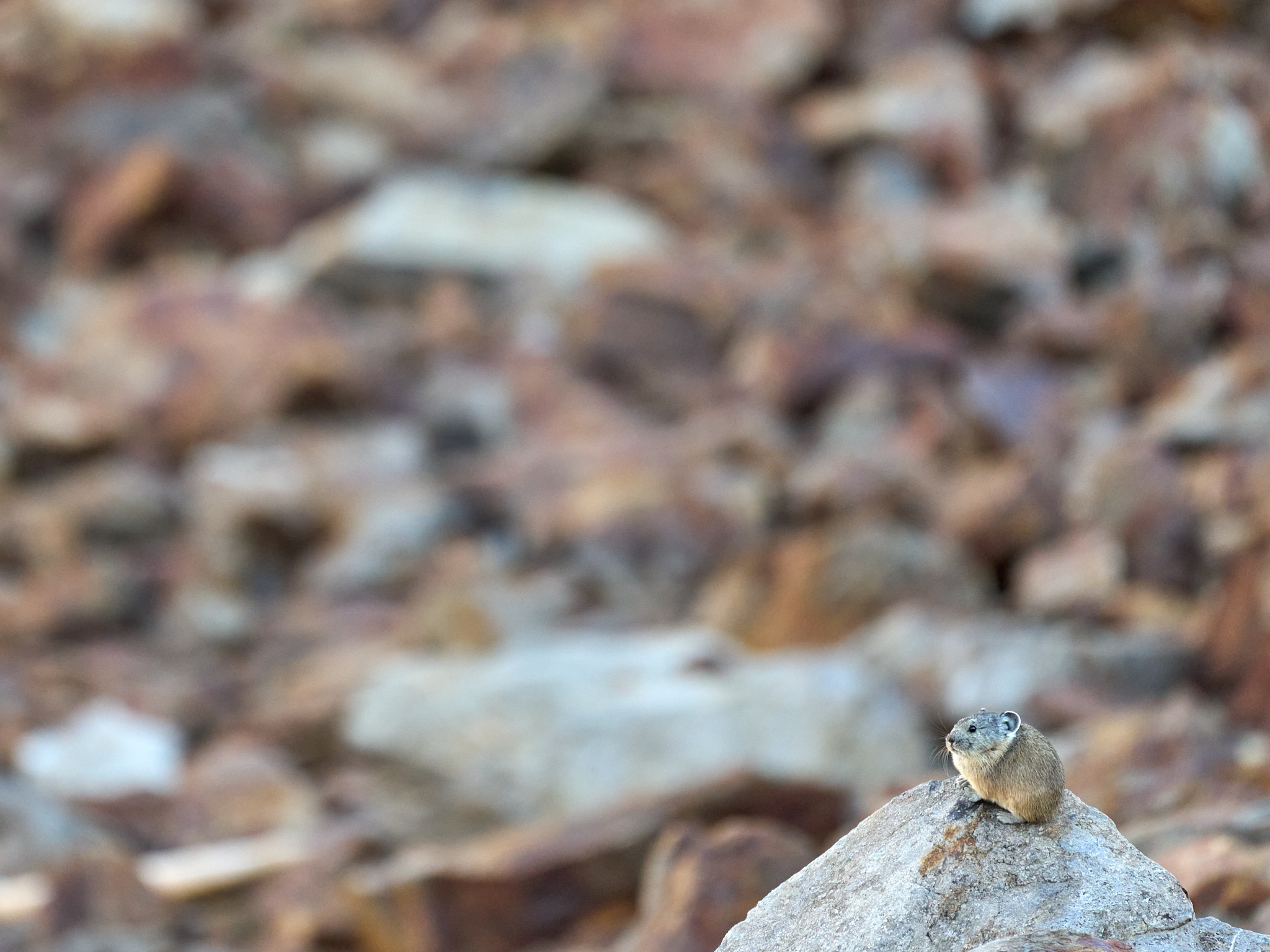
Just as I was finally easing into position for the scenic shot, the pika got spooked and disappeared into the talus. When it emerged a minute later, it returned to the ridge, but no longer on the prominent boulder. I was able to crouch down and line up the mountains in the distance, but the pika didn’t stand out from the rocks the way it had when it was on the boulder.
I waited an hour as the pika made a couple of forays towards me and back towards the ridge, but it never returned to the boulder. Finally, the sun set, and the pika disappeared into the talus for the night.
I made the short walk back to the car and a slightly hair-rising drive back down to 8,000 ft elevation after dark with mixed feelings. On the one hand, I’d succeeded at my goal of photographing an American Pika in a scenic setting. On the other hand, I knew an even better shot was possible. Fortunately, I had one more day to go in the Sierra.
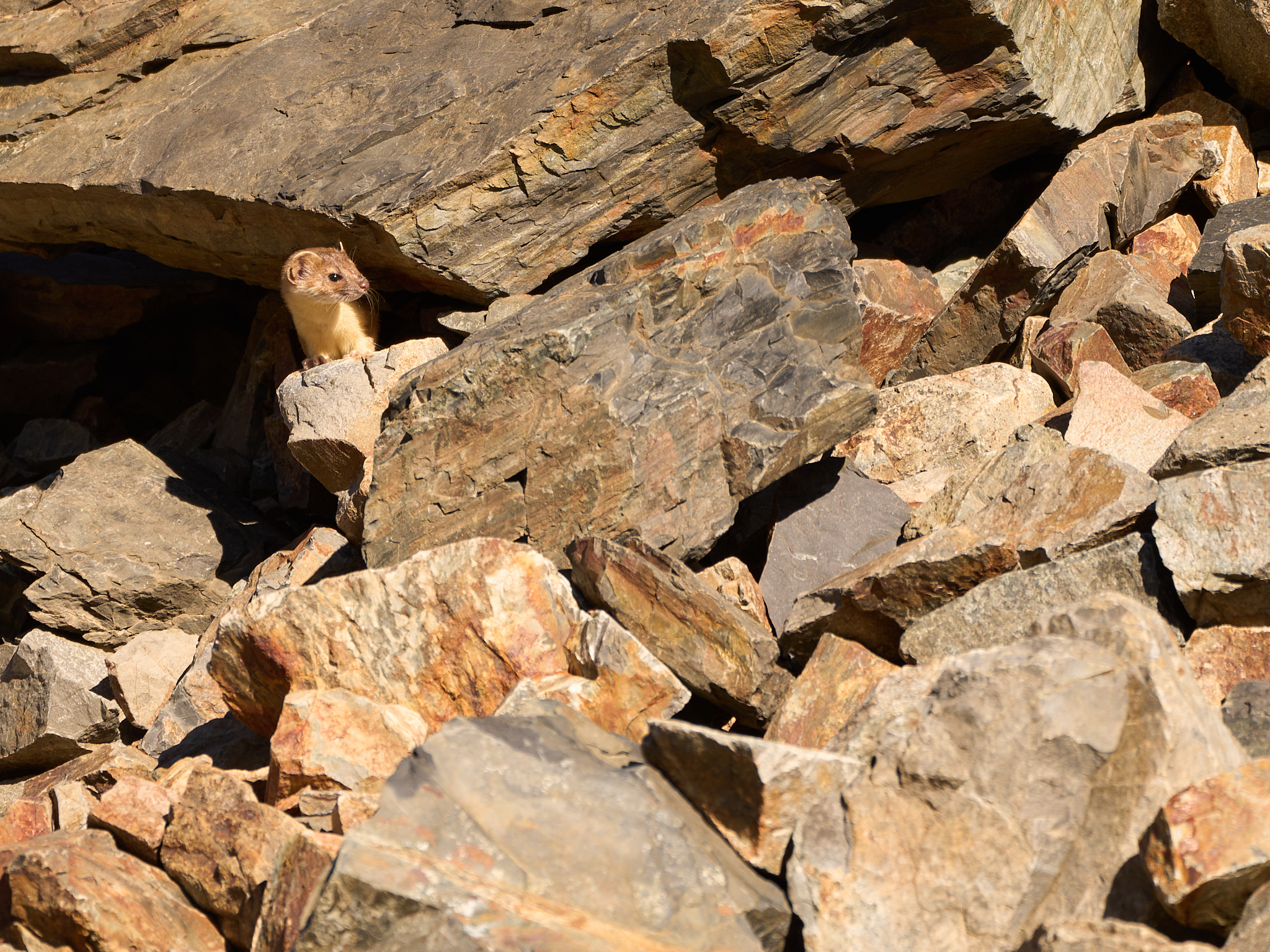
The next day started with an exploration of a different lake. I heard pikas, but I didn’t see them. This was probably due to the presence of a fellow pika enthusiast Long-Tailed Weasel. Pika colonies are regular hunting grounds for weasels.
In the evening, I headed back to the spot with the scenic boulder. It all happened right on script. With the assistance of photos I’d taken the previous evening, I found the spot where I’d lined up the shot, sat, waited 30 minutes, and was greeted by my pika friend emerging from the talus.
I waited patiently, and 15 minutes later the pika returned to the boulder. I wasn’t surprised. That boulder was the first place the pika perched the previous time I saw it. With a commanding view of the talus field, it’s a natural place from which to watch for predators or encroaching neighbors while enjoying a crisp early fall evening.
I had already figured out the composition I wanted, with the pika’s boulder echoing a distant mountain peak. As soon as the pika perched, I zoomed out, focused, framed, and got the shot I’d been visualizing for months.