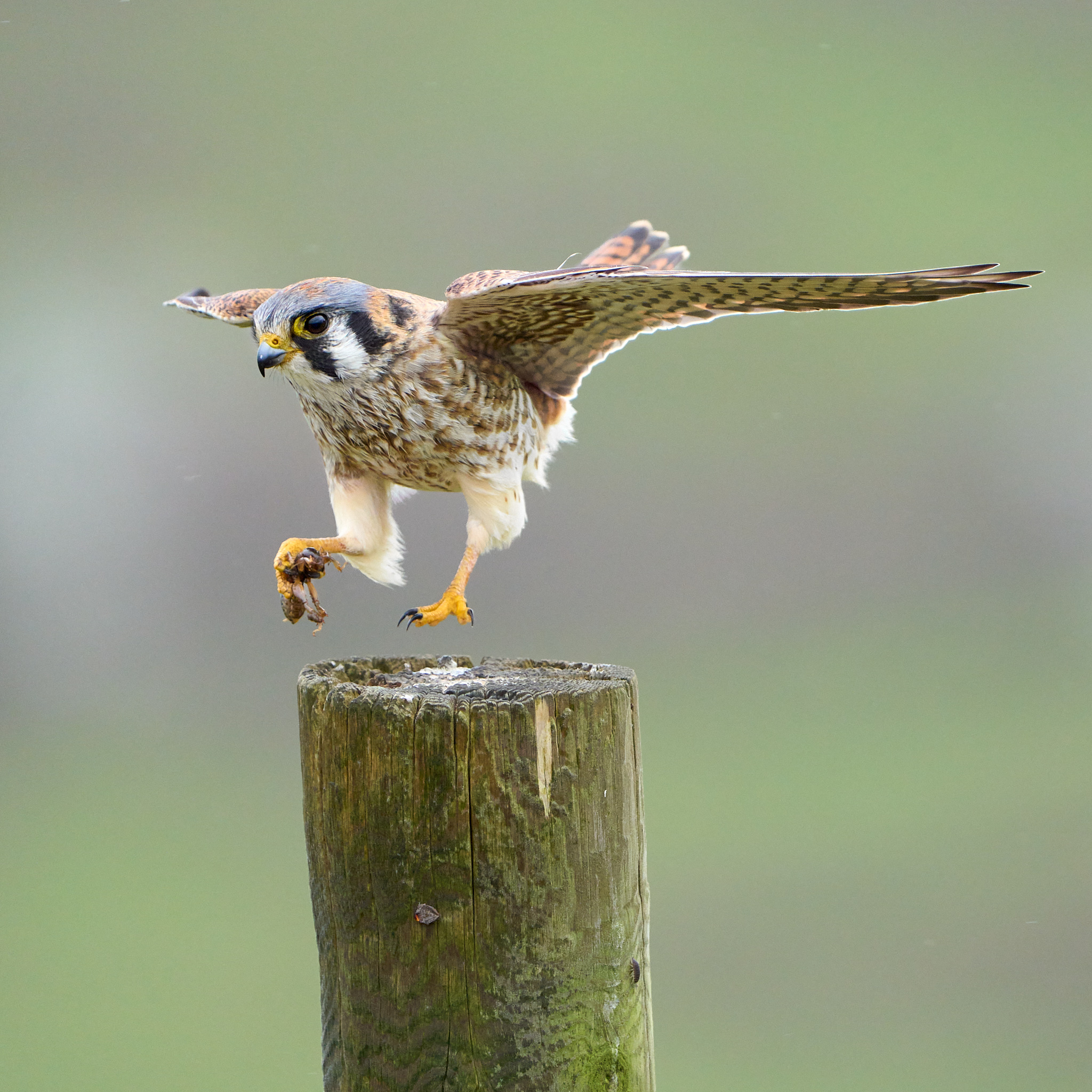
An American Kestrel comes in for landing clutching a jerusalem cricket.

What does it mean when a Coyote yawns? Sometimes it means the Coyote is tired, or waking up, just like with humans. That’ll usually be accompanied by stretching. I’ve seen young Coyotes yawn as part of a greeting for their mother. In that case, there was also a lot of smiling.
Coyotes will also yawn when stressed, or as a sort of pacifying gesture to another, potentially aggressive, canine. It doesn’t mean submission. It’s more “let’s live and let live; there’s nothing worth fighting about here.” There wasn’t any smiling or stretching going on and this Coyote was in an urban park with lots of dogs being walked, so it was probably the latter.
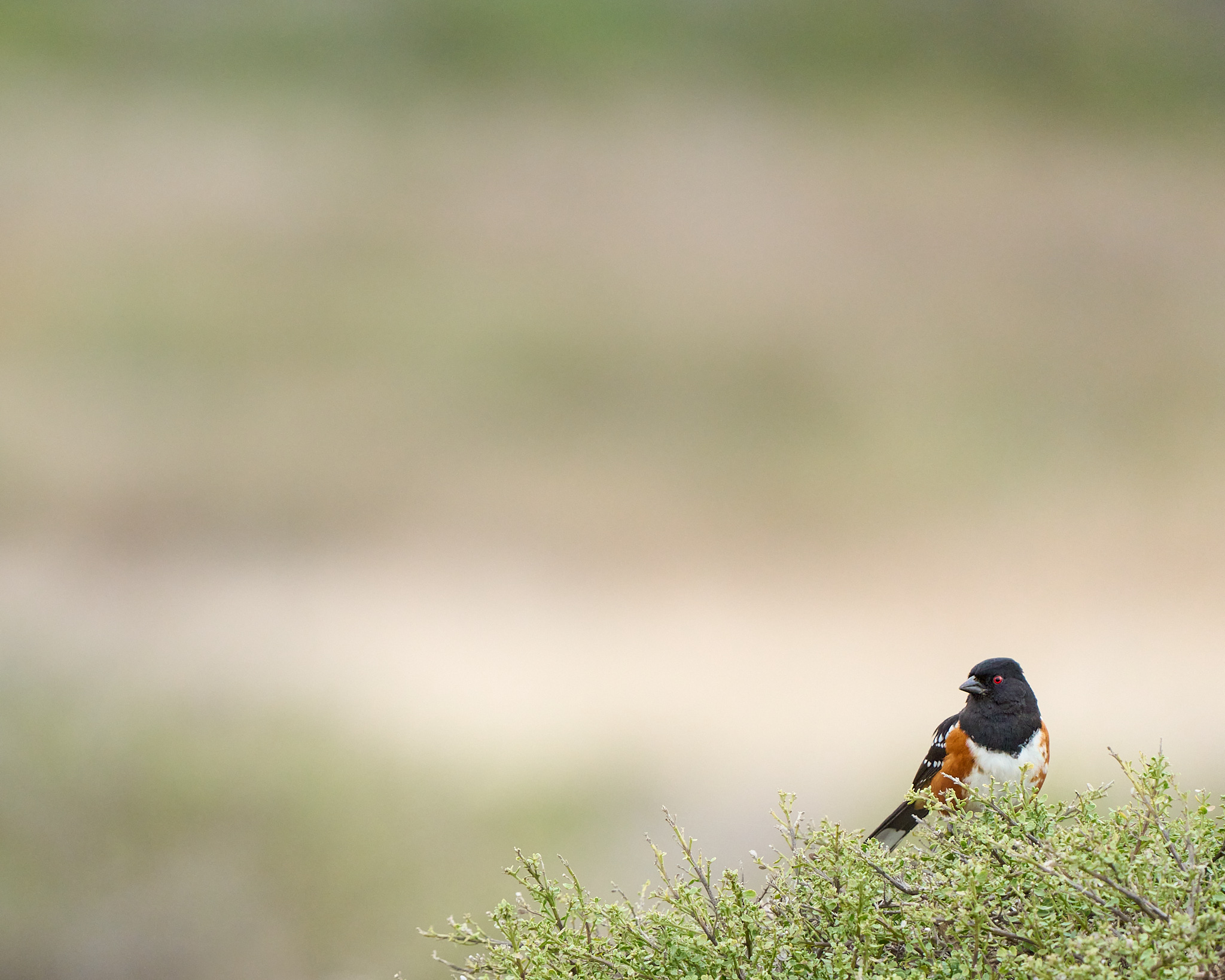
A Spotted Towhee perches on a Coyote Brush at Abbotts Lagoon. It’s always such a pleasure to see one of these skulkers out in the open.
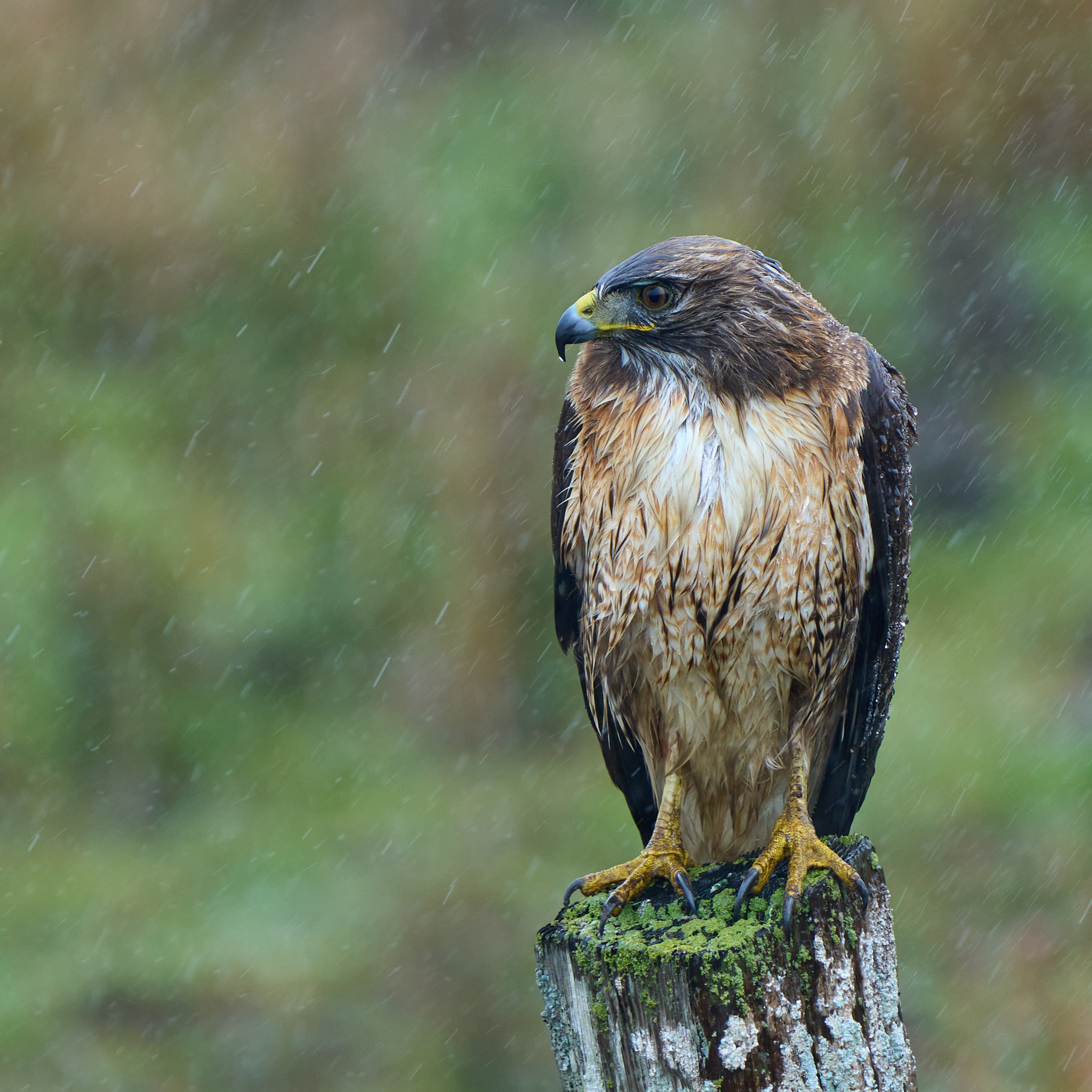
Happy one year anniversary of finding an epically soaked Red-Tailed Hawk to all who celebrate. A small but very select group, no doubt.
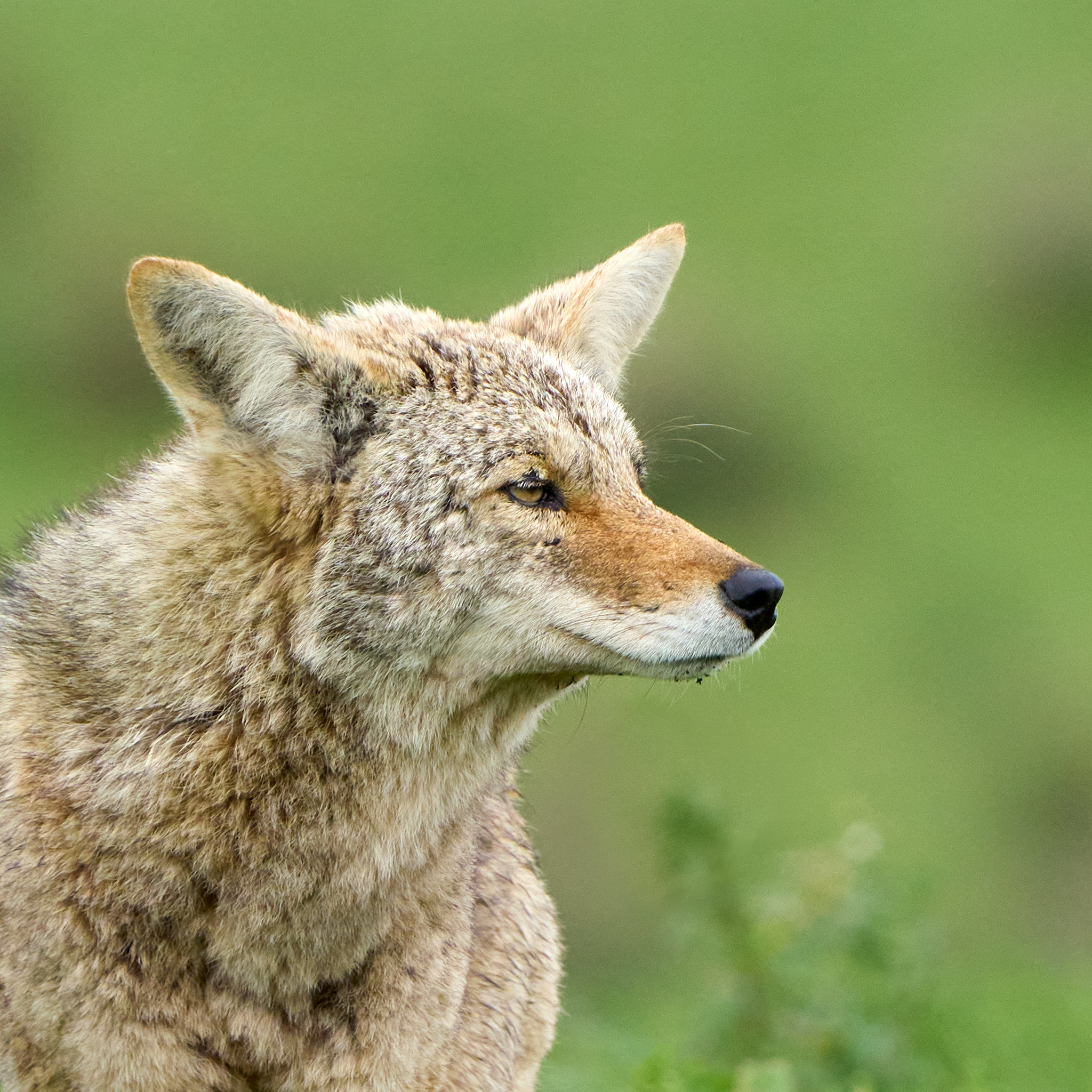
Have you ever seen a Coyote’s eyelashes before? It was very windy and this fellow was walking straight into the wind as it headed for shelter to ride out an incoming storm. Squinting into the wind, the Coyote revealed its delicate white eyelashes for my camera.
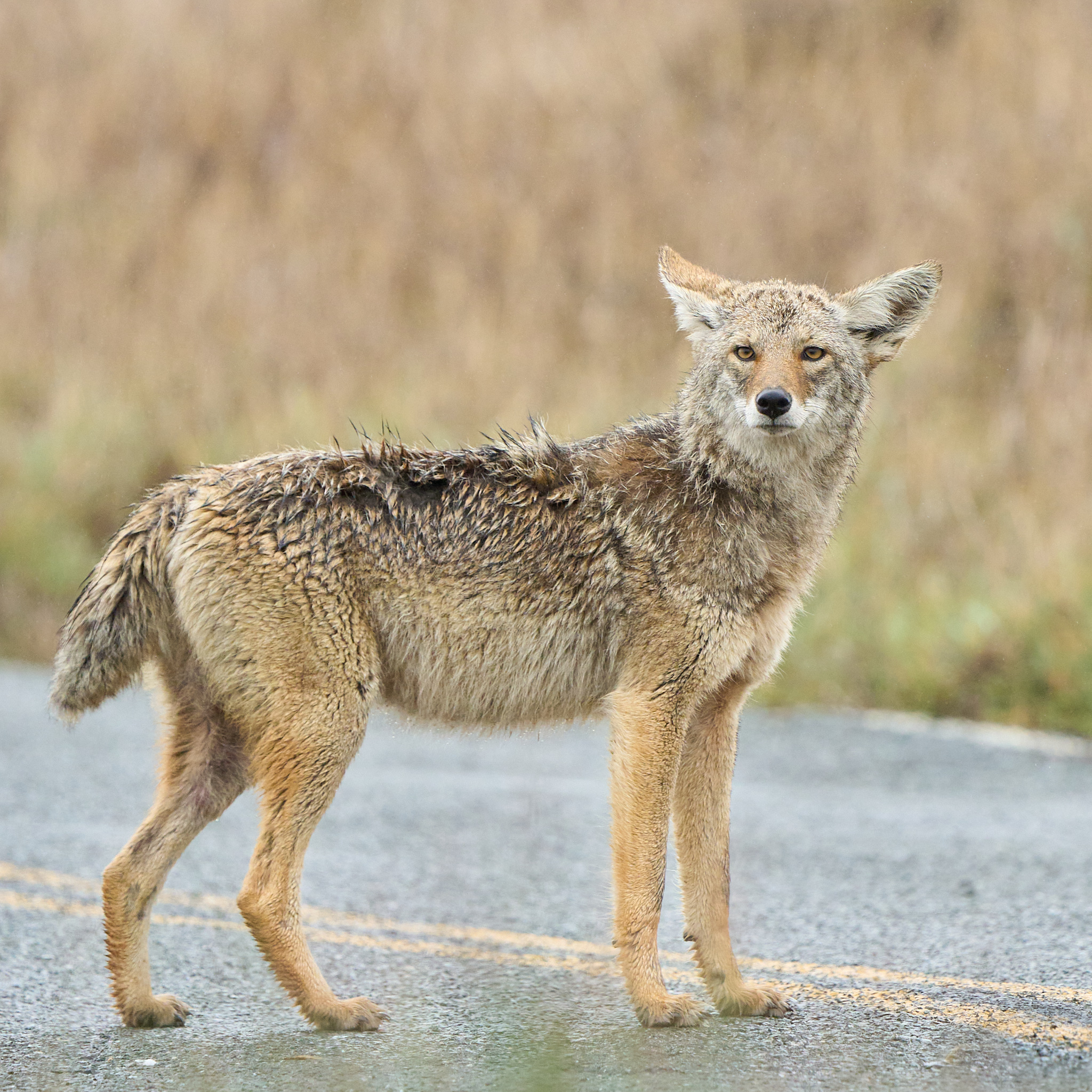
I always wonder what the story is when I see an animal that looks different from the rest. This Coyote is obviously missing the long and luxurious tail its species usually sports.
Sometimes a shorter tail is a sign of mange, but you can usually see the core of the tail hanging down below the furry part in that case. Did it lose part of its tail in a fight? Coyotes have been known to survive losing a whole leg, so a tail being mutilated would be survivable. Maybe the tail is an uncommon birth defect.
However it happened, the loss of the tail didn’t appear to affect the Coyote much. It trotted onto a side road when I approached in my car, paused to look at me quizzically, and then squatted in some underbrush to give me the ole Coyote salute.
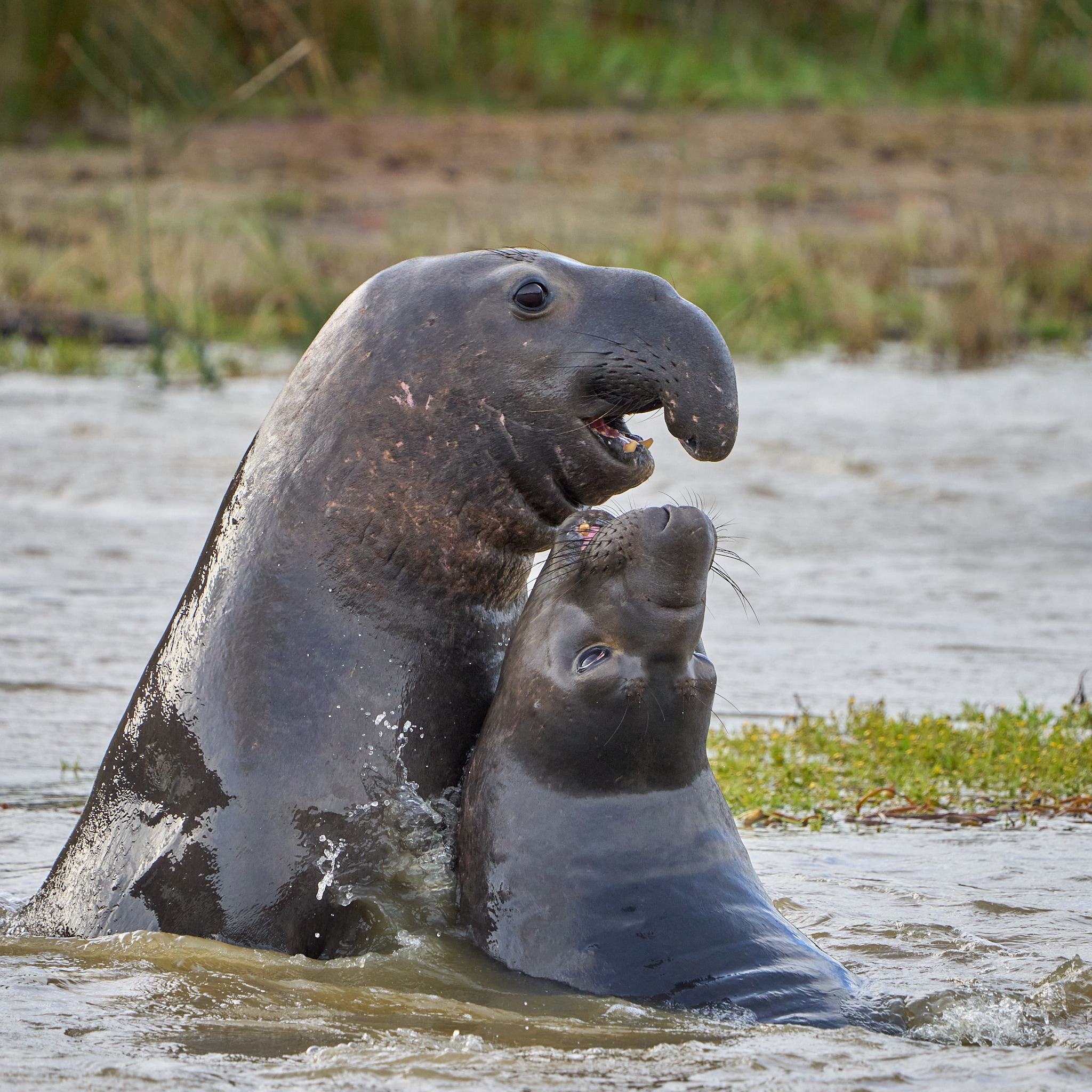
A couple of subadults engage in a vigorous game of Elephant Seal water polo.
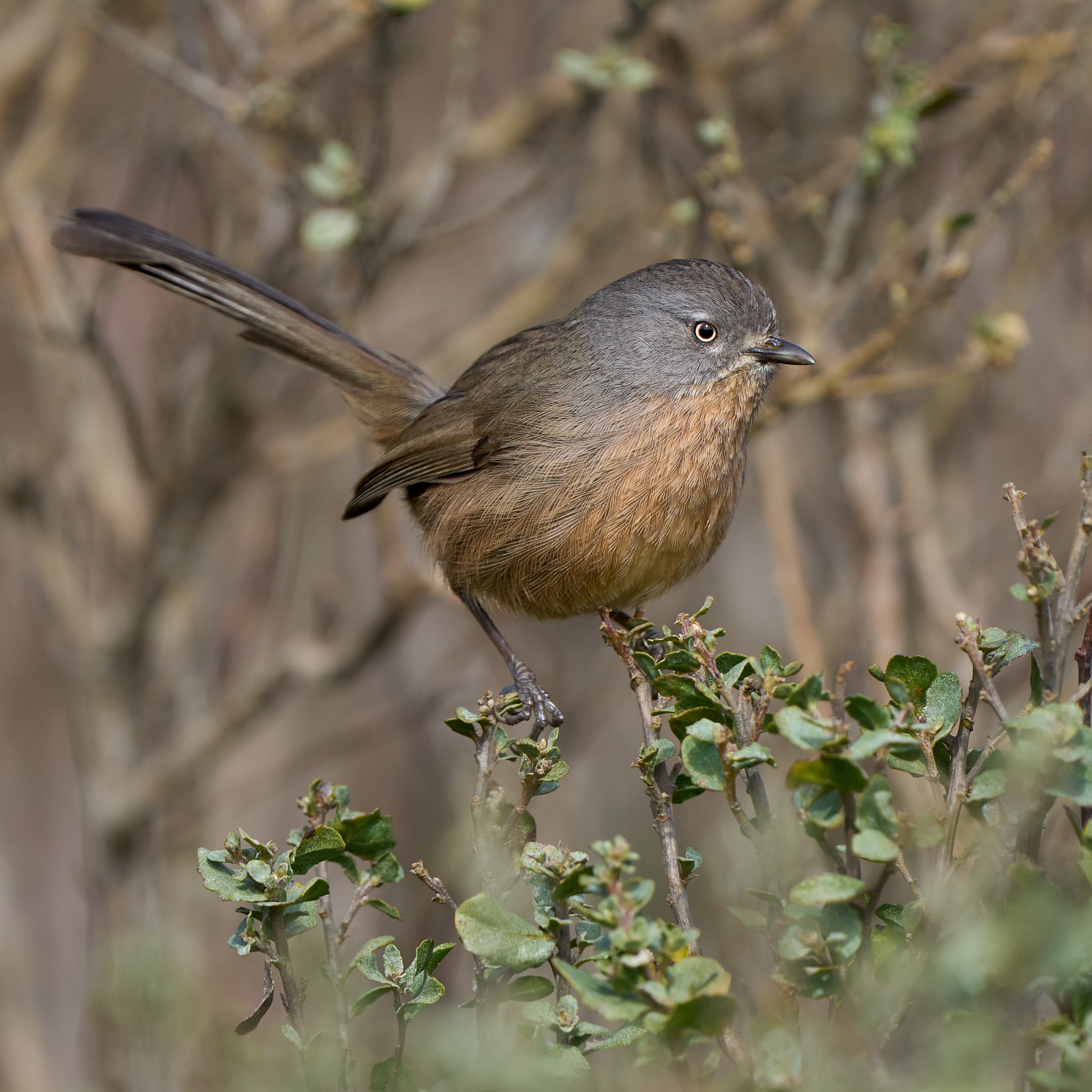
I usually prefer my birds photos to be less branchy, but this is the best shot I’ve yet to manage of a Wrentit, so you get to deal with a branchy photo.
Wrentits are kind of fascinating if you’re into taxonomy. Their name doesn’t reflect any relationship to wrens or tits. It’s pretty much ornithologists throwing up their hands in despair at classifying them. They’ve recently been classified into the the family Paradoxornithidae, which is Latin for “we don’t know WTF is going on with these birds, but they’re all genetically related.” The family’s common name Parrotbills is yet another taxonomic cry of despair.
Wrentits are only found on the west coast of North American, and they’re the only members of Paradoxornithidae found outside Asia.

