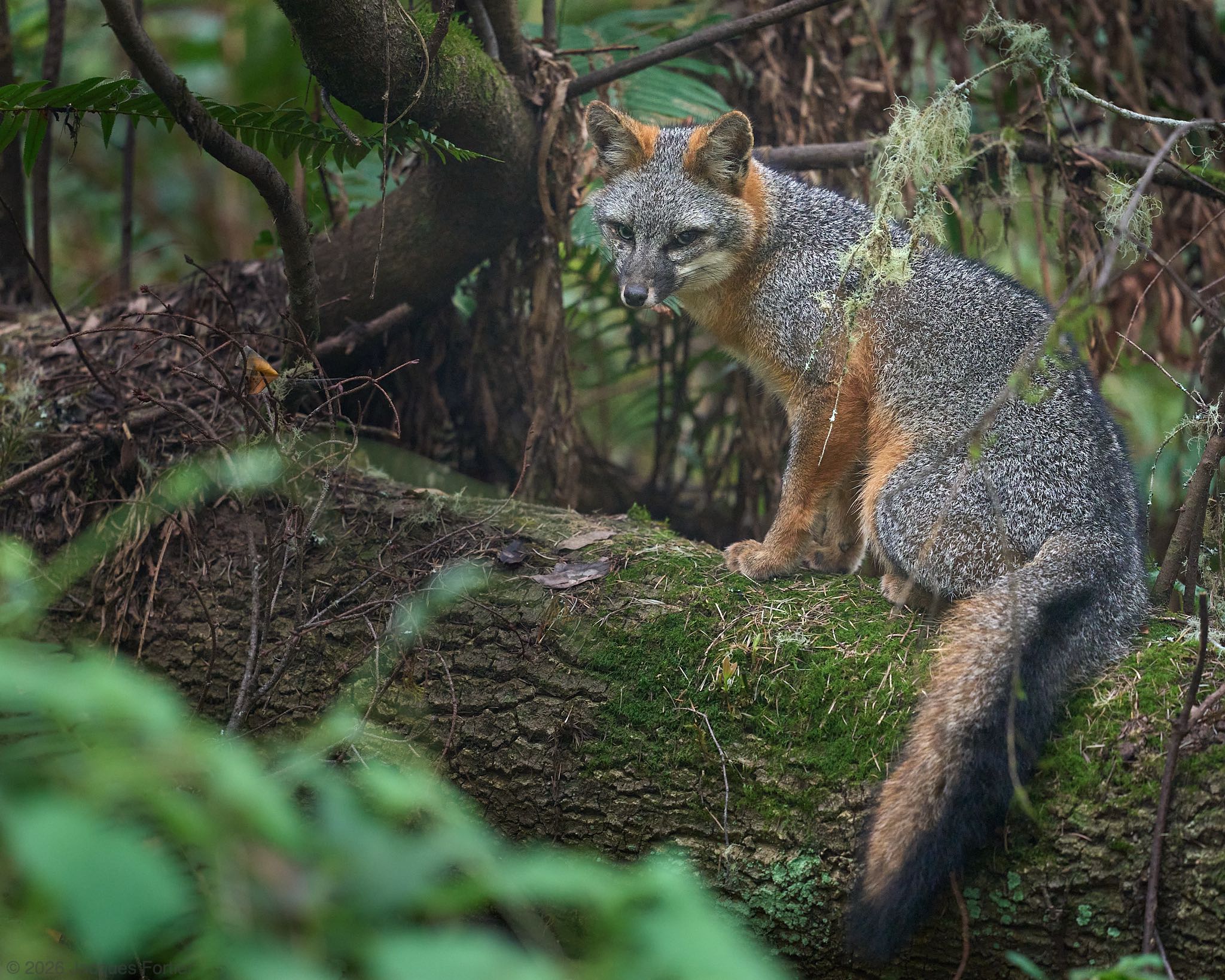
My big wildlife trip for this year centered around a week-long Patagonian Puma photography tour. Given the length of the trip, I wanted to spend some extra time in Chile. Just getting to Santiago from San Francisco is a 17 hour trip, with the flight from Santiago to Patagonia taking another 3 hours.
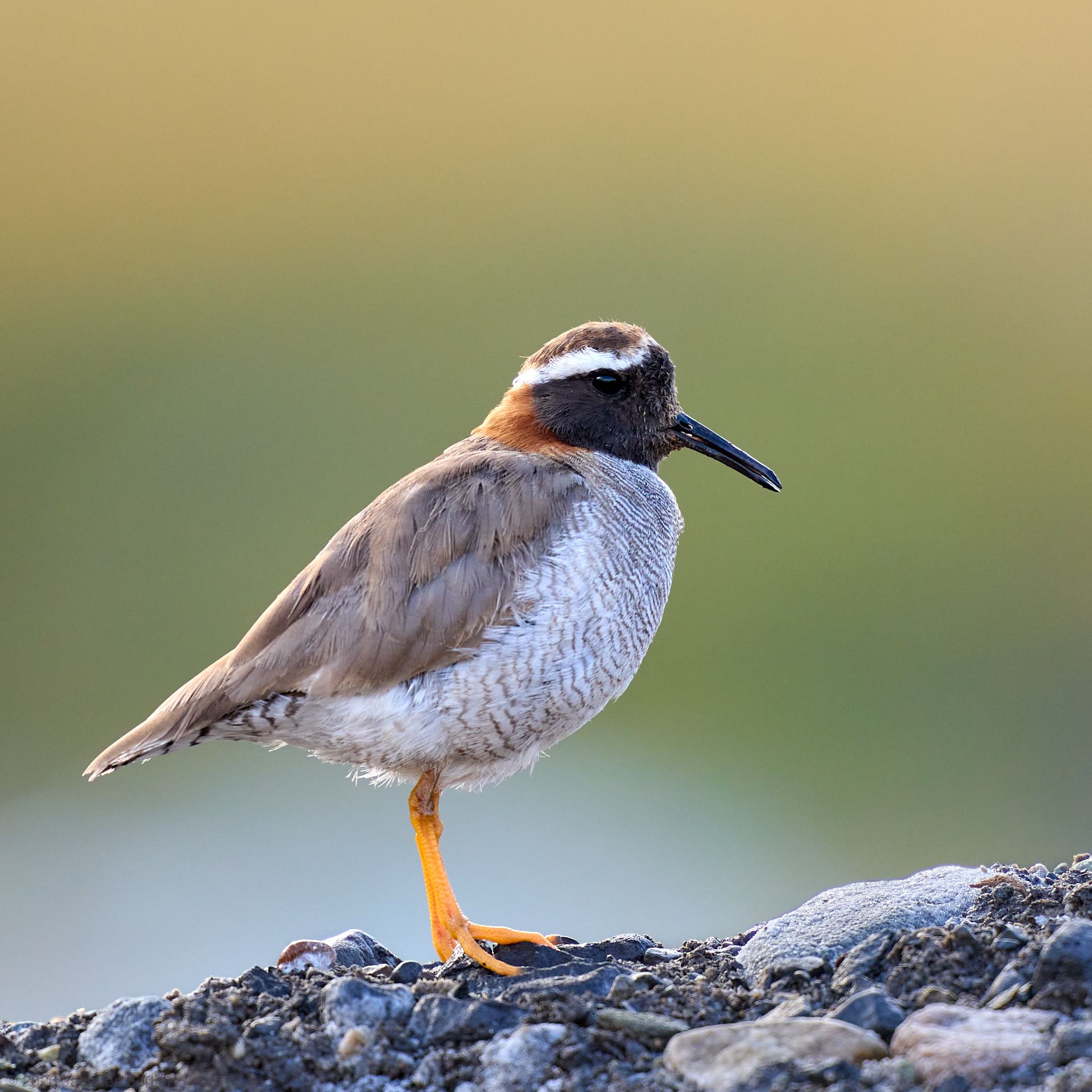
As I researched potential options Patagonia and the Santiago region, I learned about a remarkable bird I’d never heard of before: the Diademed Sandpiper-Plover. The more I learned, the more I was fascinated. These striking shorebirds live high up in the Andes. One doesn’t usually associate shorebirds with the mountains, but they’ve adapted to specialize in alpine glacier-fed wetlands such as vegas and bofedales. Relatively little is known about them. For example, only in 2024 a study revealed that some populations barely migrate. When their breeding habitat gets covered in snow, they move to nearby hot springs that stay snow-free all year.
Not only are Diademed Sandpiper-Plovers (let’s just call them Diademeds for short) stunning birds, the glacier-carved valleys they inhabit are beautiful in their own right. Not to mention, there are great backpacking and hiking opportunities in the same areas. I quickly stopped considering other options and focused the non-Puma half of my trip on the Diademed.
As I researched this bird, I found that there weren’t a ton of photos showing off their alpine habitat. Pretty much every photo I found was a portrait. This seemed like a real shame, because from what I could tell it lived in some grand and truly unique habitats. I’d never seen a high alpine wetland before. Since my photographic style a bit towards smaller in frame environment shots, this seemed like a great opportunity for me to contribute something new to the world of bird photography: an environmental shot of a Diademed Sandpiper-Plover.
My research identified three reliable spots for the Diademed near Santiago: Valle del Yeso (the Yeso Valley) above Embalse del Yeso (Yeso Reservoir), Piedra Numerada, and the vegas of Rio Olivares. I made a plan to visit all three over the course of my trip.
Valle del Yeso Logistics
Valle del Yeso is the easiest to reach. You can drive right to it. To make the most of my time, I booked a day tour through Albatross Birding. I often like to hire a guide the first time I go to a new place or photograph a new subject. I can probably figure things out on my own, but for a small fraction of the overall cost of my trip, a guide can orient me, give me tips on wildlife habitat and behavior, and impart a wealth of local and natural history knowledge. I requested a guide experienced in photography, and Albatross delivered, connecting me with Jean Paul de la Harpe, a very accomplished Chilean wildlife photographer.
After arriving in Santiago, I rented a car and drove up to my AirBnB in the commune of San Jose de Maipo. Since I was spending multiple days above 10k feet, I wanted to spend the night at at least 4000 ft. I made a quick lunch stop at Restaurant Inesita where my terrible Spanish scored me some lamb Cazuela and a Churrasco sandwich to go. That’s where I learned that in Chile, a sandwich “a la Italiana” includes avocado, a generous heap of mayo, and tomato to make the colors of the Italian flag. After lunch, I checked in to my AirBnB (simple, cozy, and with a very friendly and helpful host), and then drove up to the Embalse el Yeso area to quickly scout things out.
While this is the easiest place to find the Diademed, the drive isn’t for the faint of heart. First, you need to ignore the signs telling you that you can only drive up the mountain in the morning. They aren’t enforced, and nobody pays them any mind. The road up to the reservoir isn’t too bad, but it is steep and very winding in places.
Once you get to the reservoir itself, things get more exciting. The road is perched on the side of a steep glacial valley. In most places, it’s just wide enough for a single car. There are small sections where two cars can squeeze past each other. A narrow berm that varies between 6″ and 12″ high is all that protects you from a fall to your death in the reservoir. On the other side, the rock face is at times vertical. This is all made even more exciting by the 10-12 blind corners, most of which are in the single lane sections. I’m assured that this is a relatively high quality mountain road by Chilean standards. Fortunately, nobody was driving very fast and everyone was courteous about navigating the single lane areas.
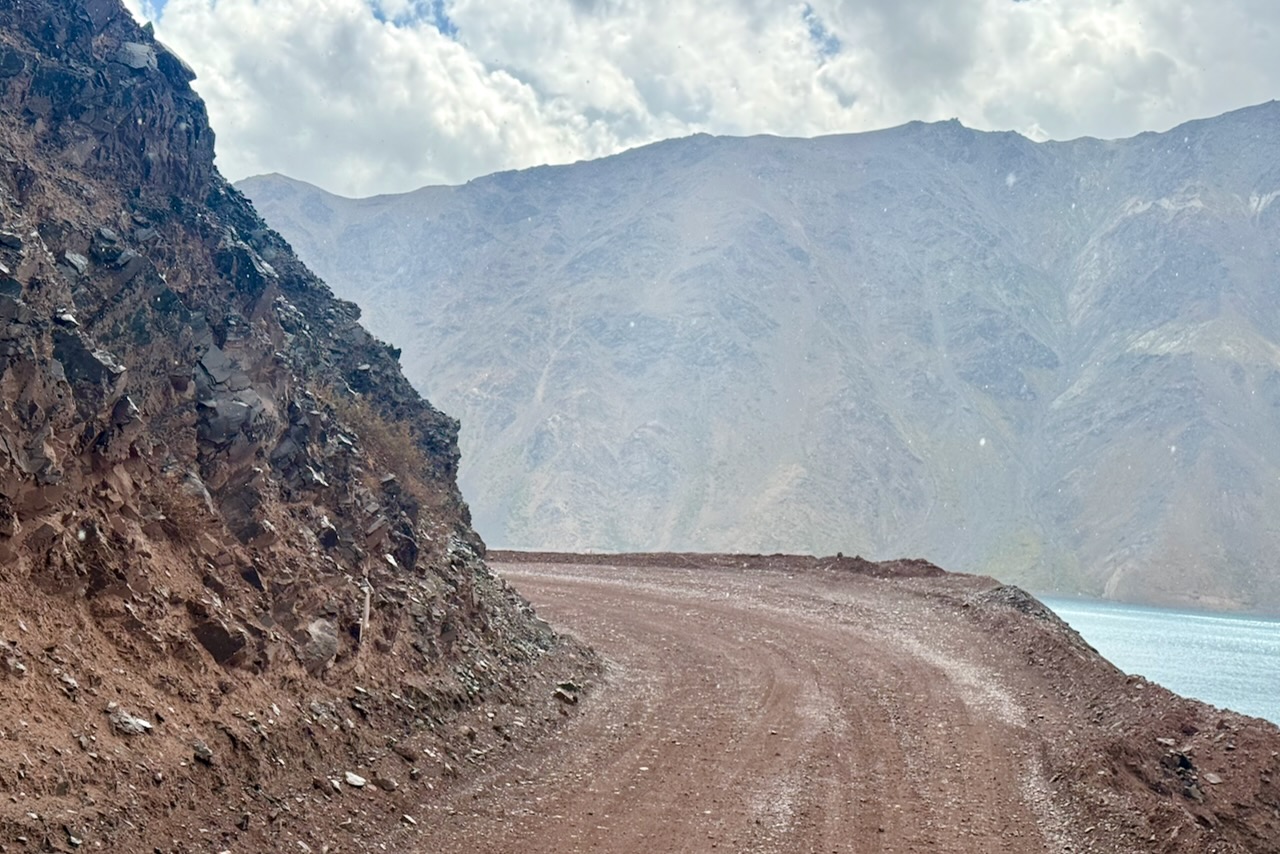
Once you get past the reservoir, you’re still driving on dirt or gravel roads but without the steep dropoffs. For part of the drive, the roads are usually in good condition because they’re maintained by a mining company. Eventually, you come to a gate into a small park (12000 CLP fee) after which the road gets quite a bit worse. In some portions, you’re driving directly on the streambed.
While plenty of people drive this area in small city cars, I’d recommend AWD/4WD. If you get yourself into a sticky situation, it’s going to be a much bigger hassle in a rental car in a foreign country, especially if your Spanish isn’t very strong. Most car rental places in Chile only have 4x4s available in manual transmission. Since I expected to be driving unfamiliar mountain roads and last drove a stick shift about 10 years ago, I tracked down a 4×4 with automatic transmission at Fox Rent a Car. Fox subcontracts through Europcar, who in turn subcontract to Econorent in Chile, so look for Econorent when picking up your car at the airport.
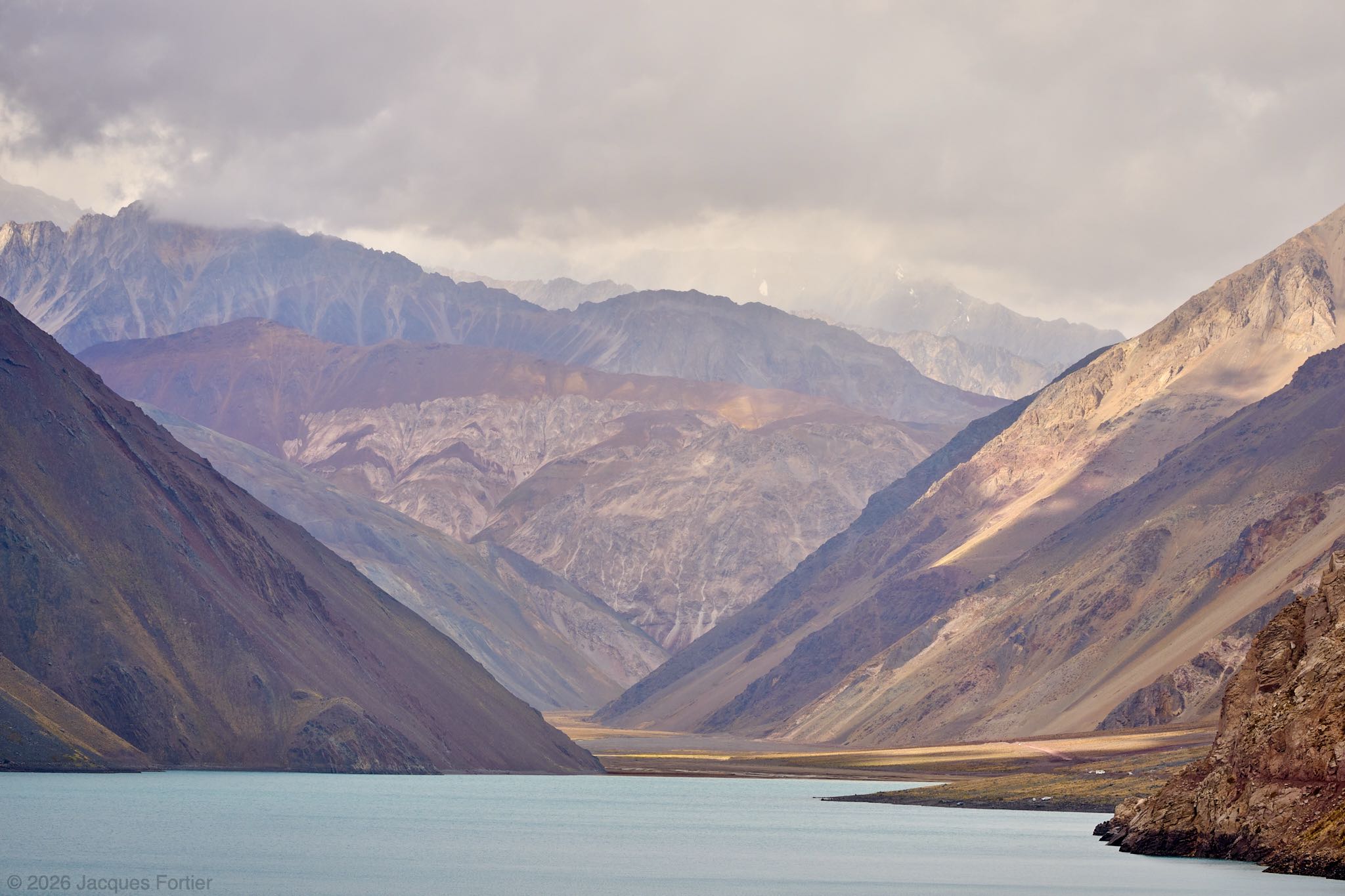
For this first visit, I was mainly focused on driving and taking in the scenery, so while I saw plenty of birds, I didn’t try to photograph them. The scenery was absolutely astounding, however. I’ve never seen colors and layers quite like this.

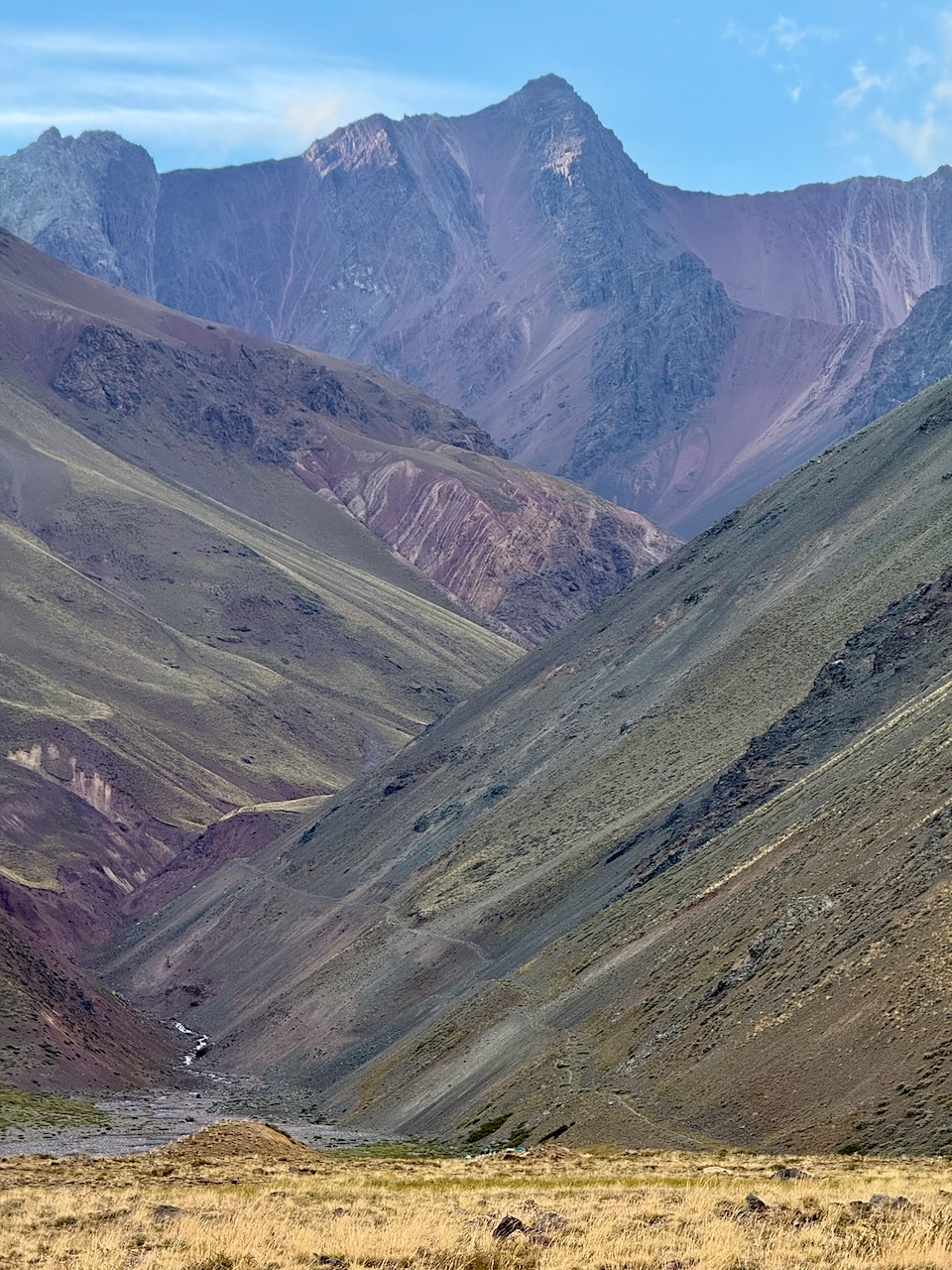
The gate to the park with the plovers closes at 8 pm, and I arrived just after, so I turned around, enjoyed the sunset, and then headed back to my AirBnB to get some rest.
Valle del Yeso Tour
The next day, JP picked me up from my AirBnB at 6:30 and we drove up in the dark. We arrived at the reservoir a bit after dawn around 7:30 am. It was a cloudy morning, so the light was pretty terrible.
The area is surprisingly birdy for such a high altitude. JP pointed out at least a dozen species just on the few mile drive to the area with the plovers.
The gate doesn’t open until 8 am, so we took our time, photographing a few bird species and also stopping to take in the landscapes.
The species we saw included Greater Yellow-Finch, Black-Winged Ground Dove, and the Gray-Breasted Seedsnipe.
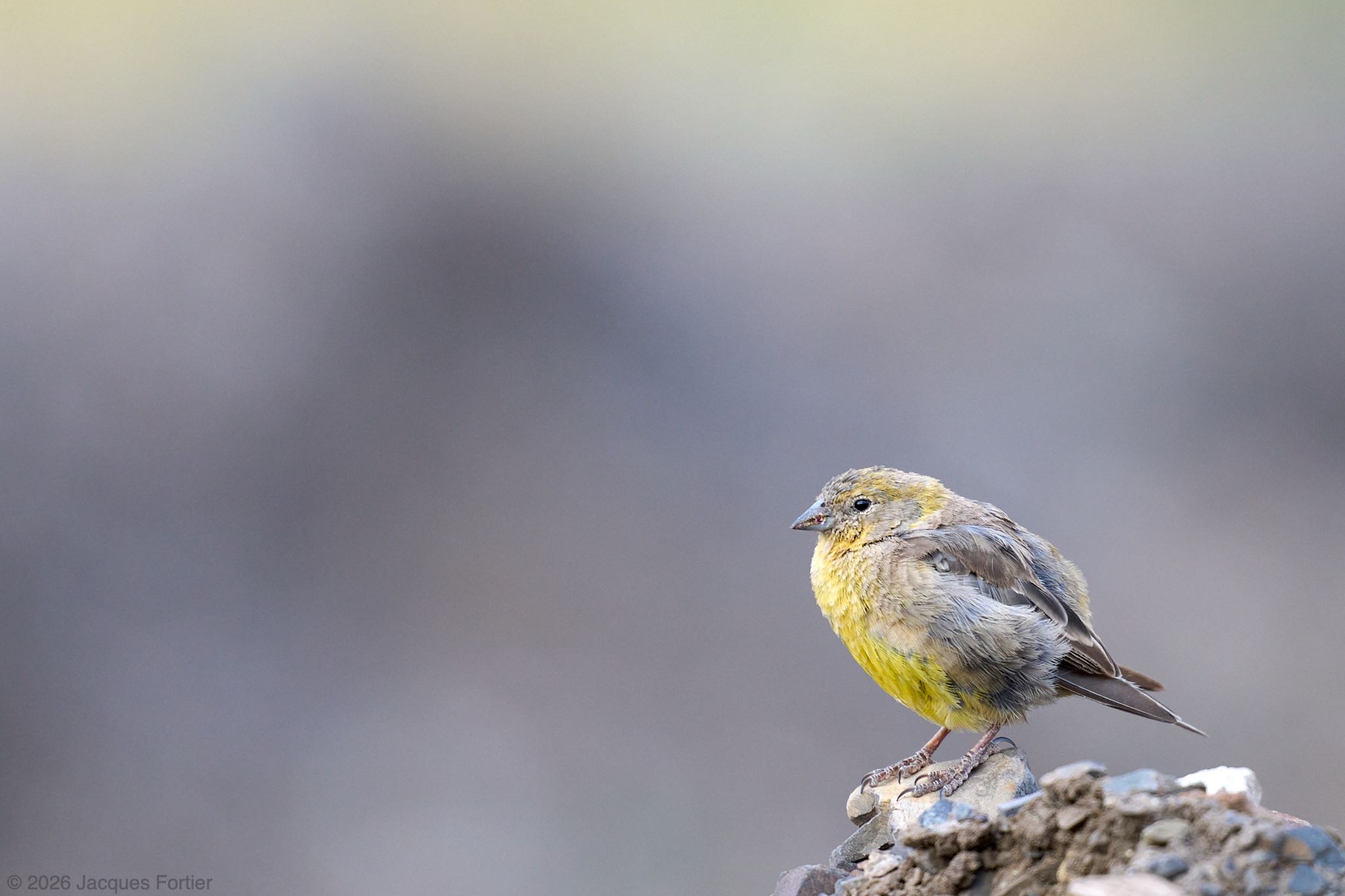
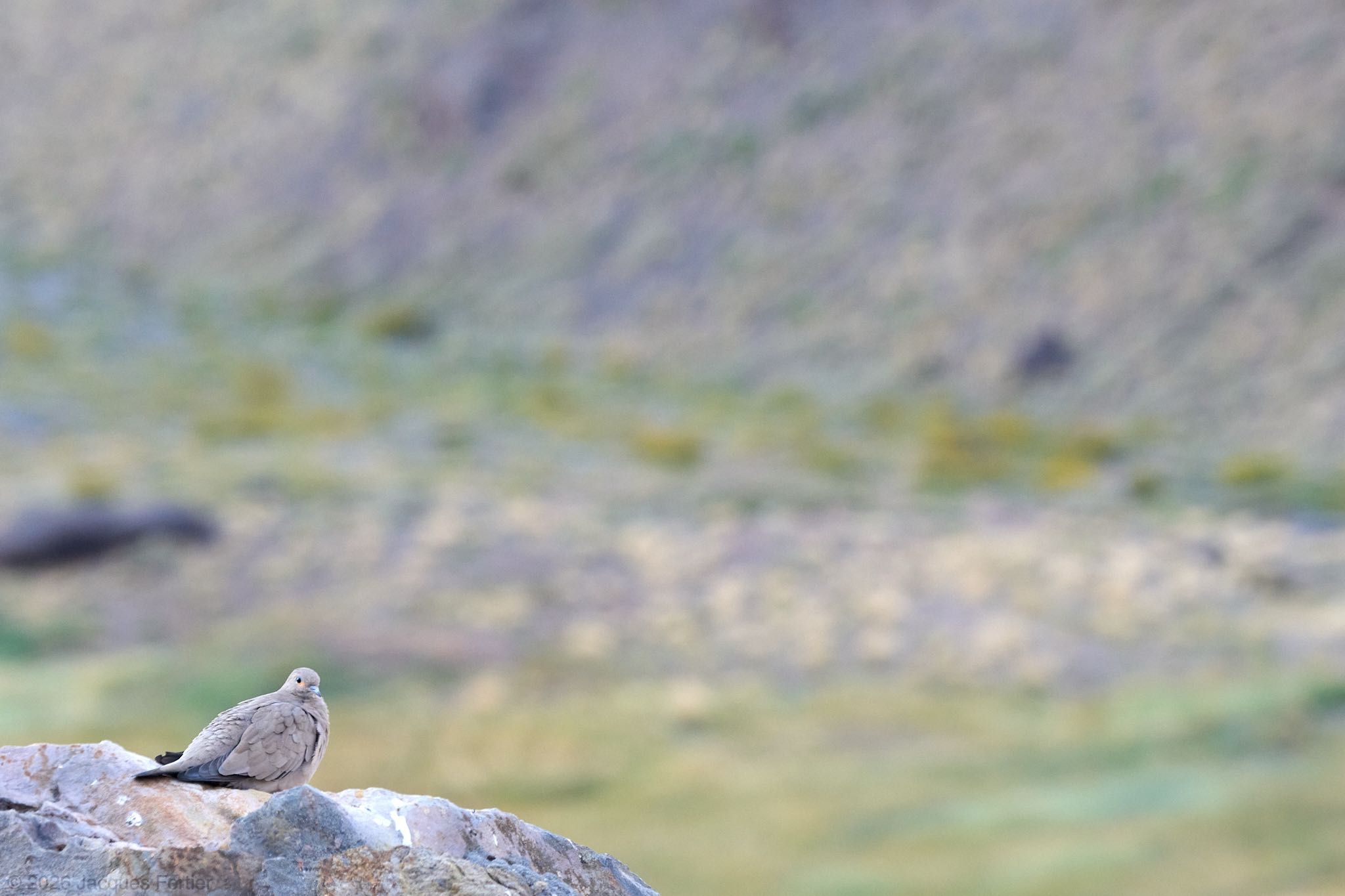

The seedsnipe in particular is a pretty special bird for the area. They’re shy, however, and they weren’t our focus, so we kept moving after it faded into the bushes.
We also made a few stops to take landscape photos. I just don’t have the gift for translating the grandeur of landcsapes into photos, so please take my word for it that it was a spectacular morning in the valley.

We stopped at one spot where the Diademed is occasionally seen, but after 5 minutes of scanning we didn’t have luck, so we continued towards the gate, timing our arrival for right around 8 am.
Finding the Diademed-Sandpiper Plover
JP filled me in the the plover’s typical habitat. He also explained that they tend to stick to the same general area every season, so once they track them down at the beginning of the season, they become a bit easier to locate.
We found the juvenile almost right away. They have a more richly patterned back than the adults, but they’re missing the distinctive diadem that really makes the adults pop in photos. You can just see it starting to grow in on this adolescent (it being the beginning of autumn in Chile when I visited).
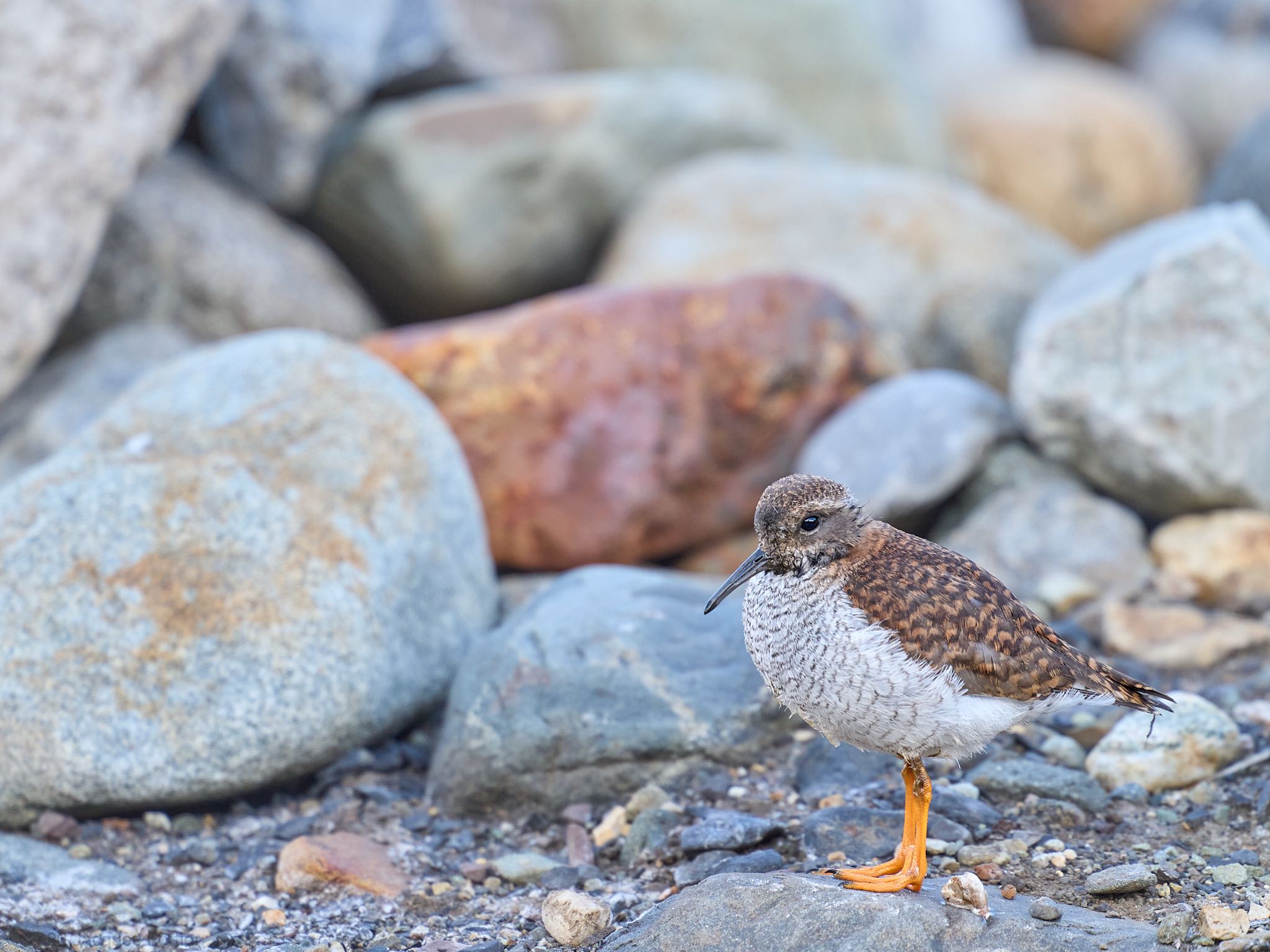
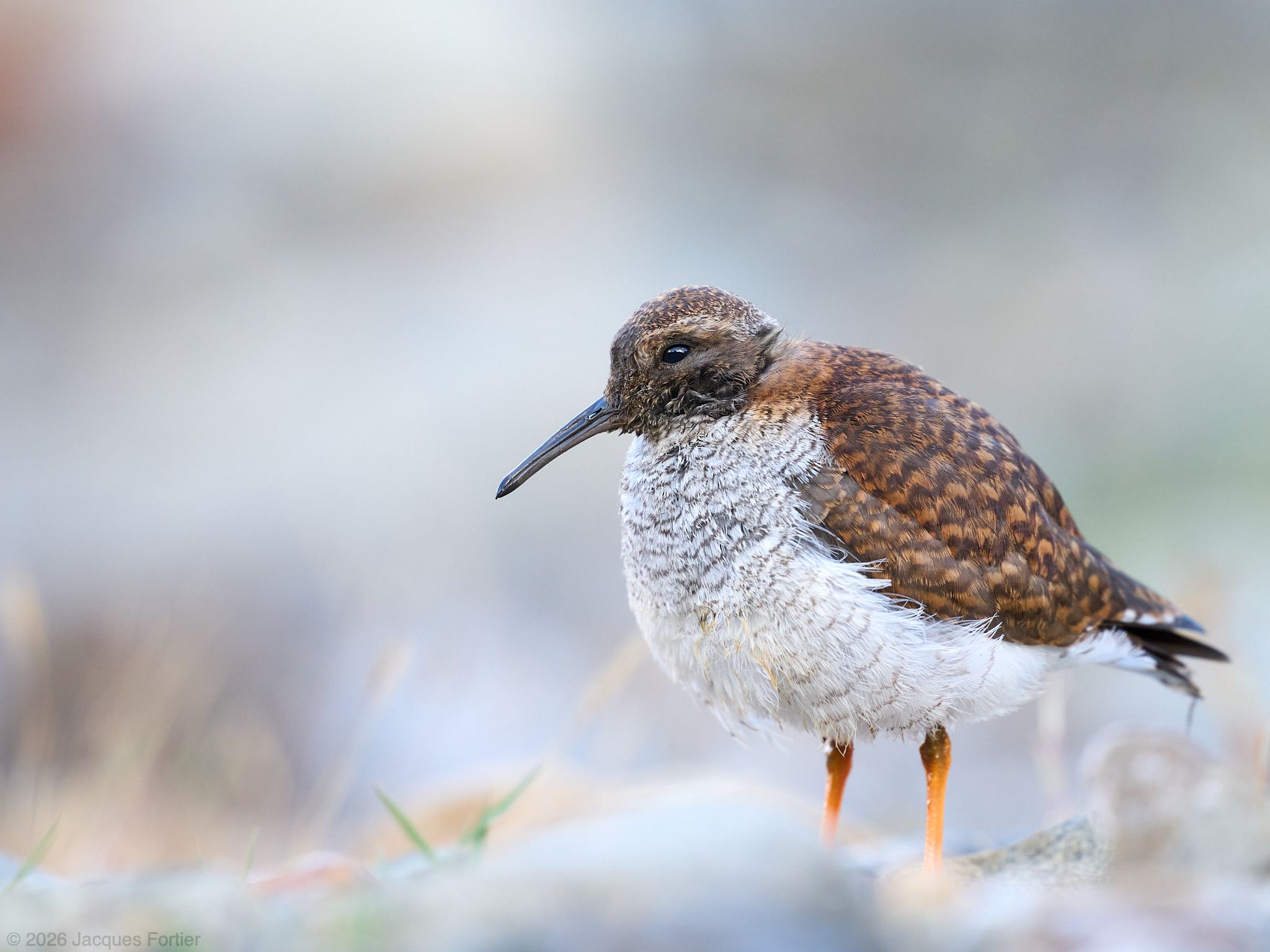
After spending a bit of time with the juvenile, we set out to find the adults. Finding a bunch of shorebirds doesn’t sound like it should be hard, but there are two important things you need to know.
First, Diademed-Sandpiper Plovers are solitary. In a given wetland, there will usually be a single breeding pair, plus one or two juveniles. I haven’t heard of clutches larger than two. That means if you don’t already have a sense of where they’re clustering, you’re looking in an area of a few acres for at most four birds. Second, while they look striking in photos at eye level, from above they look almost exactly like a rock. The stipe on their head really works to break up their shape. Even after we found them, it would take serious concentration to relocate them if we looked away for more than a few seconds.
JP gave me a few hints about their typical habitat, and he had a good idea of where to start looking, so it only took us about 20 minutes to track down the adults. They’re easiest to spot if they’re in motion. If not, their bright orange legs are a good clue. And if those are hidden you’re just going to have to look at every rock until one of them transforms into a shorebird.
Photographing the Diademed Sandpiper-Plover
Right after we found the first adult, it hopped up onto a mound of rocks and looked back at me, giving me the one of the scenic shots I was after.
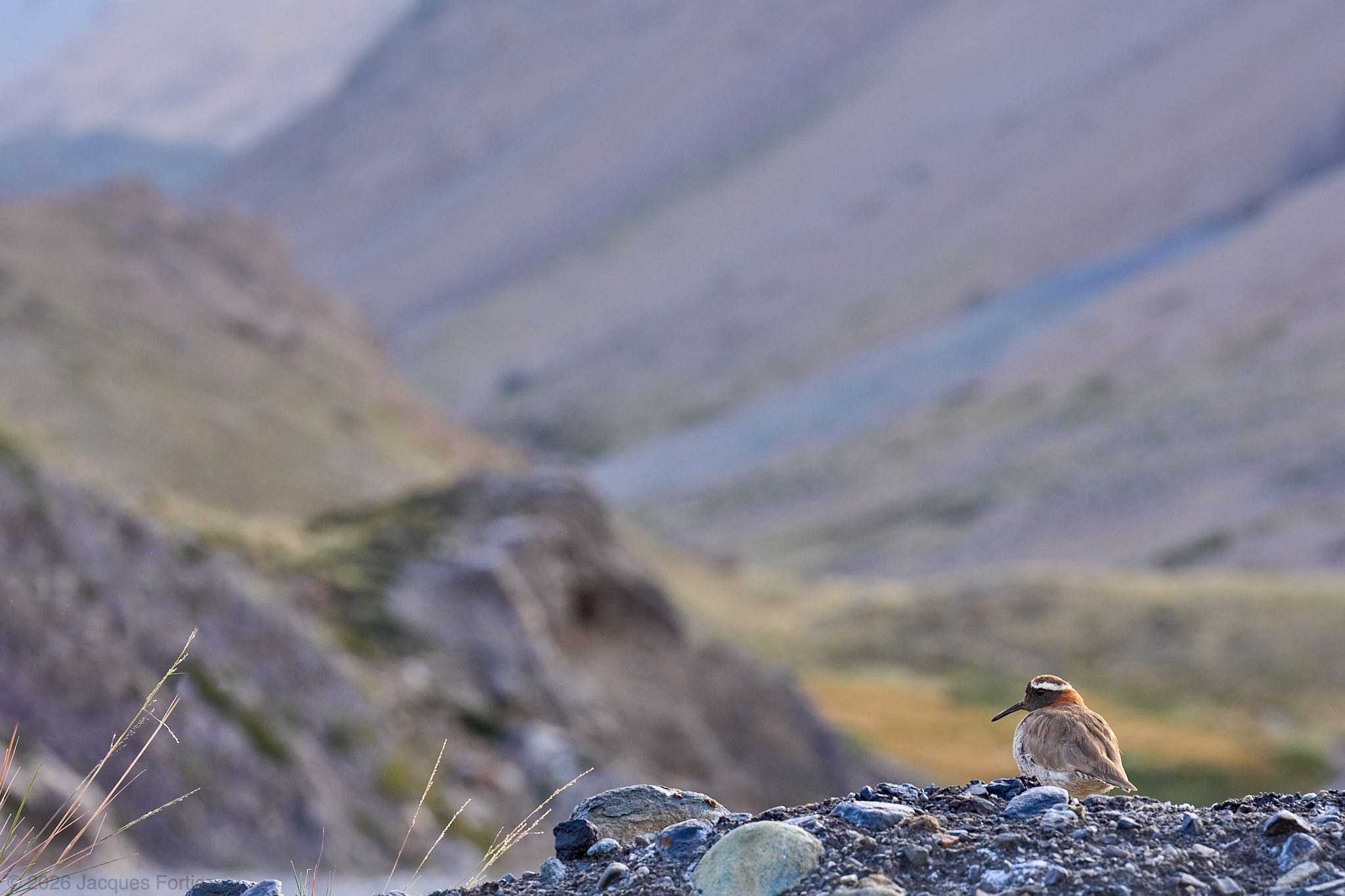
It was also happy to stay still to let me zoom in and get a portrait.

I quickly realized that I had brought the wrong lens for this trip. The widest one I had was my 70-200 mm. I have a 24-105 mm, and I had considered bringing it with me. But, while packing I thought about all the other trips I’d taken where it had sat unused in my pack for the whole time, and opted to save myself some weight. I quickly found myself regretting that when I discovered that these birds have absolutely no fear of humans. As long as they saw us coming and we moved at a reasonable pace, they paid us very little mind. More than once they walked right towards me, coming within less than a foot.
I had weird issues with focus when the birds came in close. I could manually focus on them, but autofocus just wouldn’t lock. I eventually resorted to manual focus. It was only the following night that the solution hit me completely at random: I was so unused to dealing with subjects that close that I hadn’t thought to check the focus limiter. Sure enough, it was set to 3 m instead of the lens’s native 0.4 m minimum focus distance. Dealing with that definitely cost me a few potential shots. It turned out JP had a 24-105 with him (a nice benefit of of going on a tour with a Sony ambassador), but the best light was gone by the time I borrowed it from him.
We spent a couple of hours working on environmental portraits. The plovers spent a lot of time feeding, and occasionally roosted, but I managed to get some solid shots showing off the unique colors of the Andes in the background. I never felt like I quite got a “wow” shot, however. The light was a bit of a challenge. There were scattered clouds, so we alternated between flat and harsh light the whole morning. Still, for my first time shooting these birds, it was a great result.
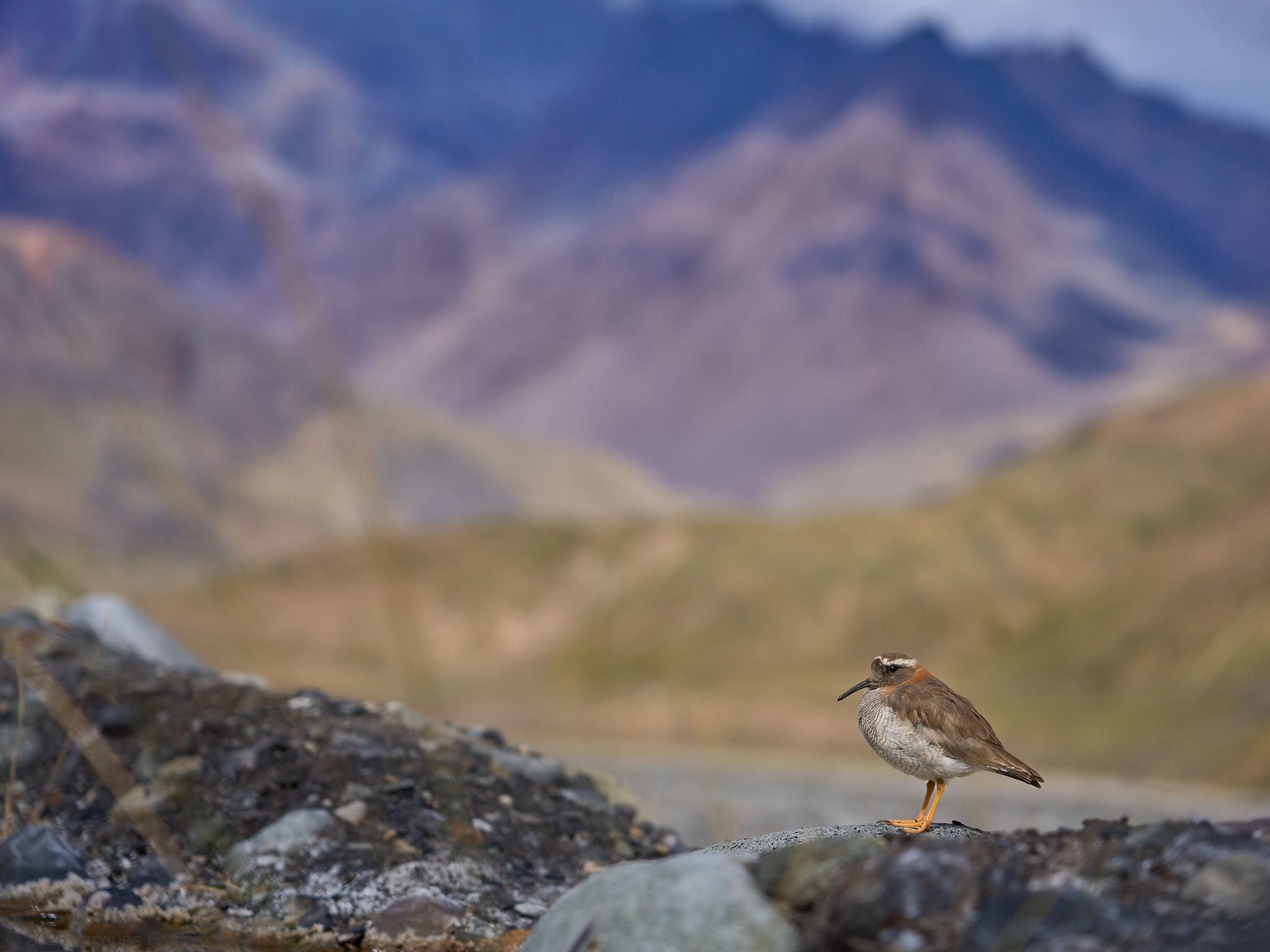
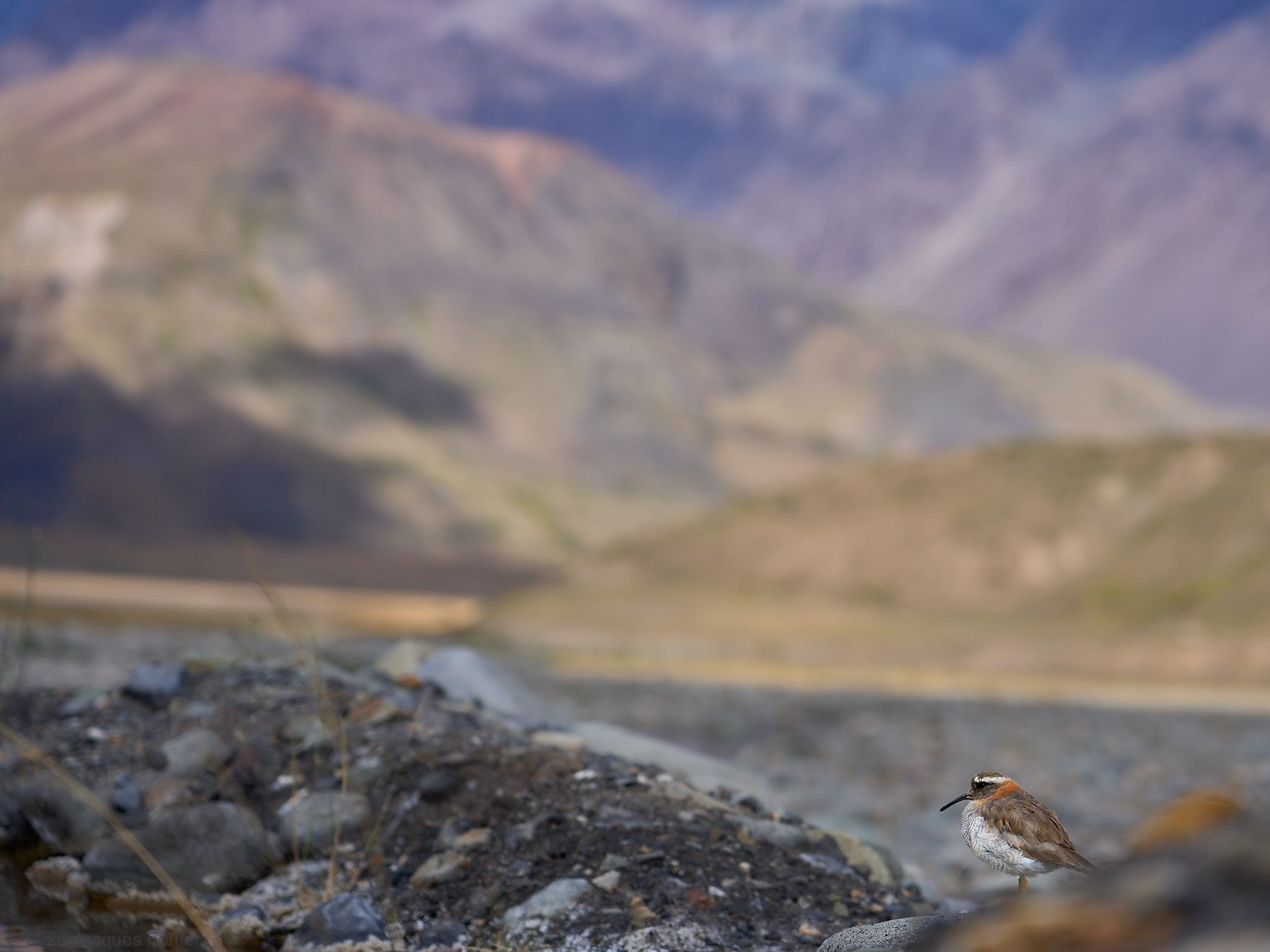
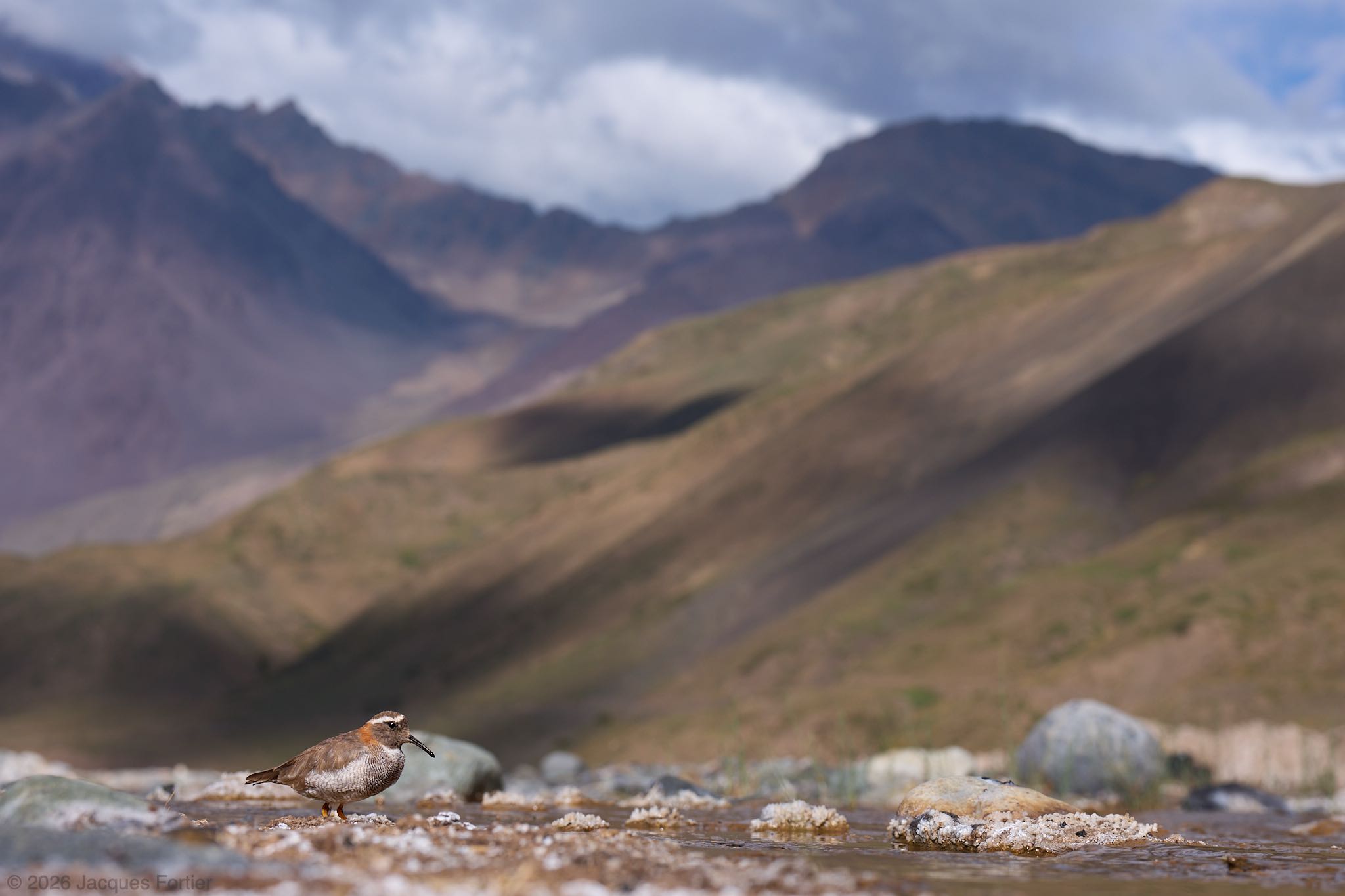

We also ran into Lalo, another Albatross birding guide, who was bringing an avid birder out for his second attempt to find the Diademed Sandpiper-Plover. He’d failed on his first attempt a few years ago when lingering snowpack prevented access to the most fruitful habitat. He was ecstatic to find them on this attempt.
Everyone seemed to have a good time doing wider-angle photography. Lalo got this sweet shot at 24 mm, while JP worked on macro shots (yes, these birds really are that tolerant).
Eventually, the plovers settled in to roost, so we paused for a lunch break. After lunch, we waited for them to wake back up and get active again, but despite waiting for a couple of hours they stayed hunkered down. Still, the time did not feel wasted at all, as we hung out and soaked in the views in JP’s cordilleran “office”.
More Valle del Yeso Landscapes
When 3 pm rolled around, we started heading back to my AirBnB, giving ourselves plenty of time to stop for landscape photos. I still don’t feel like these photos quite do the landscape justice. I was in awe pretty much my entire time in the valley.
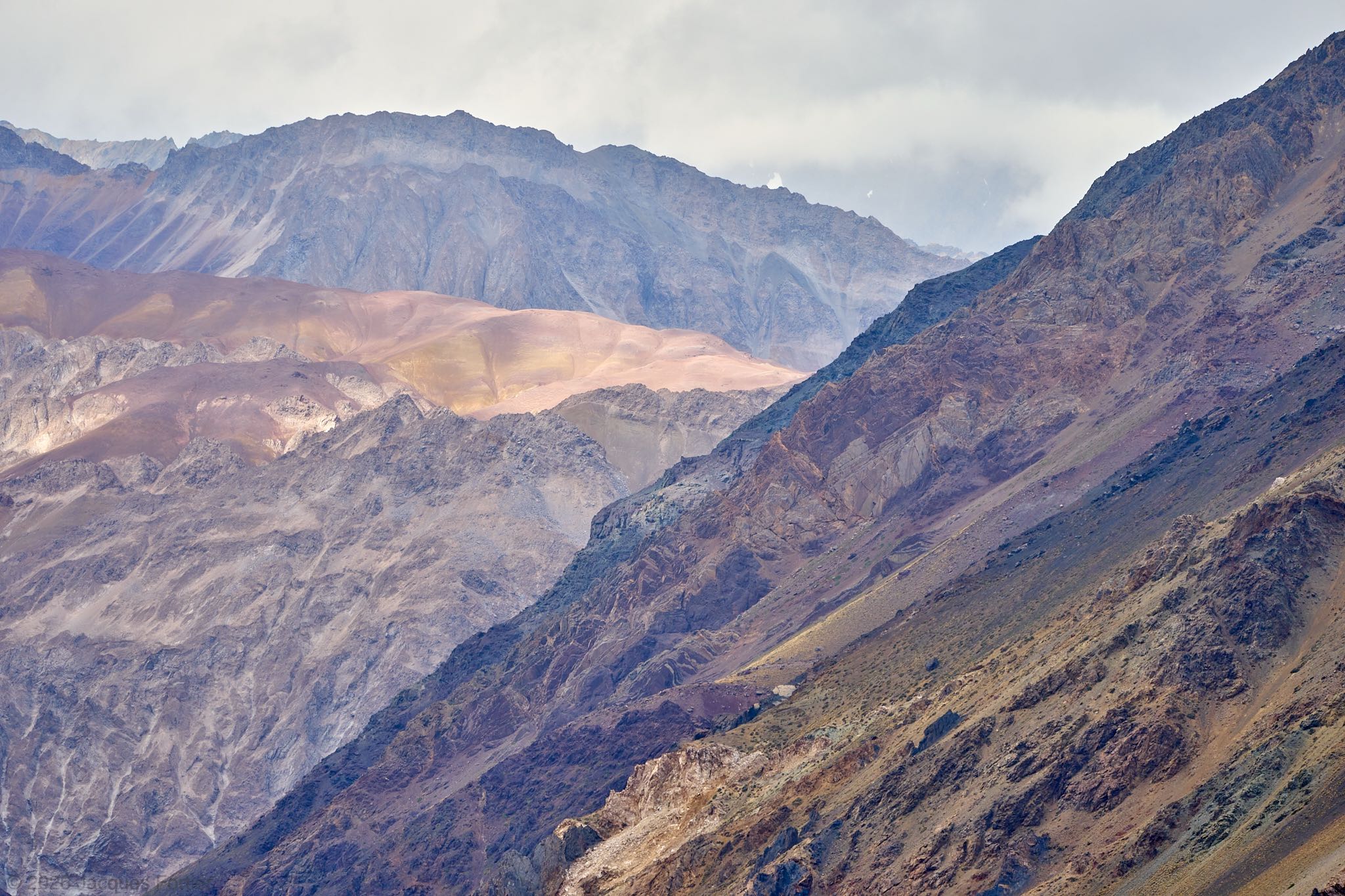

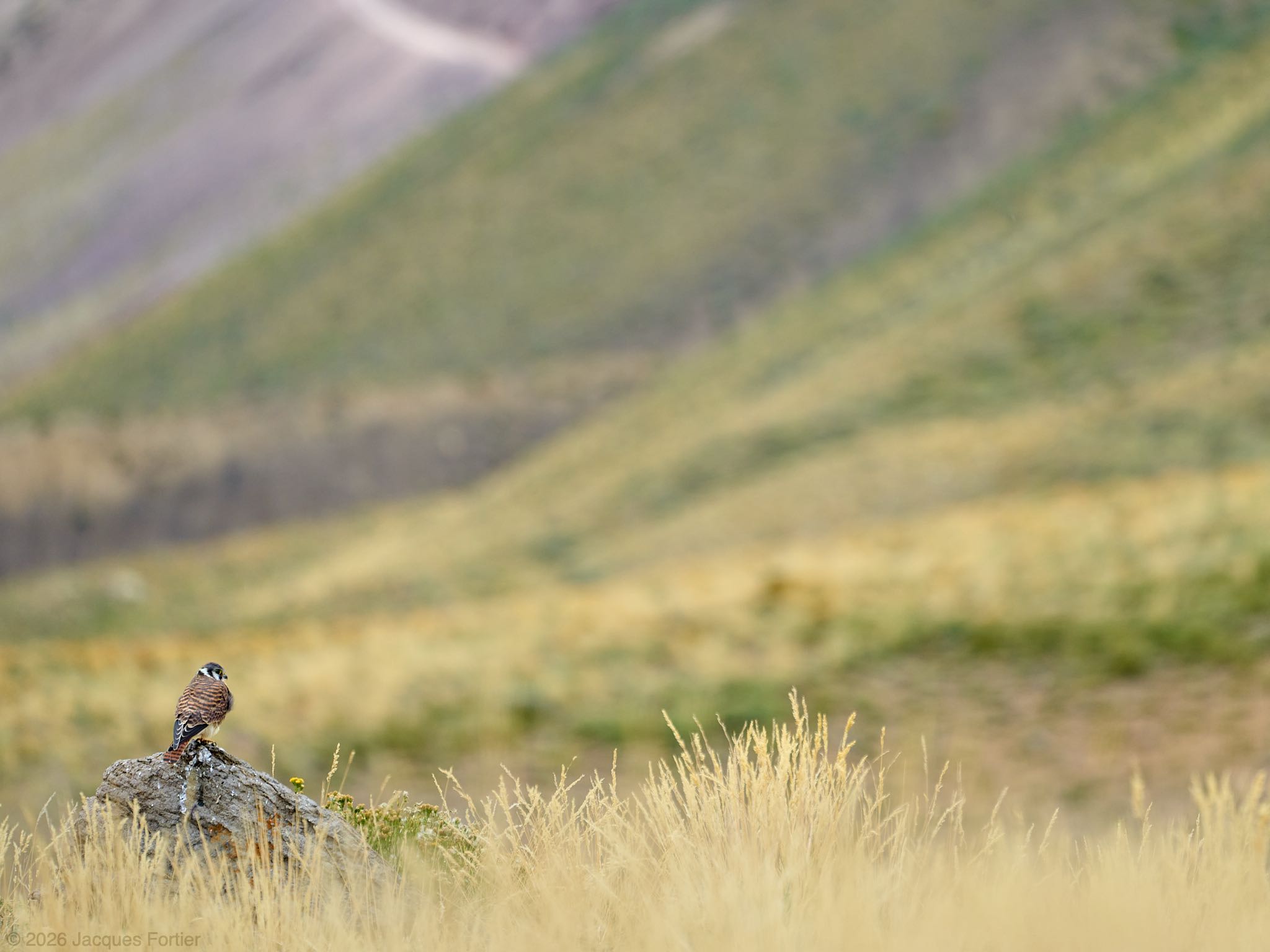
We also had a brief encounter with an American Kestrel. I went as wide as possible to pull in the Andean scenery. Unfortunately, that meant I didn’t notice it looking away when I finally had the composition dialed in. Still, it was a cool shot.
My next night was in a different valley to the north. Claudia, my AirBnB host had been gracious enough to let me leave my car at her house while I was out on my tour. When I stopped by to pick it up, she offered me the use of the bathroom, water, and the shower before I continued on my trip. I was very grateful for the hospitality, and would definitely stay with her if I’m ever in San Jose de Maipo again.
Final Thoughts
The Yeso Valley is a great place to photograph the Diademed Sandpiper-Plover. It should probably be the main go-to for anyone who wants to photograph this amazing shorebird. It’s got a few things going for it.
First, it’s relatively easily accessible. Just 2-3 hours of driving from Santiago. Very little hiking is required.
Next, the birds are extremely tolerant. While I haven’t witnessed it myself, the guides said the plovers in northern Chile are as skittish as you would expect from a typical shorebird. The biggest problem with the birds in this spot was having them rush inside your minimum focus distance.
Equally importantly, the Valle del Yeso has some great landscapes to serve as a backdrop for the birds.
The biggest challenge for this location is the hours. You can’t enter the park where the plovers are typically found during the periods with the best light. While we were lucky enough to have some clouds during our visit, you can’t count on that in the summer in this kind of climate. (In the winter and spring, the area isn’t accessible at all because it’s covered in snow.)
However, while the gate is closed outside of 8 am to 8 pm, there is a workaround. You can camp in the area. Car camping or camping in a tent next to the car should both work. I didn’t do this myself, but I did see other people doing it. There are limited facilities (toilets). You’d need to bring shelter, food, potable water, and toilet paper for the toilets.
The one thing I’m not sure of is whether the birds will be active near sunrise and sunset. At another location, they weren’t active (or I couldn’t find them) near sunset, but I did see some activity at sunrise at that location. I would be surprised if they weren’t active at at least one of those times, however.
Next time I’m in Chile, I will definitely give the car camping approach a try.