In August, I spend a week doing photography in Alaska. The main point of the trip was to photograph bears and wolves in Katmai, but I also spent a few days in the Anchorage area, focusing on Collared Pikas.
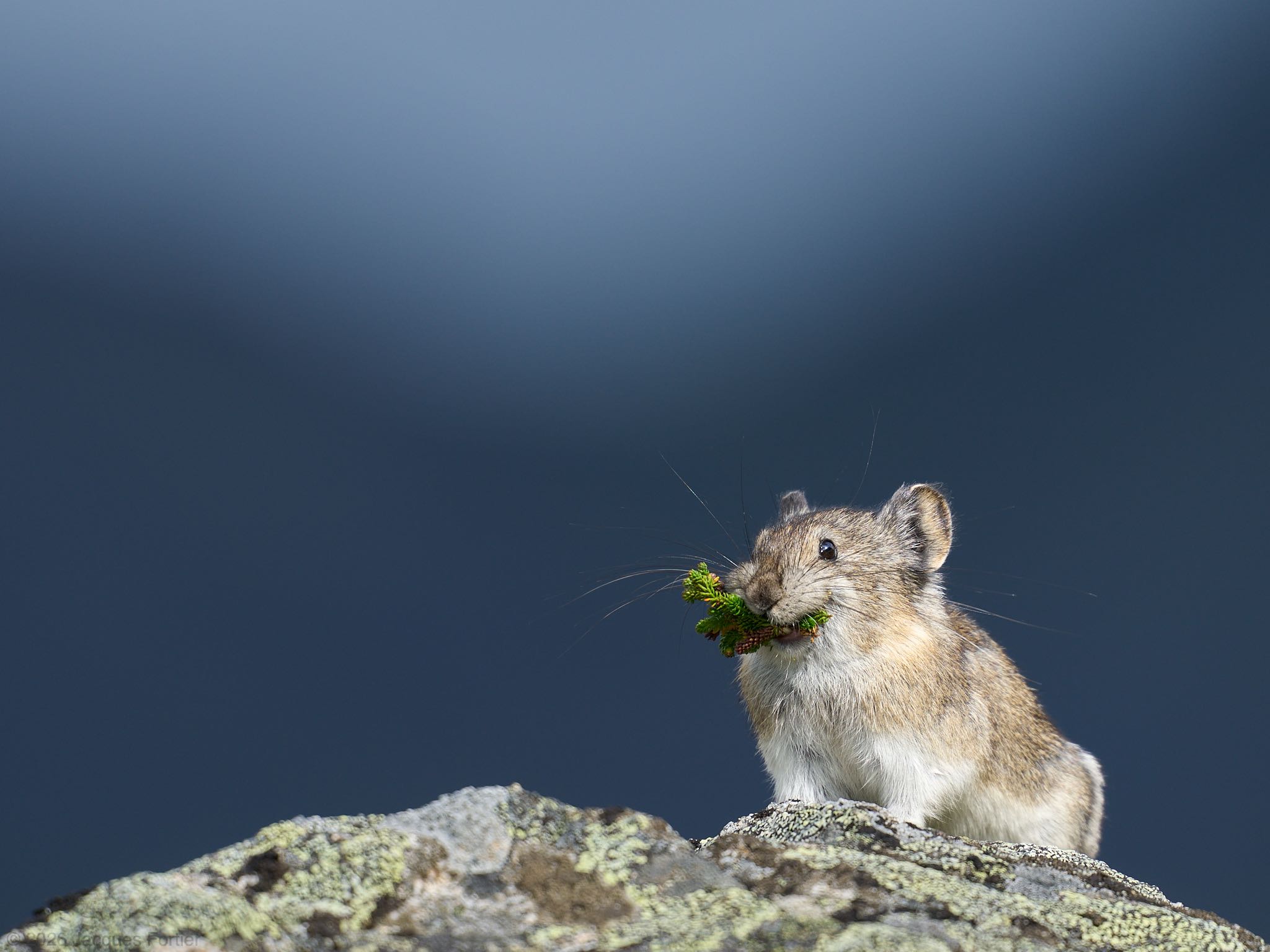
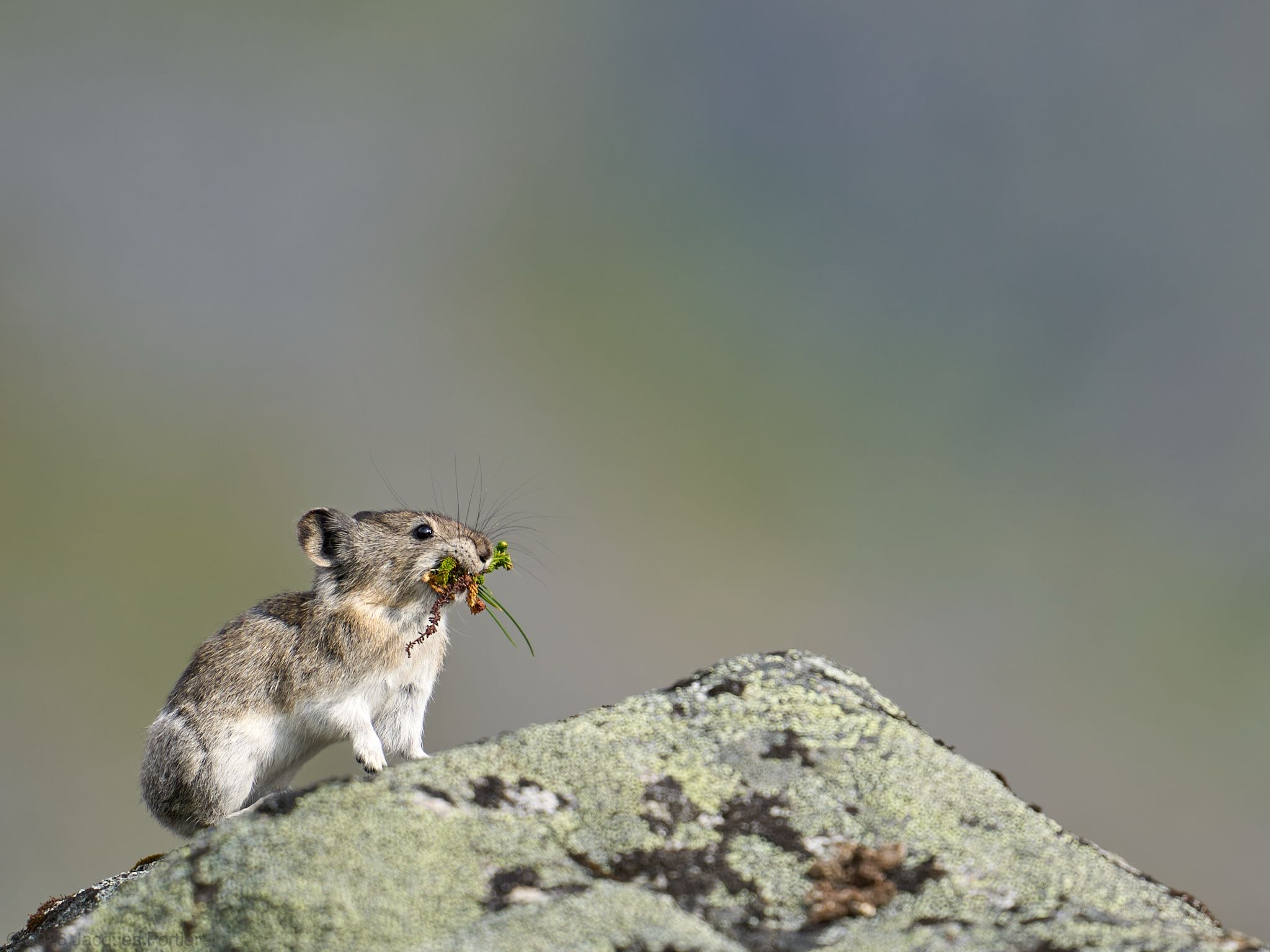
I had taken two previous trips to Hatcher Pass. The first one was very early in the season, just as the remaining snow was melting off, so there was no fresh growth for the pikas to gather. The second had been in late autumn, and the pikas hadn’t been doing much foraging either. That meant I was missing a classic shot of a Collared Pika bring plants back to its haypile. My goal for this trip was to get one of those photos.
Of course, I didn’t want just any photo of a Collared Pika carrying food. The goal was to get a scenic shot, showing the pika gather food in its mountain habitat.
Day 1: Foraging Pikas
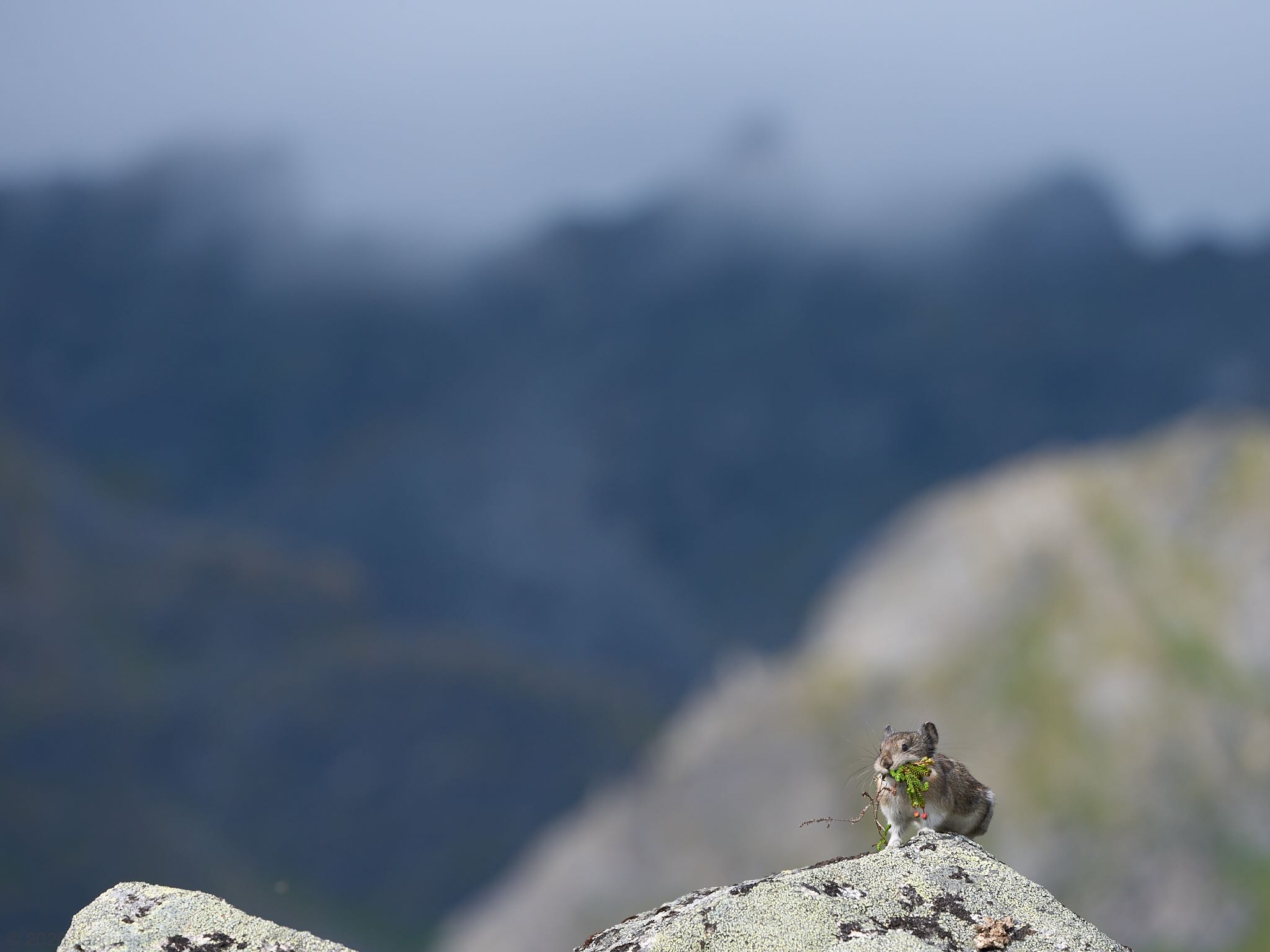
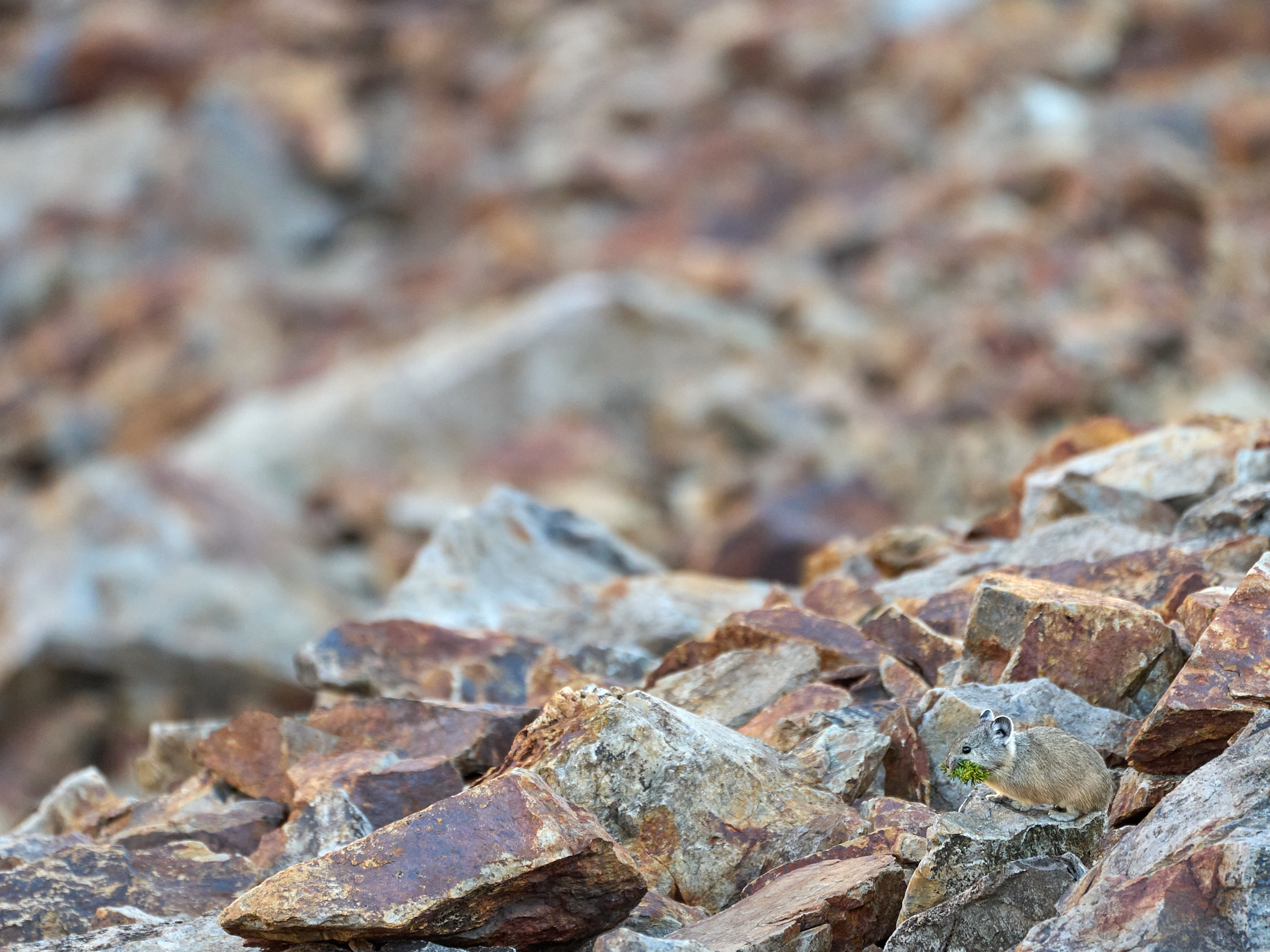
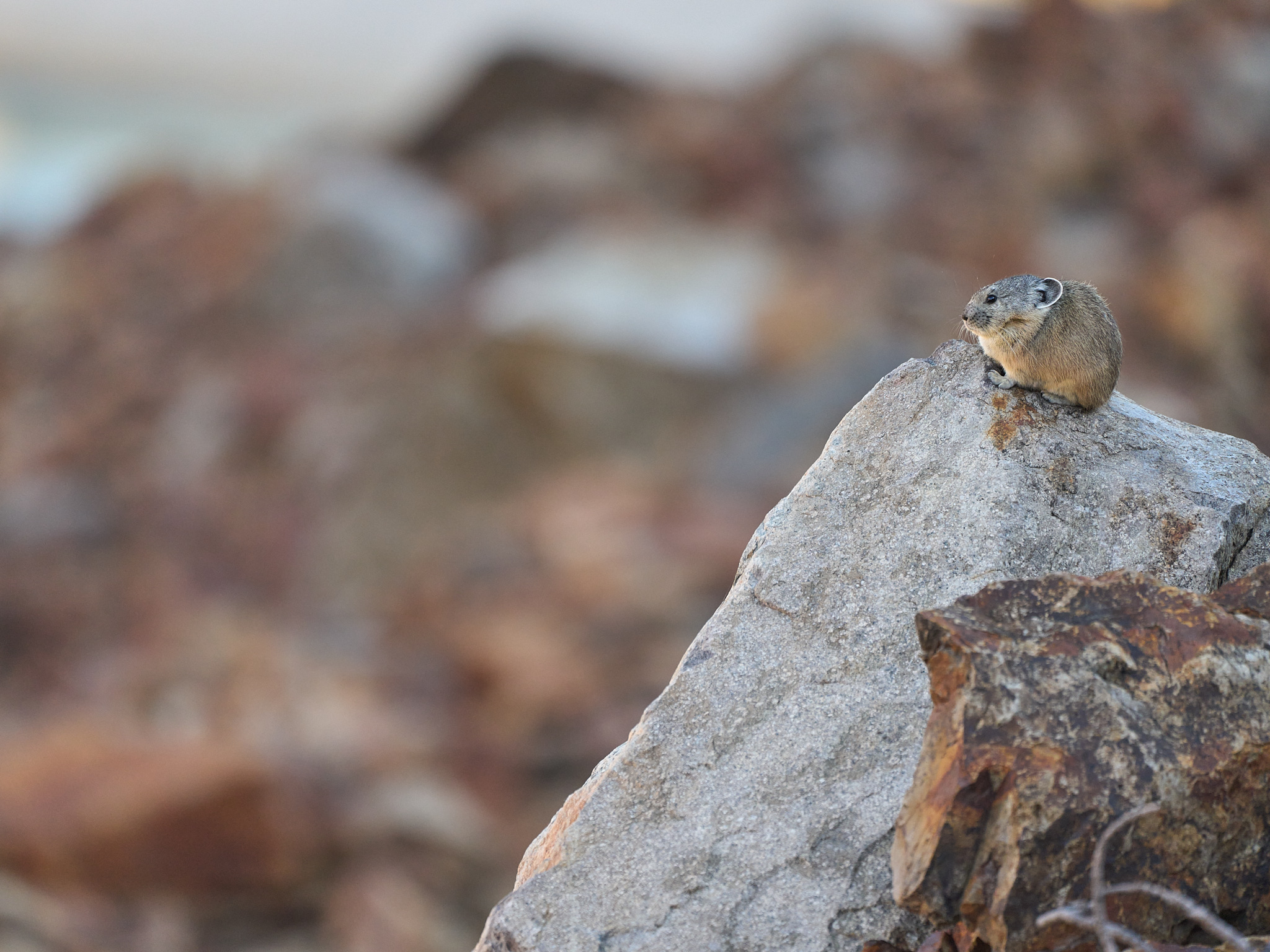
I was familiar with the area by this point, so it didn’t take too long for the pikas to show off their hay-making skills.
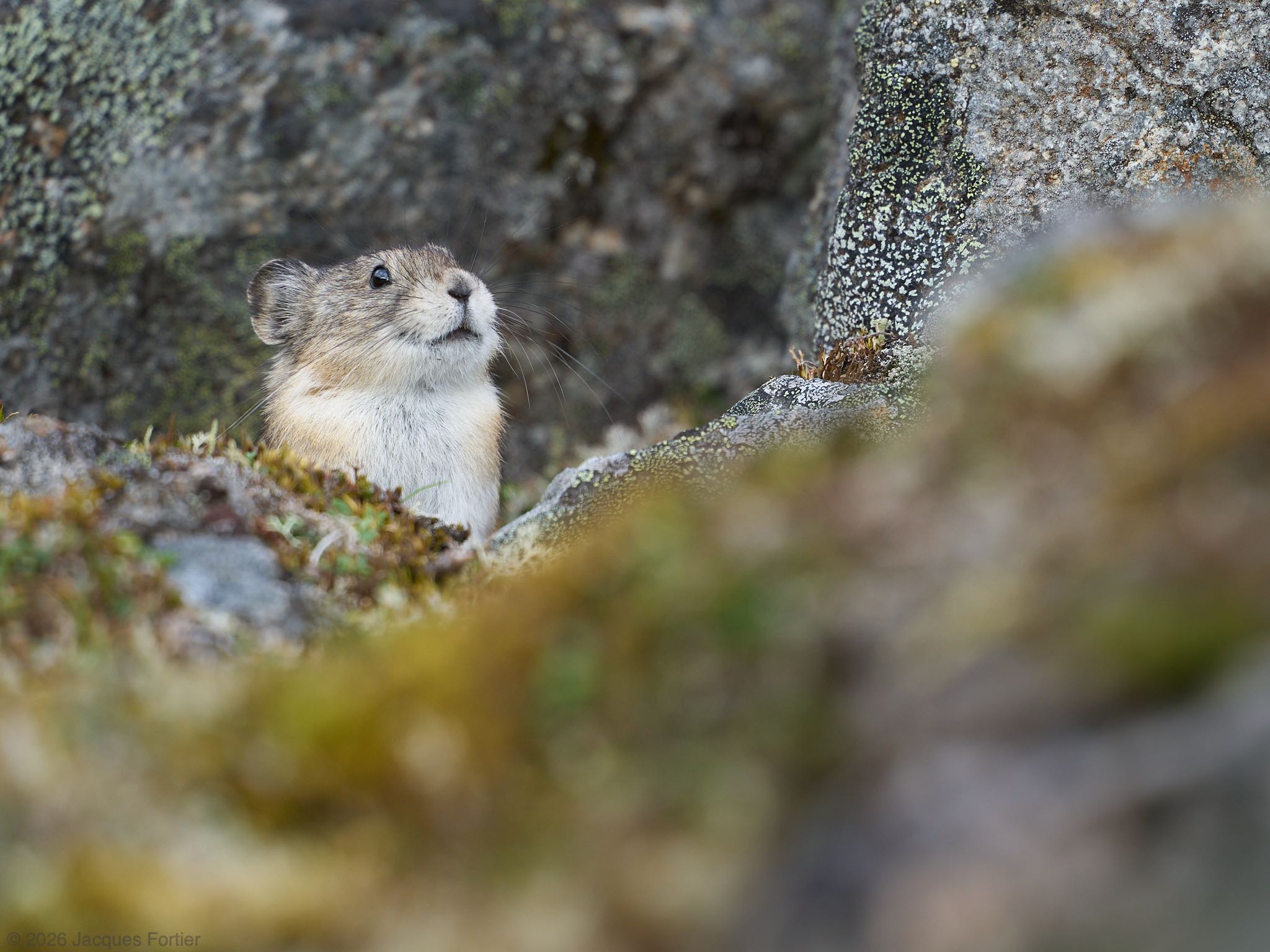
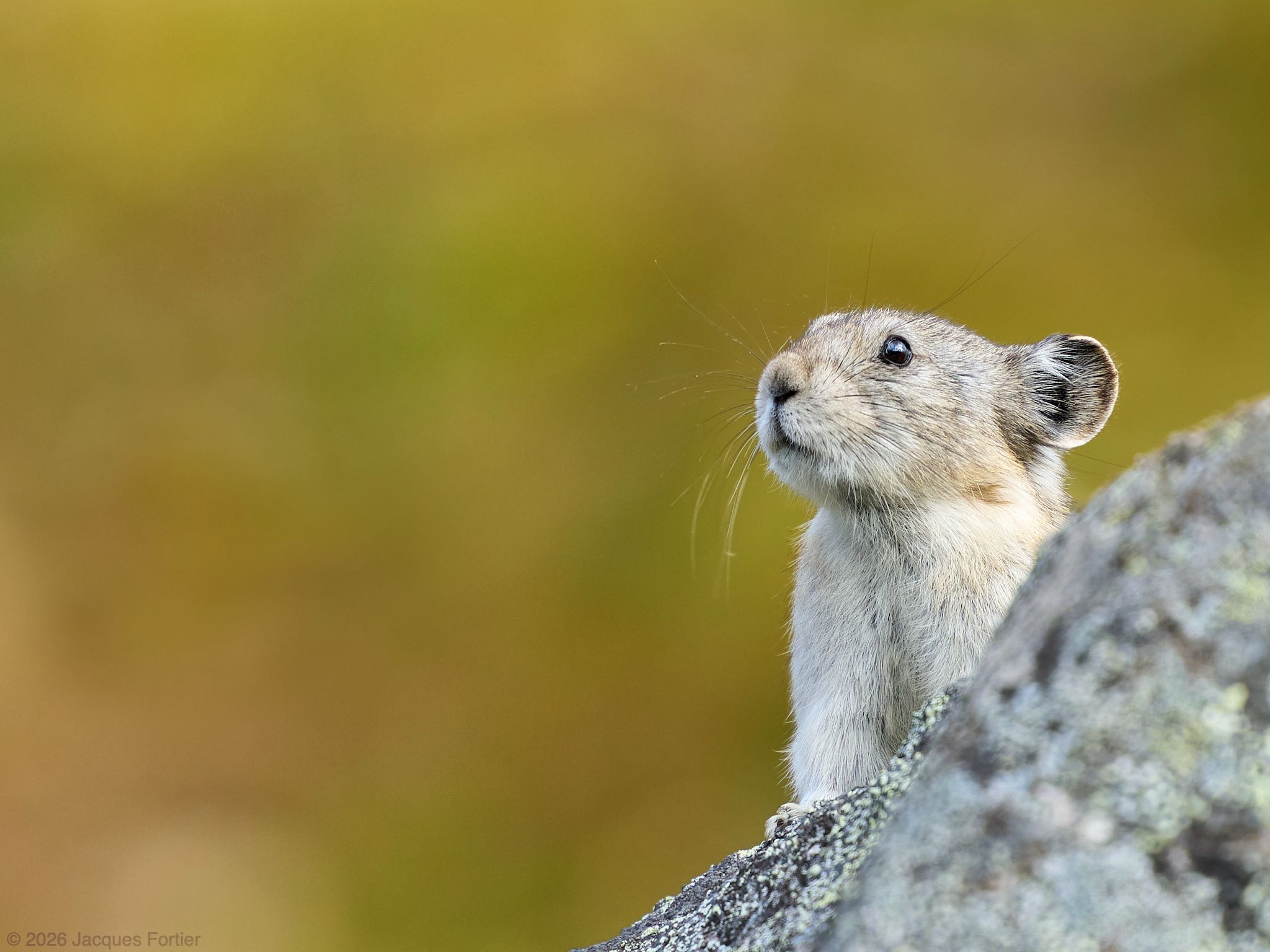
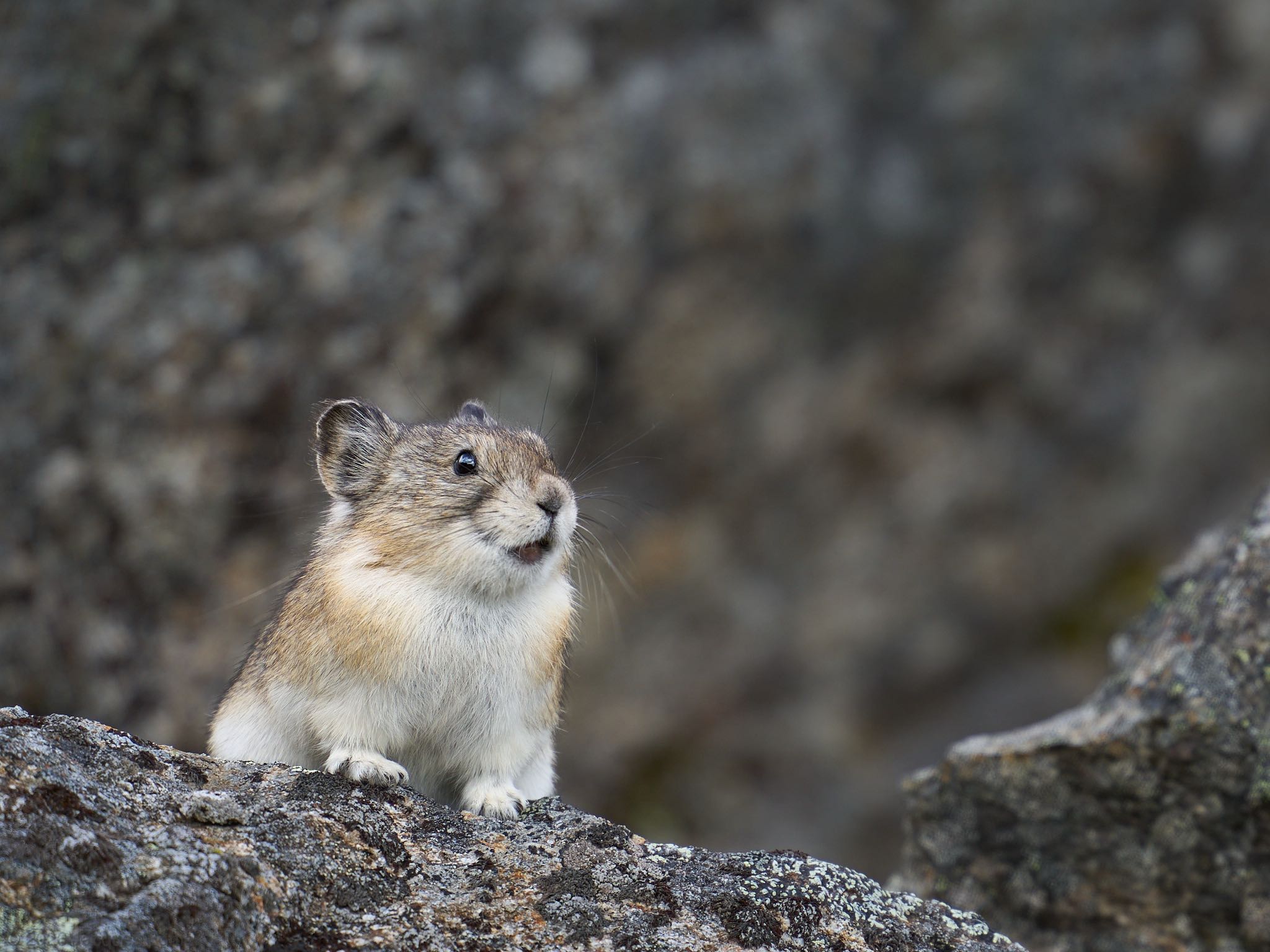
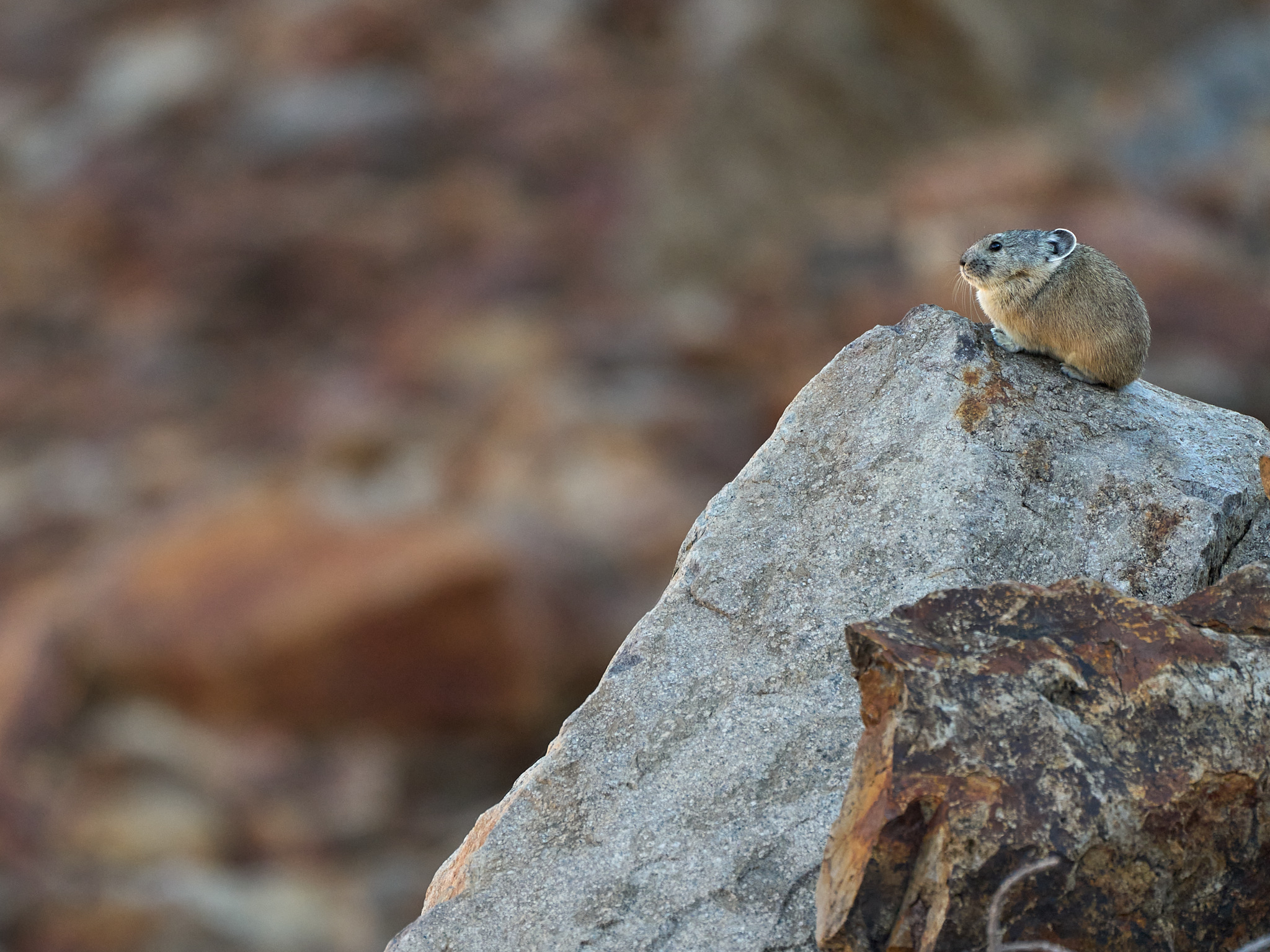
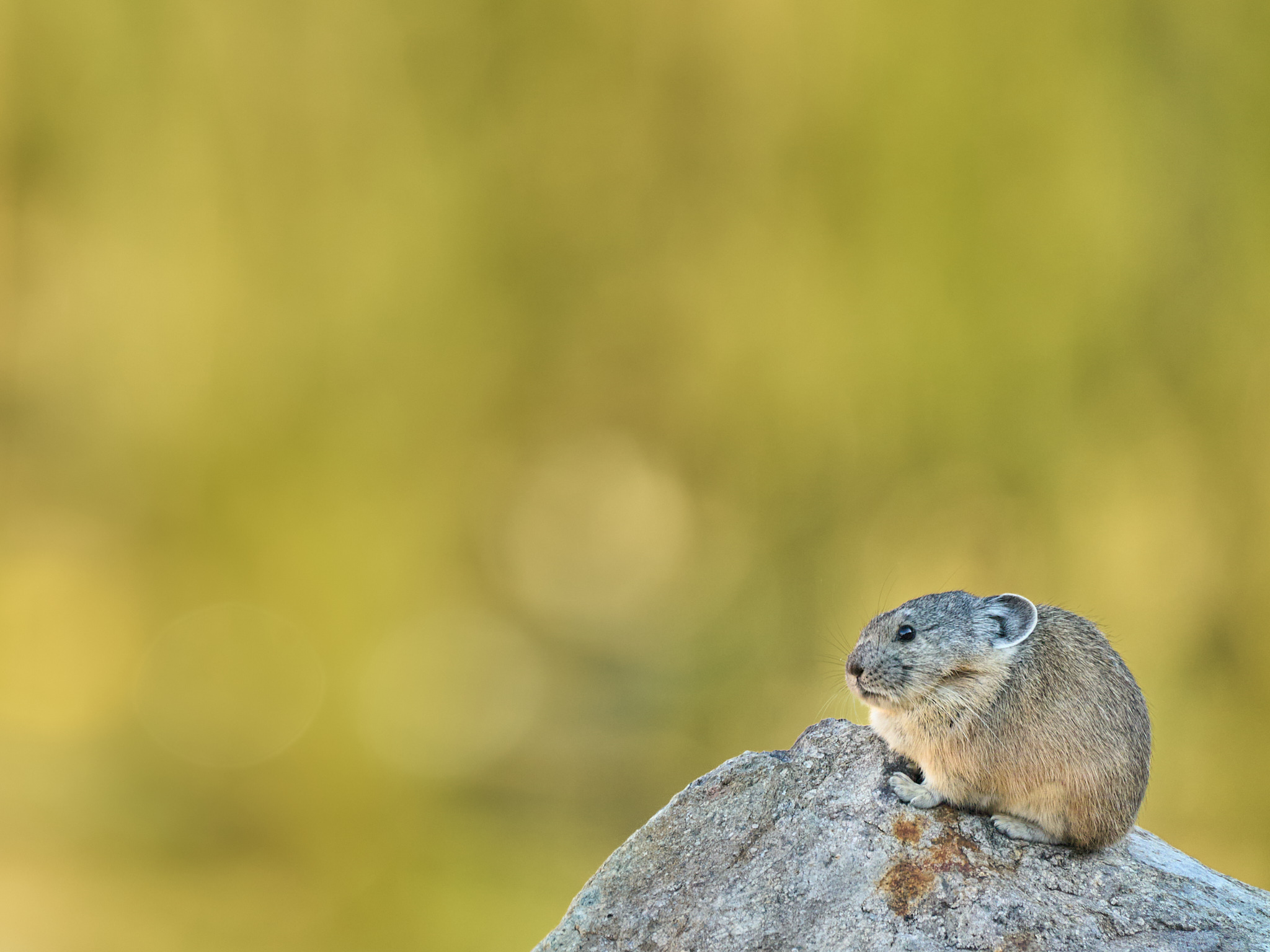
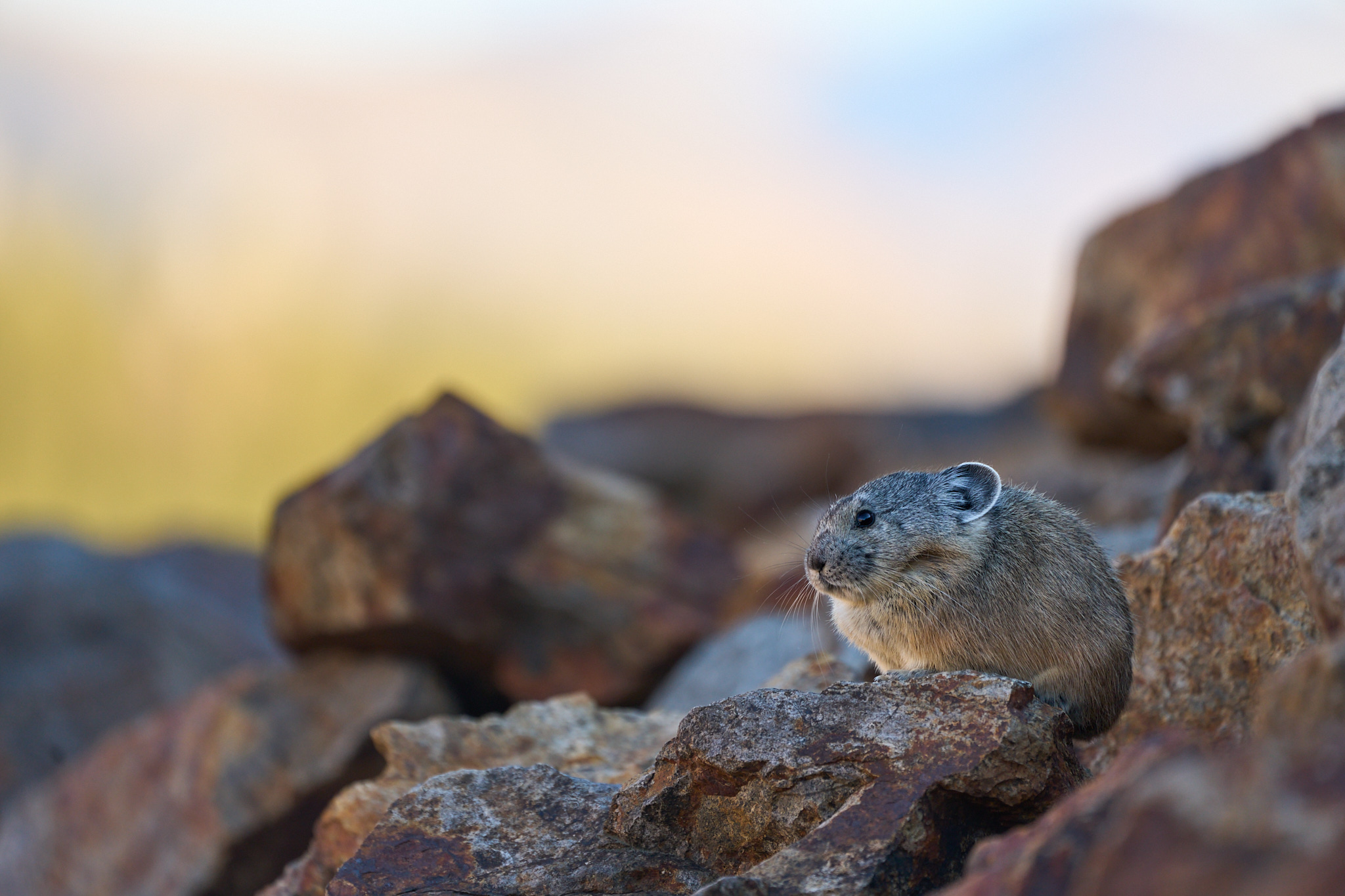
They also had no problem showing off their adorable side.
It took a little while, but I eventually found a spot where a pika would pause on its trip from a foraging spot to its haypile.
Sometimes I’m not the fastest thinker in the field. The pika would just pause briefly on the rock, so it would often be moving by the time I got focus. I was so focused on getting a posed shot of a pika that I didn’t stop to think about what a cool photo an environmental action shot of a pika running with food would be. I even had my shutter speed cranked down to 1/250s get a nice and low noise photo. That meant great shots like this came out blurry!
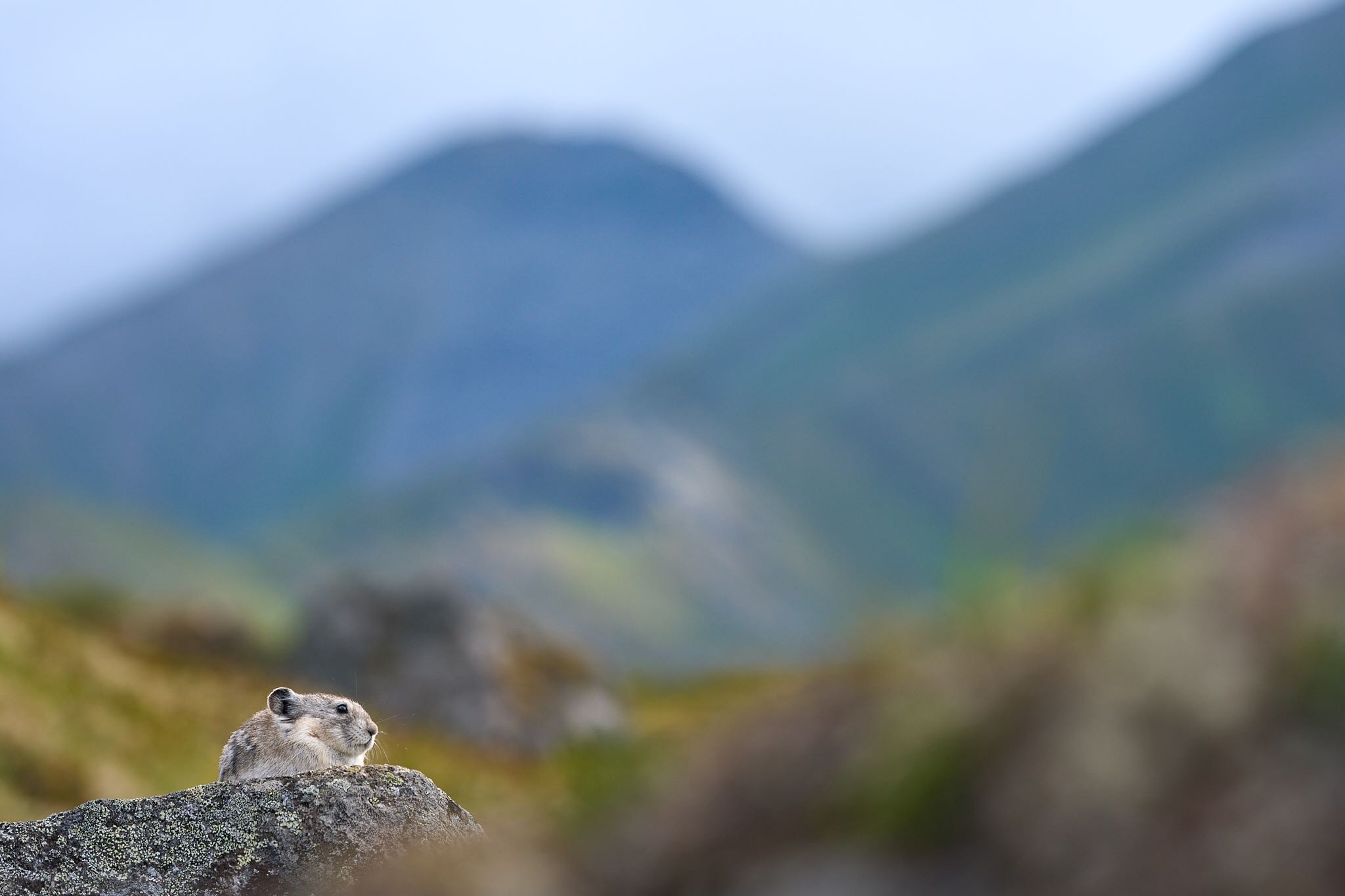
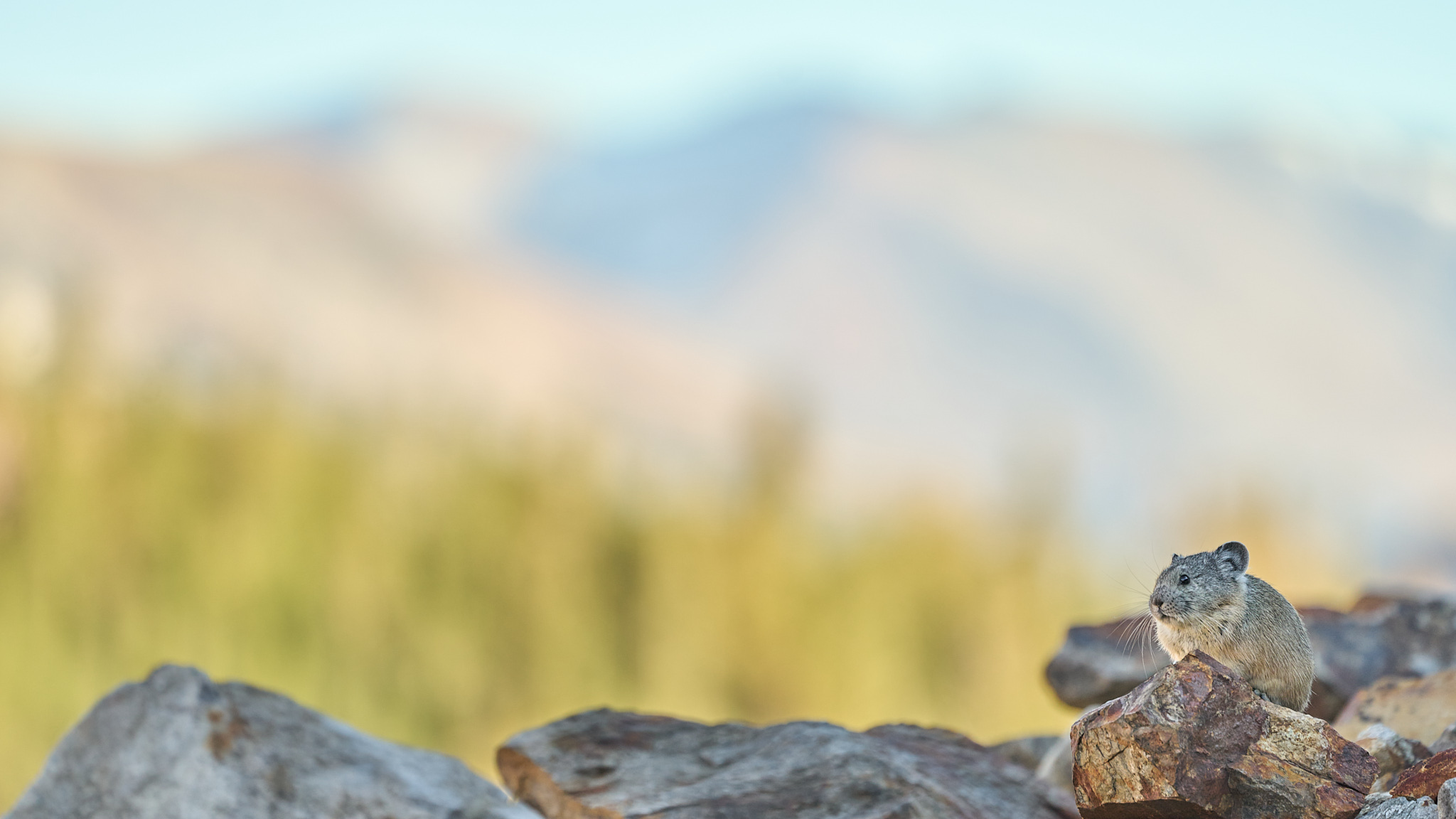
After watching the pikas for a while in this spot, I went on a bit of a walk to find different compositions. I was really happy with this shot of a Collared Pika with lush green mountains in the background.
Day 2: Pika Friends
After kicking myself a bit over my shutter speed miss on the first day, I headed back to the spot where I’d shot the foraging pika. Unfortunately, the pikas were nowhere to be seen.
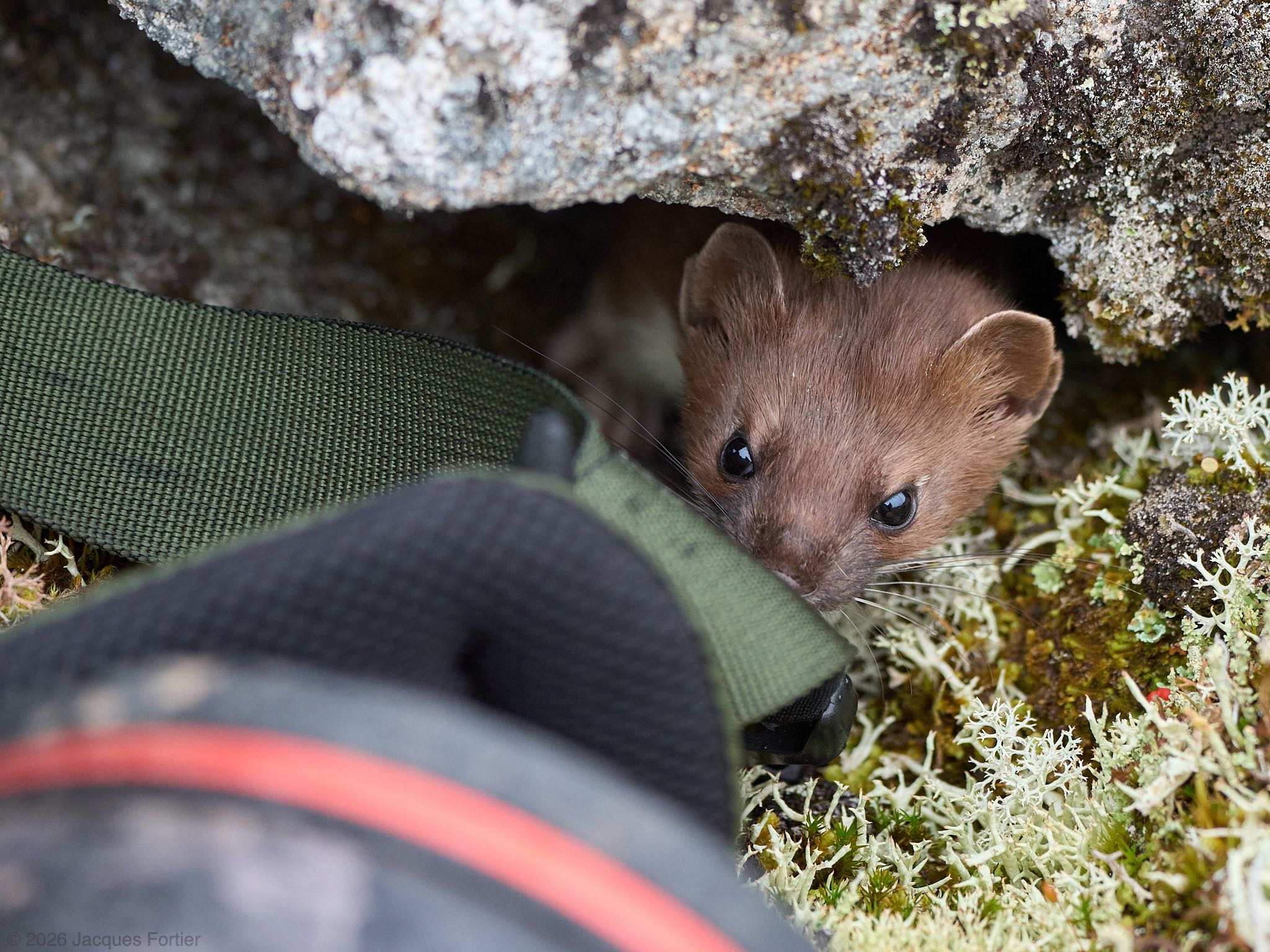
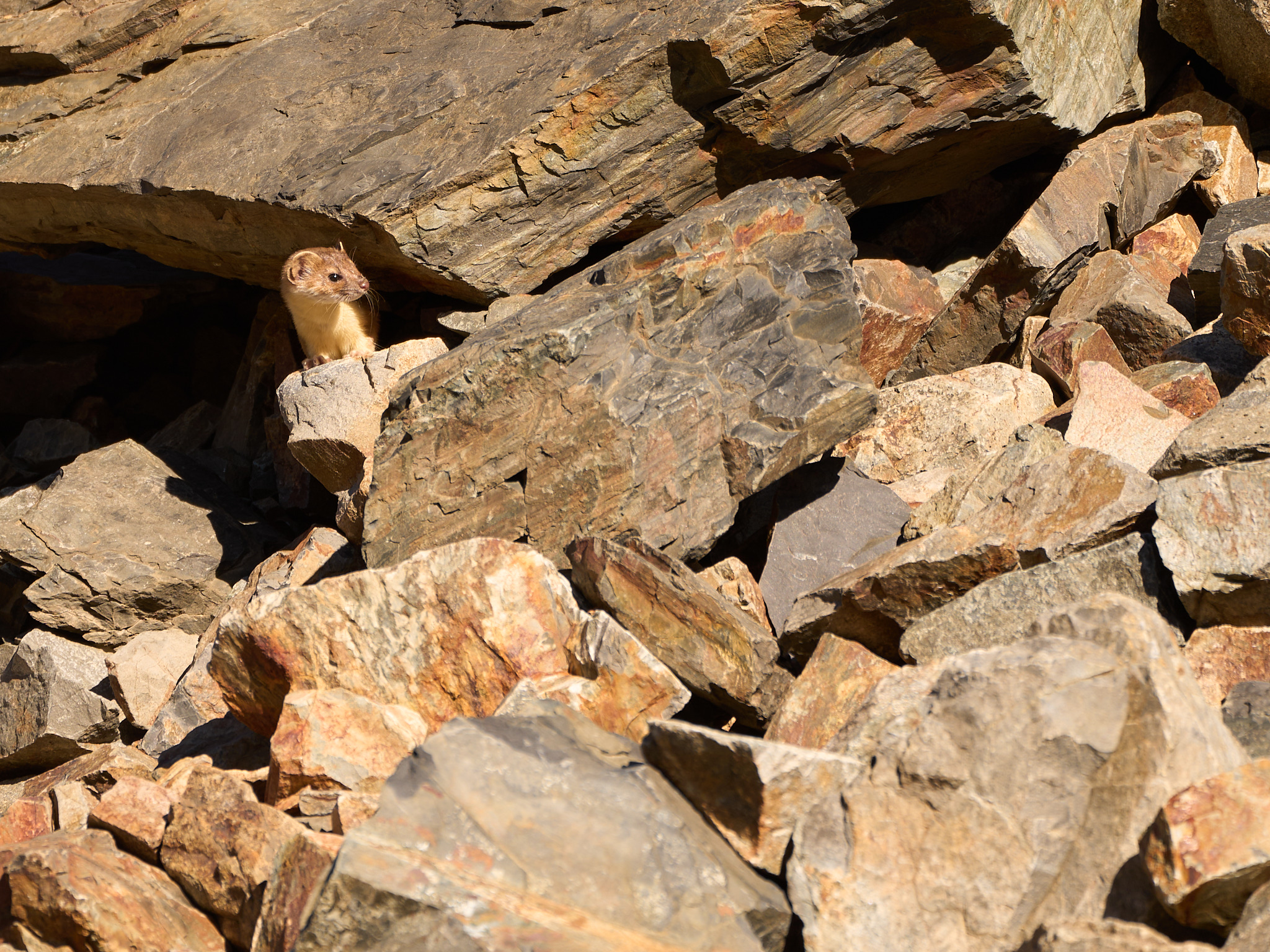
I waited for a while and the reason for their shyness became clear when a Short-Tailed Weasel (Ermine) popped out of the rocks!
The weasel was very bold, popping out right at my feet to investigate my backpack. At times, the weasel appeared to be sizing me up to decide whether it could take me down for dinner! Only polar bears have displayed more curiosity about my edibility.
Eventually the weasel moved to a more respectable distance and peered at me from behind a rock. I barely had time to get my camera focused on it before it took off, but I managed to get my favorite shot yet of a weasel.
The pikas were already in hiding by the time the weasel showed up, but the ground squirrels stood up to make their alarm calls, which produced another one of my favorite photos from the trip.
Day 3: Morning Pika
I only had a few hours on my final day before I had to head to the airport. Unfortunately pikas are not typically early risers and the light was gloomy, so I didn’t get much. But, a pika did briefly let me watch it forage before it was time to for me to bid Hatcher Pass farewell once again.
Lately, I’ve been getting interested in using a van as a base camp for wildlife photography. I’ve done some backpacking photography, and while it’s a lot of fun, the limitations of dragging all of your gear with you requires some real compromises. Not to mention, some of my favorite places to do photography are very windy, which makes for some sleepless nights.
I decided to rent a Sprinter van from Moterra Campervans, drive out to some of my favorite places, and try a couple of new places. It was a ton of fun.
Here are some of my favorite photos from the trip.
My big wildlife trip for this year centered around a week-long Patagonian Puma photography tour. Given the length of the trip, I wanted to spend some extra time in Chile. Just getting to Santiago from San Francisco is a 17 hour trip, with the flight from Santiago to Patagonia taking another 3 hours.
As I researched potential options Patagonia and the Santiago region, I learned about a remarkable bird I’d never heard of before: the Diademed Sandpiper-Plover. The more I learned, the more I was fascinated. These striking shorebirds live high up in the Andes. One doesn’t usually associate shorebirds with the mountains, but they’ve adapted to specialize in alpine glacier-fed wetlands such as vegas and bofedales. Relatively little is known about them. For example, only in 2024 a study revealed that some populations barely migrate. When their breeding habitat gets covered in snow, they move to nearby hot springs that stay snow-free all year.
Not only are Diademed Sandpiper-Plovers (let’s just call them Diademeds for short) stunning birds, the glacier-carved valleys they inhabit are beautiful in their own right. Not to mention, there are great backpacking and hiking opportunities in the same areas. I quickly stopped considering other options and focused the non-Puma half of my trip on the Diademed.
As I researched this bird, I found that there weren’t a ton of photos showing off their alpine habitat. Pretty much every photo I found was a portrait. This seemed like a real shame, because from what I could tell it lived in some grand and truly unique habitats. I’d never seen a high alpine wetland before. Since my photographic style a bit towards smaller in frame environment shots, this seemed like a great opportunity for me to contribute something new to the world of bird photography: an environmental shot of a Diademed Sandpiper-Plover.
My research identified three reliable spots for the Diademed near Santiago: Valle del Yeso (the Yeso Valley) above Embalse del Yeso (Yeso Reservoir), Piedra Numerada, and the vegas of Rio Olivares. I made a plan to visit all three over the course of my trip.
Valle del Yeso Logistics
Valle del Yeso is the easiest to reach. You can drive right to it. To make the most of my time, I booked a day tour through Albatross Birding. I often like to hire a guide the first time I go to a new place or photograph a new subject. I can probably figure things out on my own, but for a small fraction of the overall cost of my trip, a guide can orient me, give me tips on wildlife habitat and behavior, and impart a wealth of local and natural history knowledge. I requested a guide experienced in photography, and Albatross delivered, connecting me with Jean Paul de la Harpe, a very accomplished Chilean wildlife photographer.
After arriving in Santiago, I rented a car and drove up to my AirBnB in the commune of San Jose de Maipo. Since I was spending multiple days above 10k feet, I wanted to spend the night at at least 4000 ft. I made a quick lunch stop at Restaurant Inesita where my terrible Spanish scored me some lamb Cazuela and a Churrasco sandwich to go. That’s where I learned that in Chile, a sandwich “a la Italiana” includes avocado, a generous heap of mayo, and tomato to make the colors of the Italian flag. After lunch, I checked in to my AirBnB (simple, cozy, and with a very friendly and helpful host), and then drove up to the Embalse el Yeso area to quickly scout things out.
While this is the easiest place to find the Diademed, the drive isn’t for the faint of heart. First, you need to ignore the signs telling you that you can only drive up the mountain in the morning. They aren’t enforced, and nobody pays them any mind. The road up to the reservoir isn’t too bad, but it is steep and very winding in places.
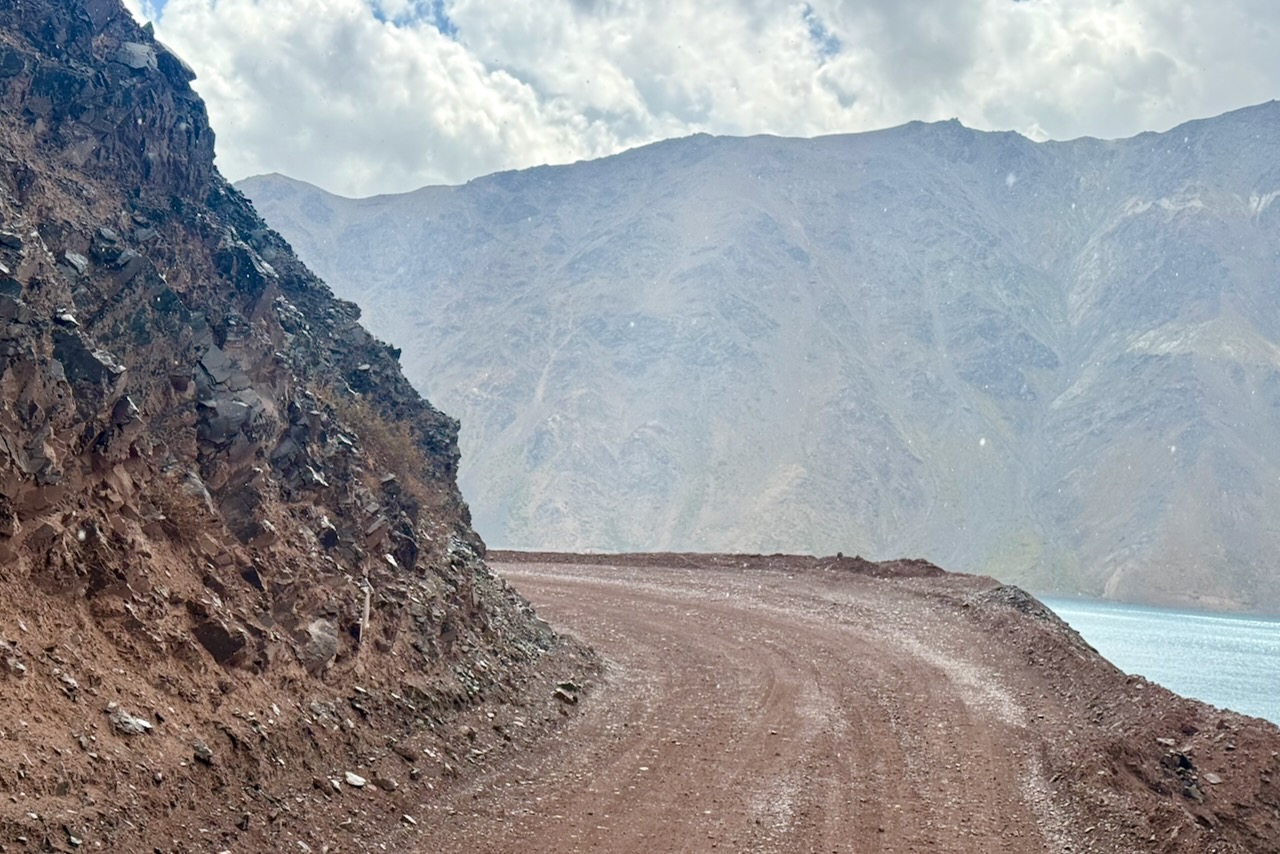
Once you get to the reservoir itself, things get more exciting. The road is perched on the side of a steep glacial valley. In most places, it’s just wide enough for a single car. There are small sections where two cars can squeeze past each other. A narrow berm that varies between 6″ and 12″ high is all that protects you from a fall to your death in the reservoir. On the other side, the rock face is at times vertical. This is all made even more exciting by the 10-12 blind corners, most of which are in the single lane sections. I’m assured that this is a relatively high quality mountain road by Chilean standards. Fortunately, nobody was driving very fast and everyone was courteous about navigating the single lane areas.
Once you get past the reservoir, you’re still driving on dirt or gravel roads but without the steep dropoffs. For part of the drive, the roads are usually in good condition because they’re maintained by a mining company. Eventually, you come to a gate into a small park (12000 CLP fee) after which the road gets quite a bit worse. In some portions, you’re driving directly on the streambed.
While plenty of people drive this area in small city cars, I’d recommend AWD/4WD. If you get yourself into a sticky situation, it’s going to be a much bigger hassle in a rental car in a foreign country, especially if your Spanish isn’t very strong. Most car rental places in Chile only have 4x4s available in manual transmission. Since I expected to be driving unfamiliar mountain roads and last drove a stick shift about 10 years ago, I tracked down a 4×4 with automatic transmission at Fox Rent a Car. Fox subcontracts through Europcar, who in turn subcontract to Econorent in Chile, so look for Econorent when picking up your car at the airport.
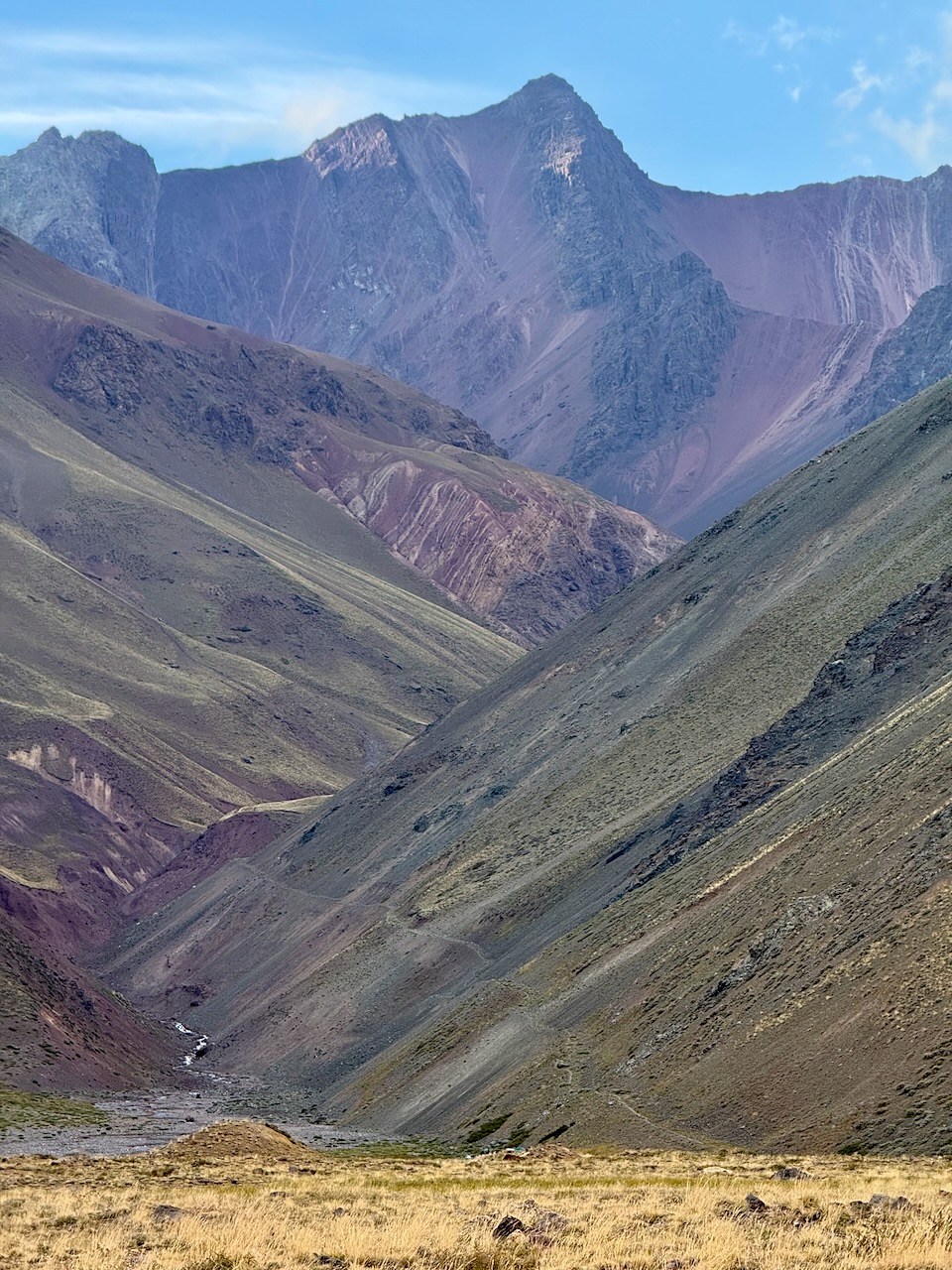
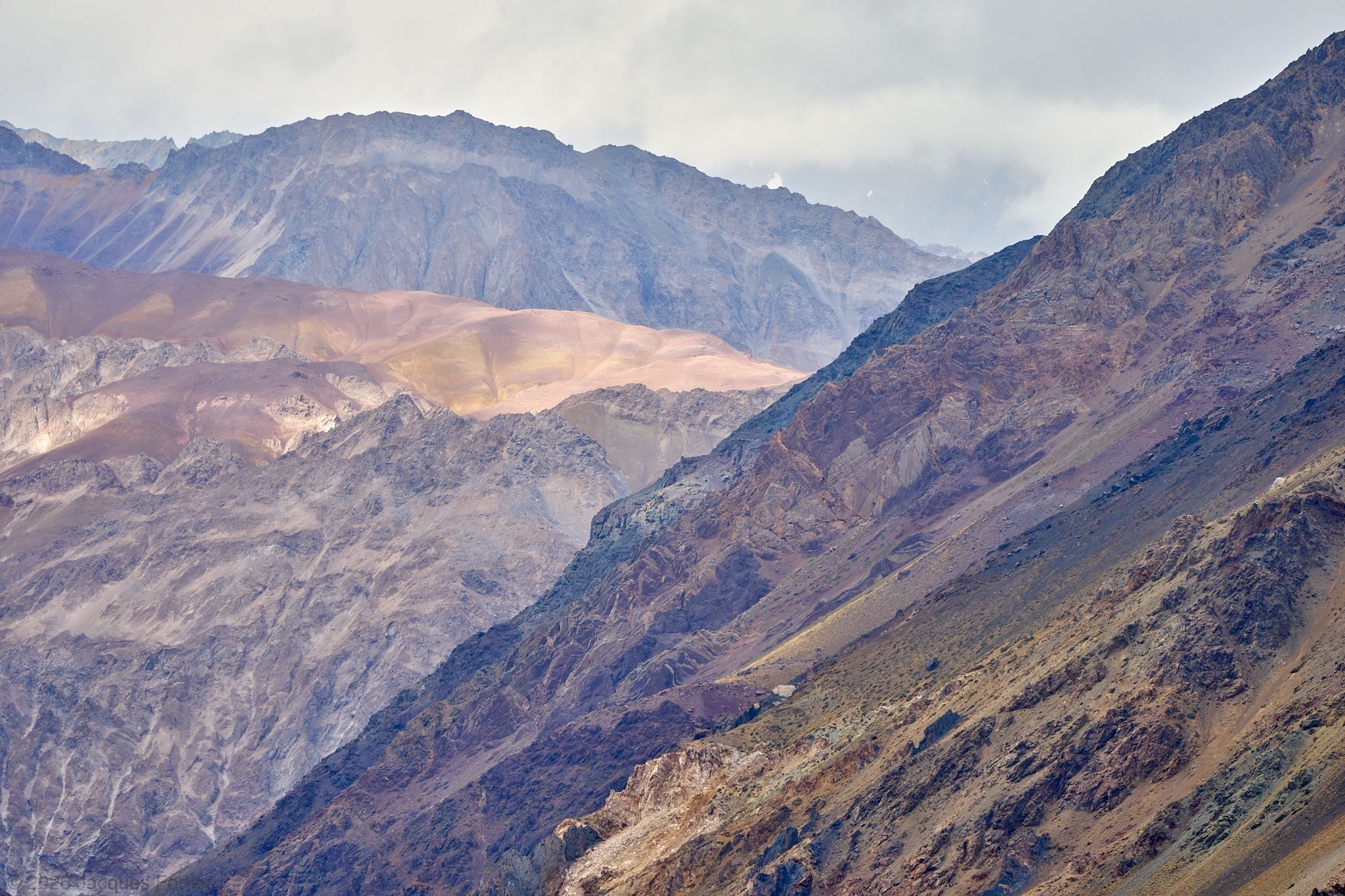
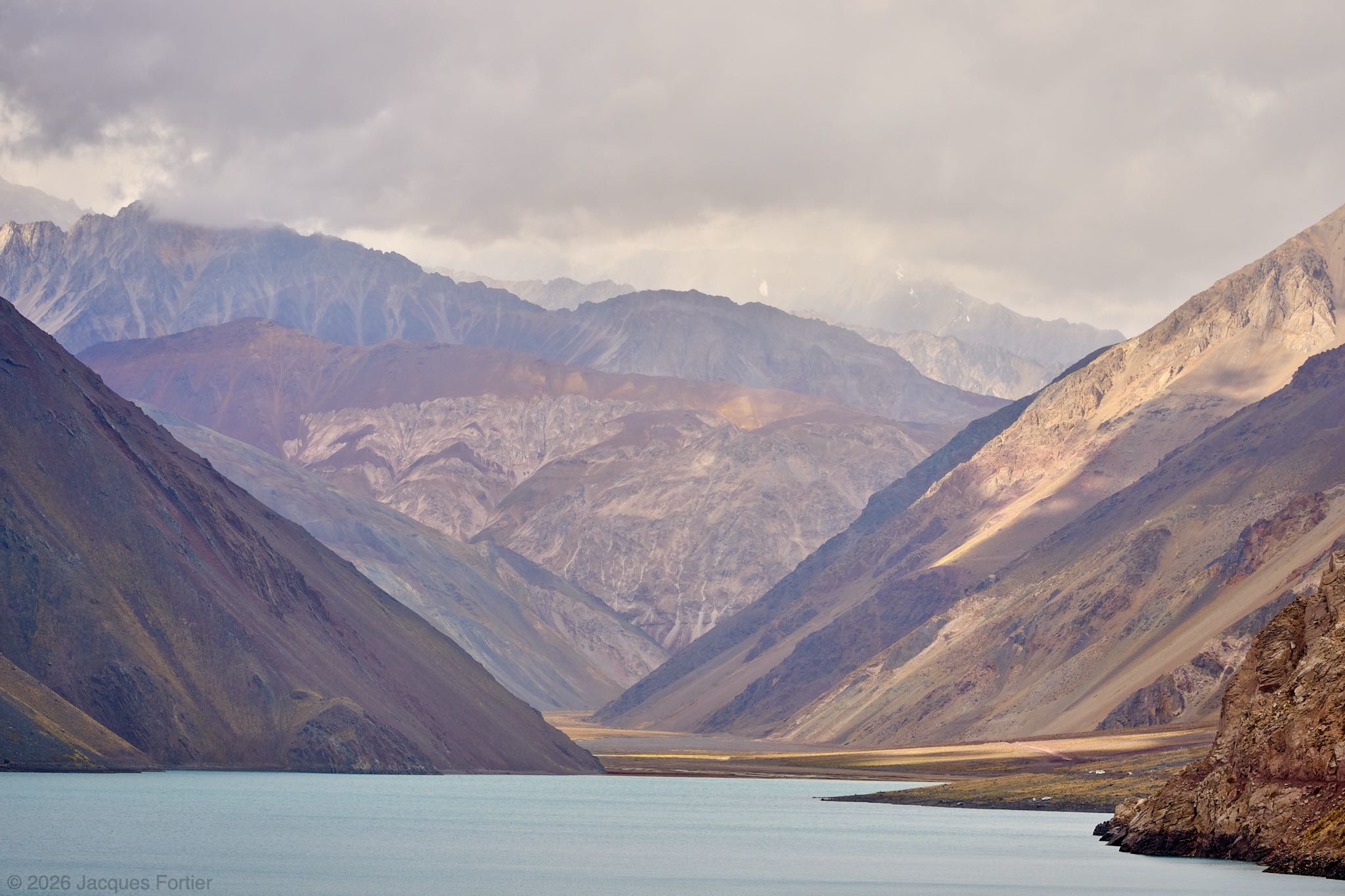
For this first visit, I was mainly focused on driving and taking in the scenery, so while I saw plenty of birds, I didn’t try to photograph them. The scenery was absolutely astounding, however. I’ve never seen colors and layers quite like this.
The gate to the park with the plovers closes at 8 pm, and I arrived just after, so I turned around, enjoyed the sunset, and then headed back to my AirBnB to get some rest.
Valle del Yeso Tour
The next day, JP picked me up from my AirBnB at 6:30 and we drove up in the dark. We arrived at the reservoir a bit after dawn around 7:30 am. It was a cloudy morning, so the light was pretty terrible.
The area is surprisingly birdy for such a high altitude. JP pointed out at least a dozen species just on the few mile drive to the area with the plovers.
The gate doesn’t open until 8 am, so we took our time, photographing a few bird species and also stopping to take in the landscapes.
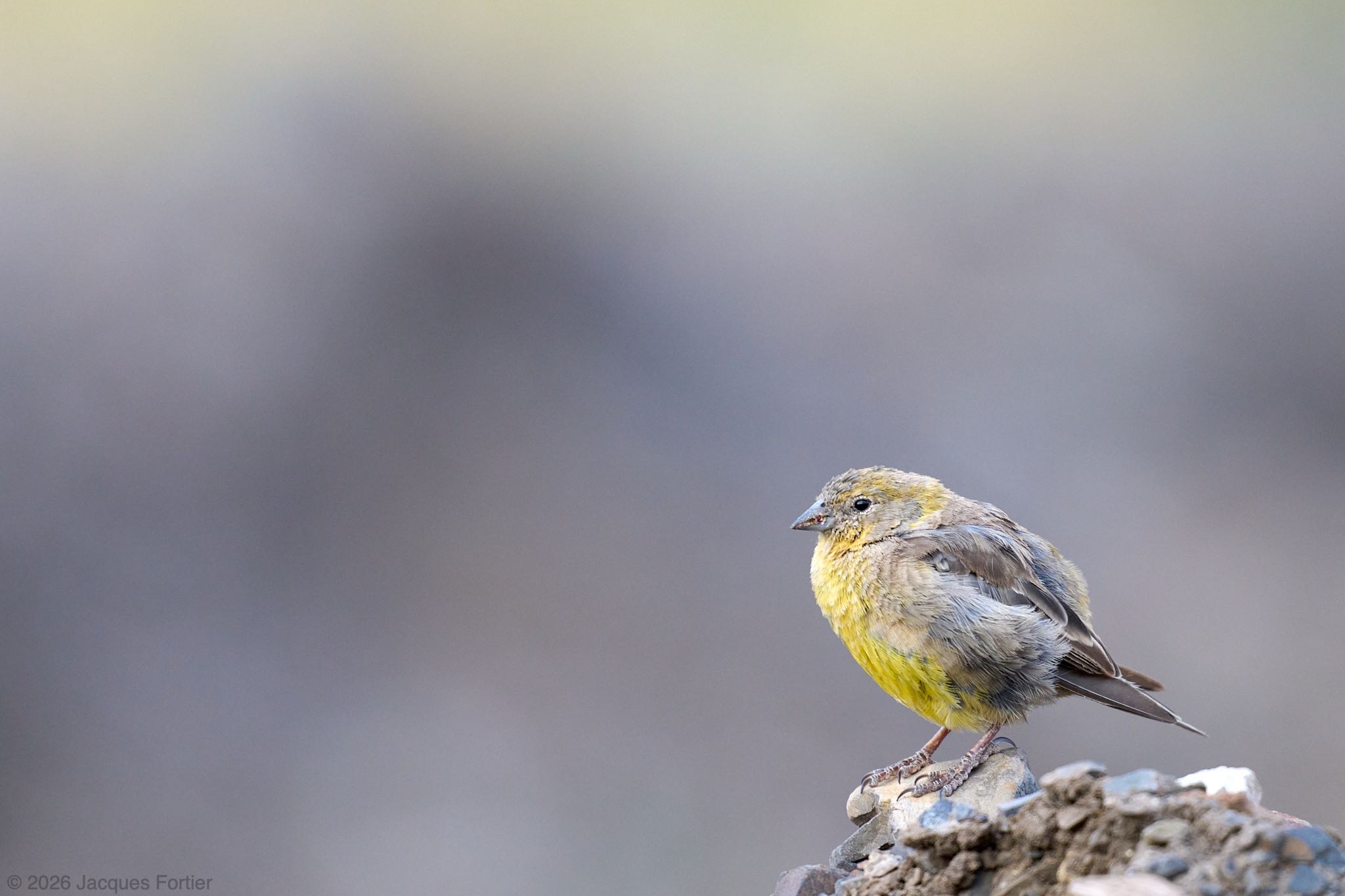
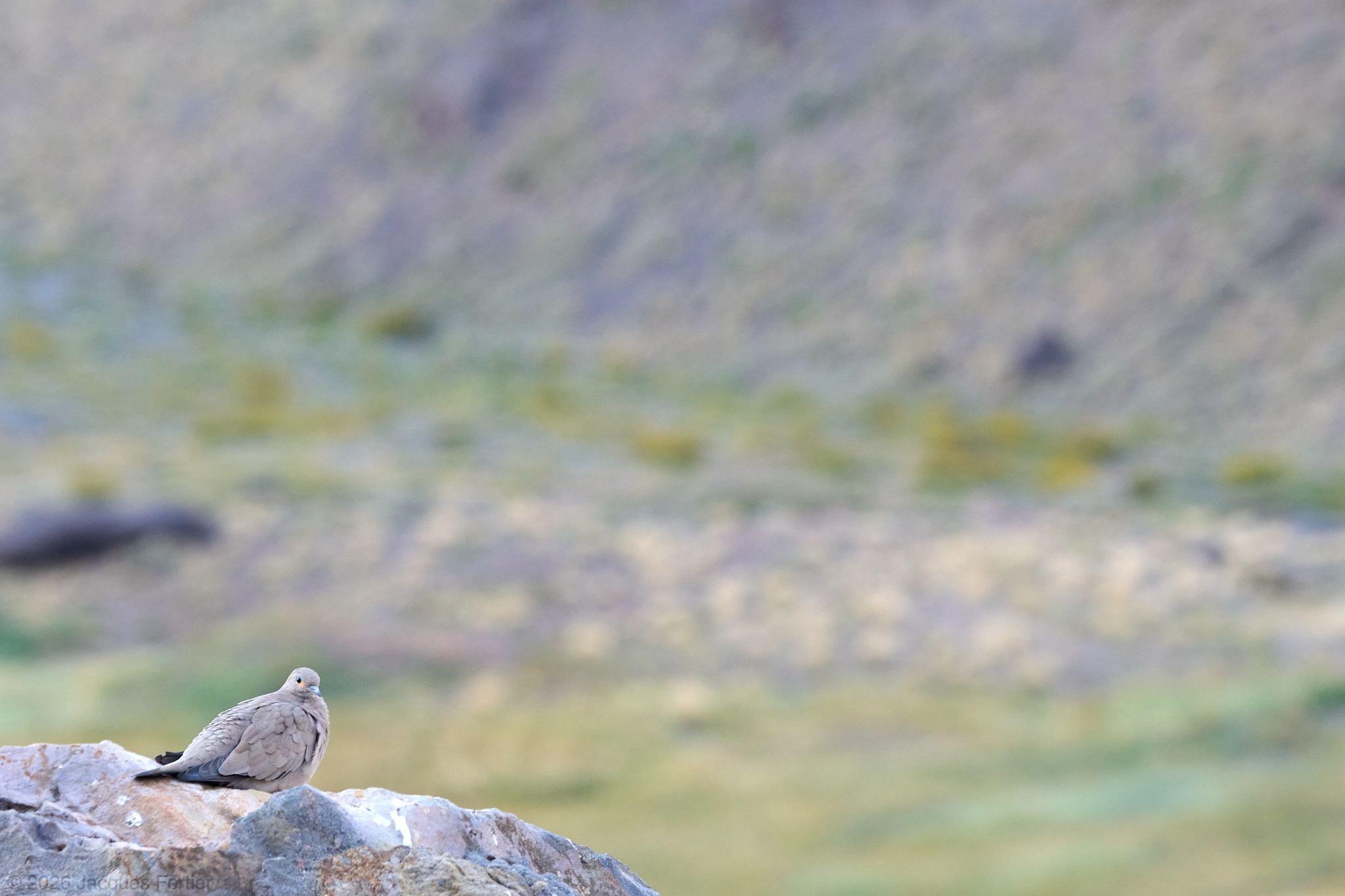
The species we saw included Greater Yellow-Finch, Black-Winged Ground Dove, and the Gray-Breasted Seedsnipe.
The seedsnipe in particular is a pretty special bird for the area. They’re shy, however, and they weren’t our focus, so we kept moving after it faded into the bushes.
We also made a few stops to take landscape photos. I just don’t have the gift for translating the grandeur of landcsapes into photos, so please take my word for it that it was a spectacular morning in the valley.
We stopped at one spot where the Diademed is occasionally seen, but after 5 minutes of scanning we didn’t have luck, so we continued towards the gate, timing our arrival for right around 8 am.
Finding the Diademed-Sandpiper Plover
JP filled me in the the plover’s typical habitat. He also explained that they tend to stick to the same general area every season, so once they track them down at the beginning of the season, they become a bit easier to locate.
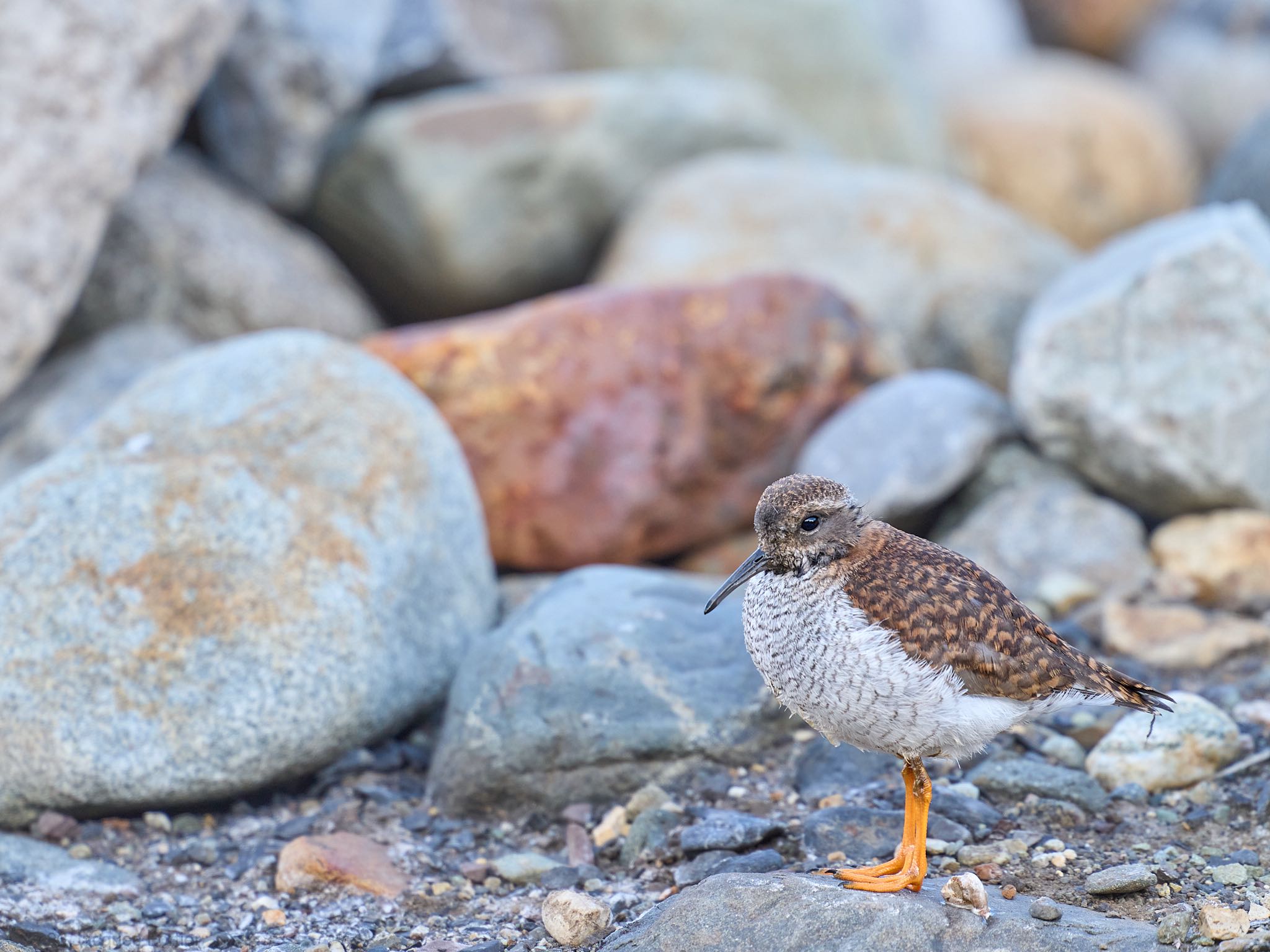
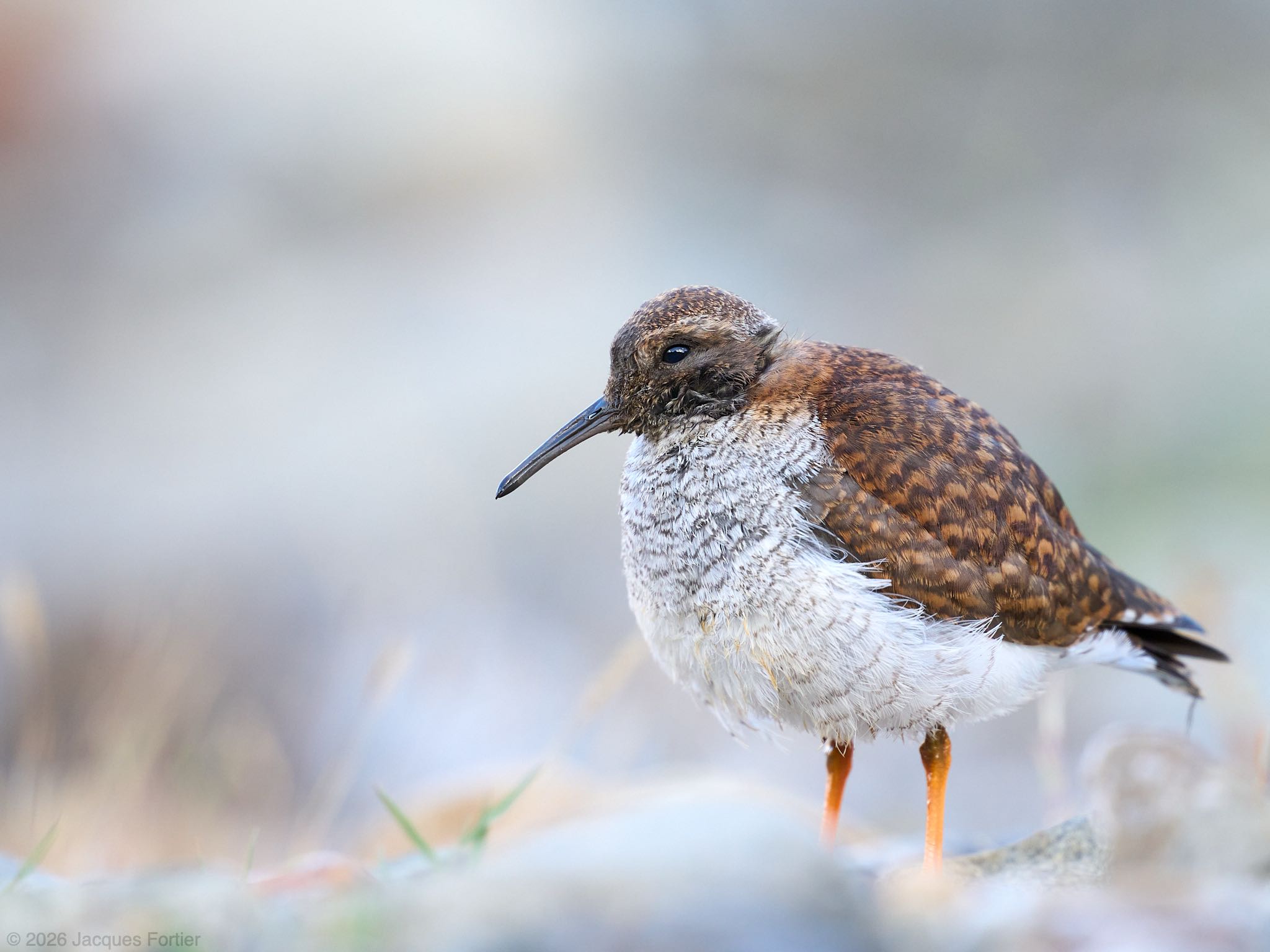
We found the juvenile almost right away. They have a more richly patterned back than the adults, but they’re missing the distinctive diadem that really makes the adults pop in photos. You can just see it starting to grow in on this adolescent (it being the beginning of autumn in Chile when I visited).
After spending a bit of time with the juvenile, we set out to find the adults. Finding a bunch of shorebirds doesn’t sound like it should be hard, but there are two important things you need to know.
First, Diademed-Sandpiper Plovers are solitary. In a given wetland, there will usually be a single breeding pair, plus one or two juveniles. I haven’t heard of clutches larger than two. That means if you don’t already have a sense of where they’re clustering, you’re looking in an area of a few acres for at most four birds. Second, while they look striking in photos at eye level, from above they look almost exactly like a rock. The stipe on their head really works to break up their shape. Even after we found them, it would take serious concentration to relocate them if we looked away for more than a few seconds.
JP gave me a few hints about their typical habitat, and he had a good idea of where to start looking, so it only took us about 20 minutes to track down the adults. They’re easiest to spot if they’re in motion. If not, their bright orange legs are a good clue. And if those are hidden you’re just going to have to look at every rock until one of them transforms into a shorebird.
Photographing the Diademed Sandpiper-Plover
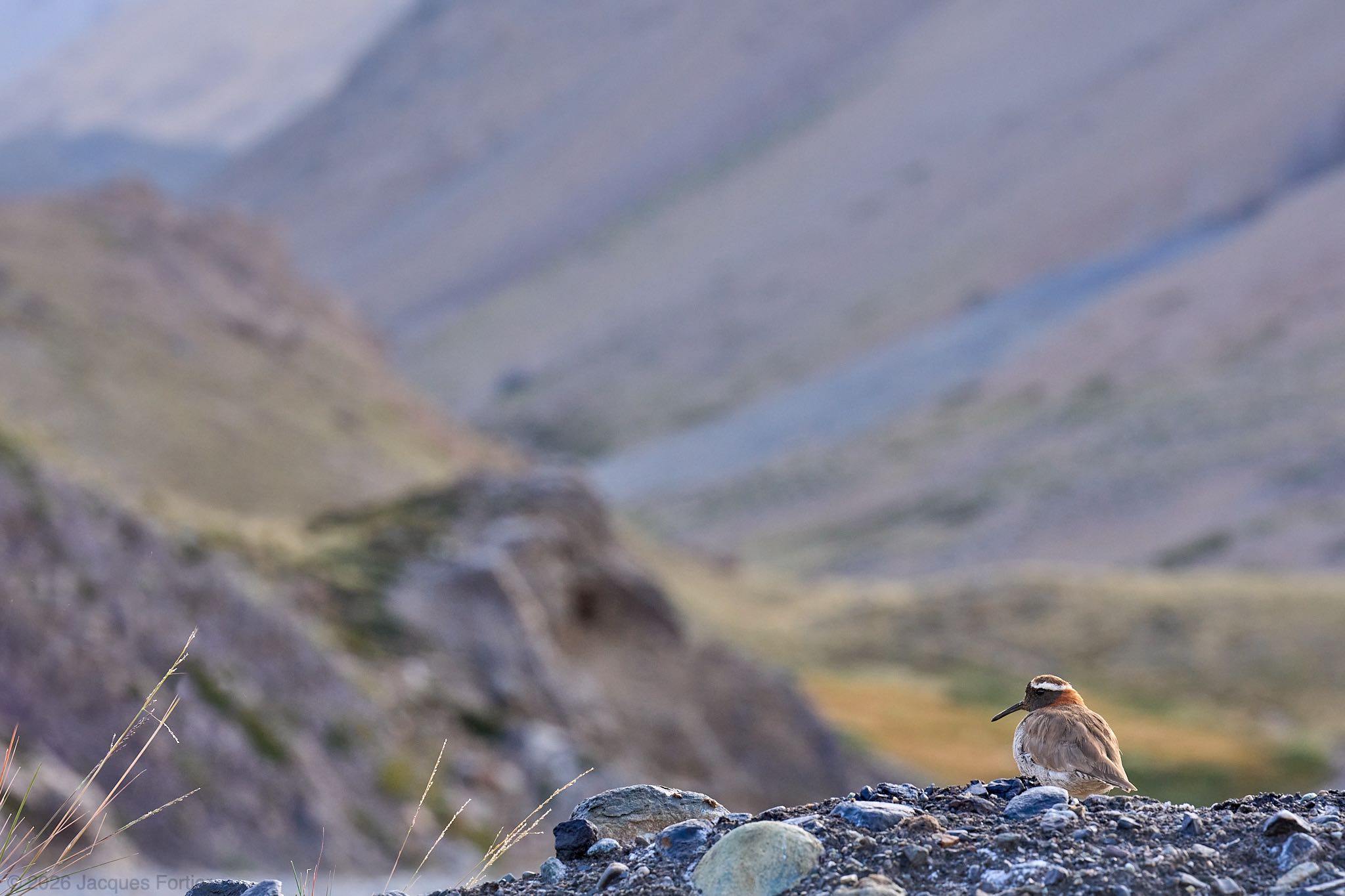
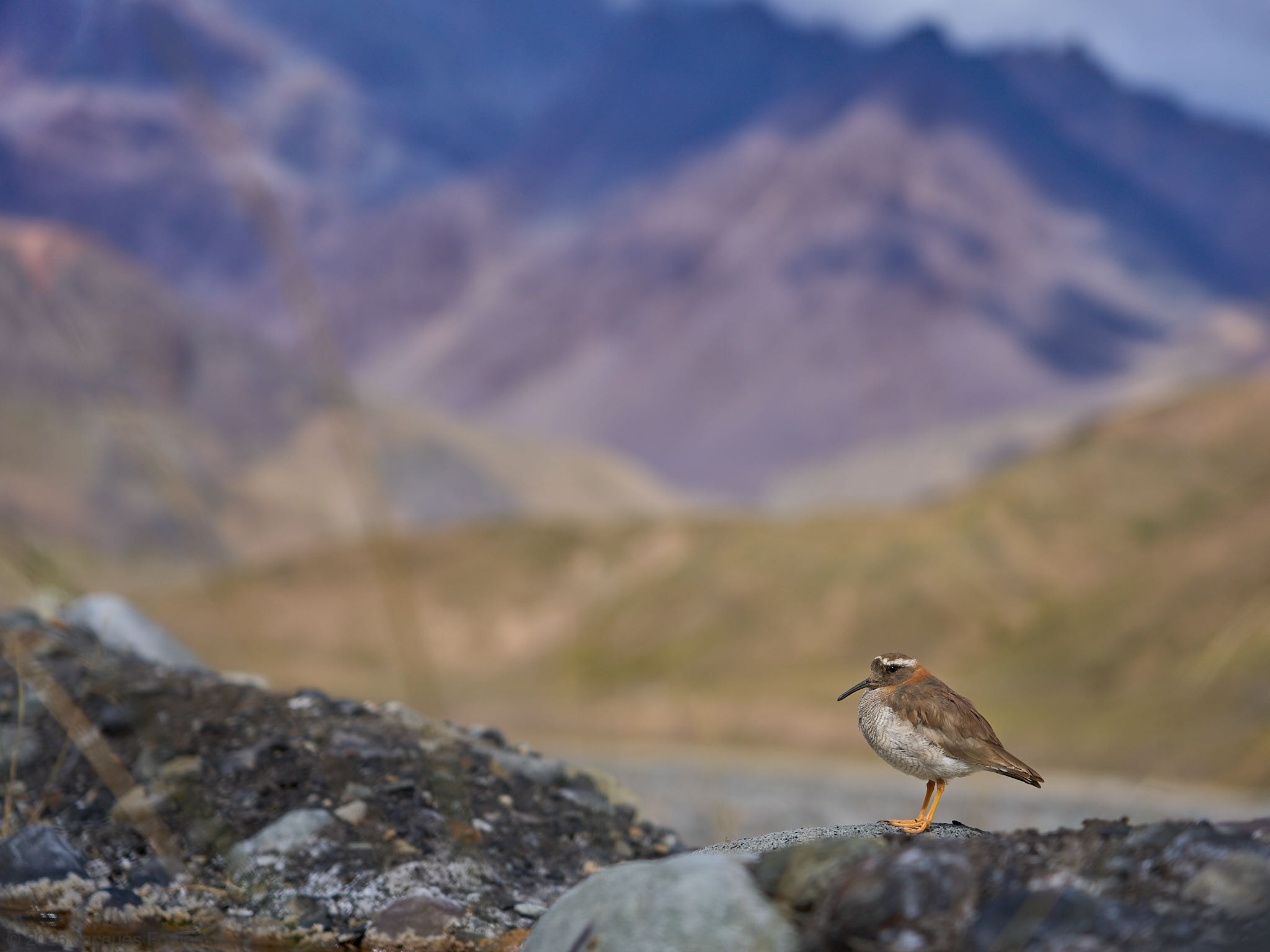
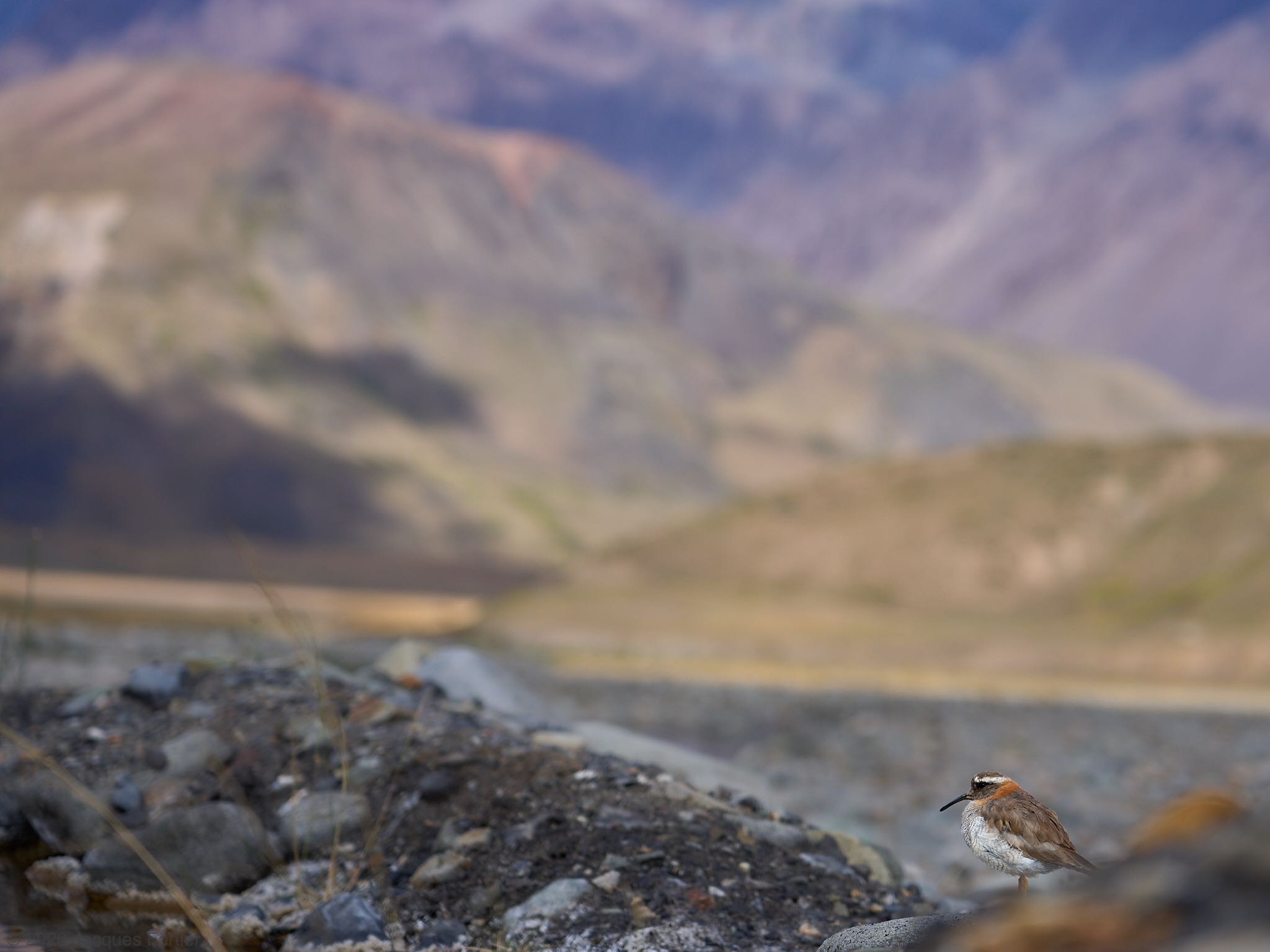
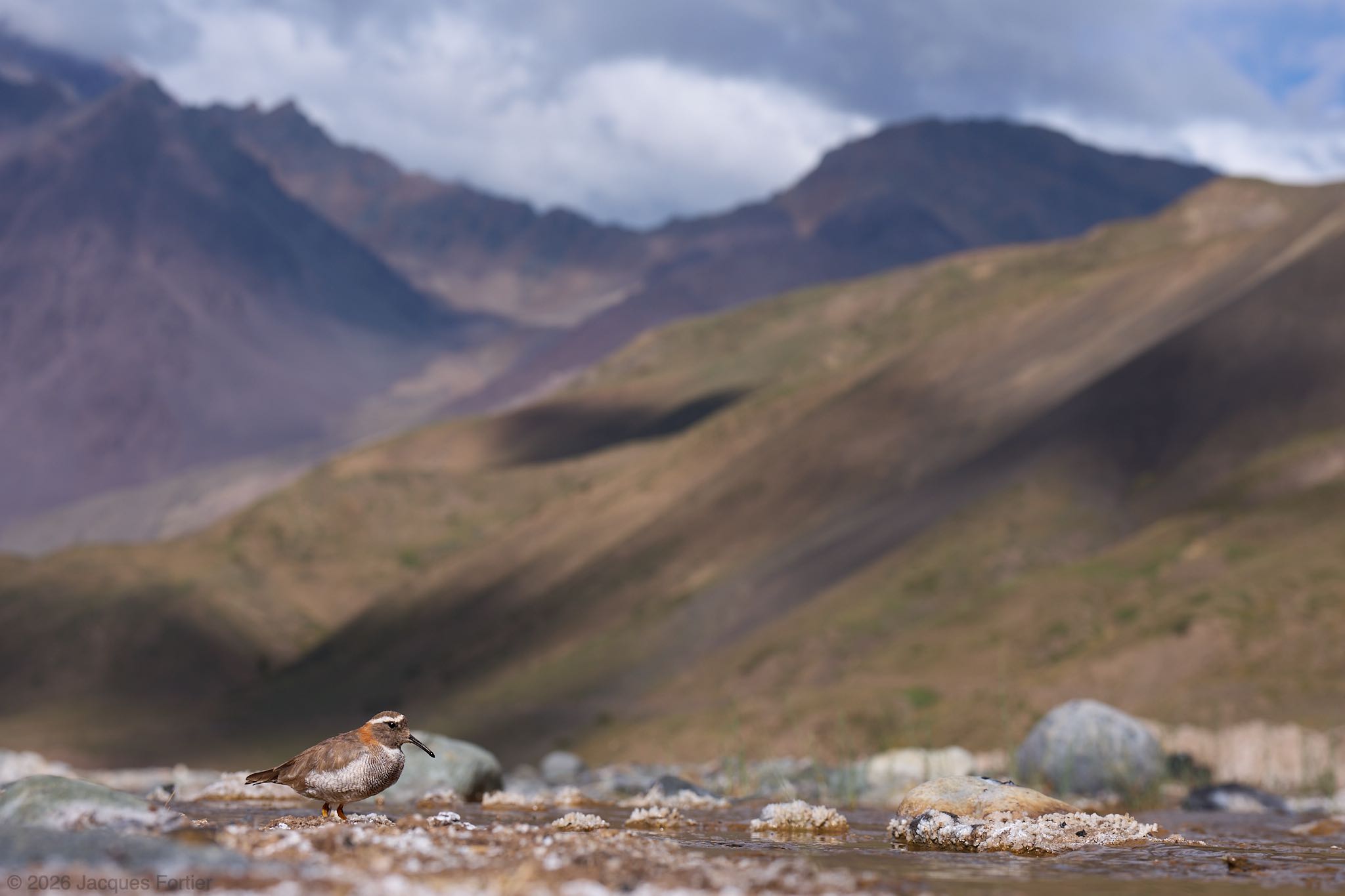
Right after we found the first adult, it hopped up onto a mound of rocks and looked back at me, giving me the one of the scenic shots I was after.
It was also happy to stay still to let me zoom in and get a portrait.
I quickly realized that I had brought the wrong lens for this trip. The widest one I had was my 70-200 mm. I have a 24-105 mm, and I had considered bringing it with me. But, while packing I thought about all the other trips I’d taken where it had sat unused in my pack for the whole time, and opted to save myself some weight. I quickly found myself regretting that when I discovered that these birds have absolutely no fear of humans. As long as they saw us coming and we moved at a reasonable pace, they paid us very little mind. More than once they walked right towards me, coming within less than a foot.
I had weird issues with focus when the birds came in close. I could manually focus on them, but autofocus just wouldn’t lock. I eventually resorted to manual focus. It was only the following night that the solution hit me completely at random: I was so unused to dealing with subjects that close that I hadn’t thought to check the focus limiter. Sure enough, it was set to 3 m instead of the lens’s native 0.4 m minimum focus distance. Dealing with that definitely cost me a few potential shots. It turned out JP had a 24-105 with him (a nice benefit of of going on a tour with a Sony ambassador), but the best light was gone by the time I borrowed it from him.
We spent a couple of hours working on environmental portraits. The plovers spent a lot of time feeding, and occasionally roosted, but I managed to get some solid shots showing off the unique colors of the Andes in the background. I never felt like I quite got a “wow” shot, however. The light was a bit of a challenge. There were scattered clouds, so we alternated between flat and harsh light the whole morning. Still, for my first time shooting these birds, it was a great result.
We also ran into Lalo, another Albatross birding guide, who was bringing an avid birder out for his second attempt to find the Diademed Sandpiper-Plover. He’d failed on his first attempt a few years ago when lingering snowpack prevented access to the most fruitful habitat. He was ecstatic to find them on this attempt.
Everyone seemed to have a good time doing wider-angle photography. Lalo got this sweet shot at 24 mm, while JP worked on macro shots (yes, these birds really are that tolerant).
Eventually, the plovers settled in to roost, so we paused for a lunch break. After lunch, we waited for them to wake back up and get active again, but despite waiting for a couple of hours they stayed hunkered down. Still, the time did not feel wasted at all, as we hung out and soaked in the views in JP’s cordilleran “office”.
More Valle del Yeso Landscapes
When 3 pm rolled around, we started heading back to my AirBnB, giving ourselves plenty of time to stop for landscape photos. I still don’t feel like these photos quite do the landscape justice. I was in awe pretty much my entire time in the valley.
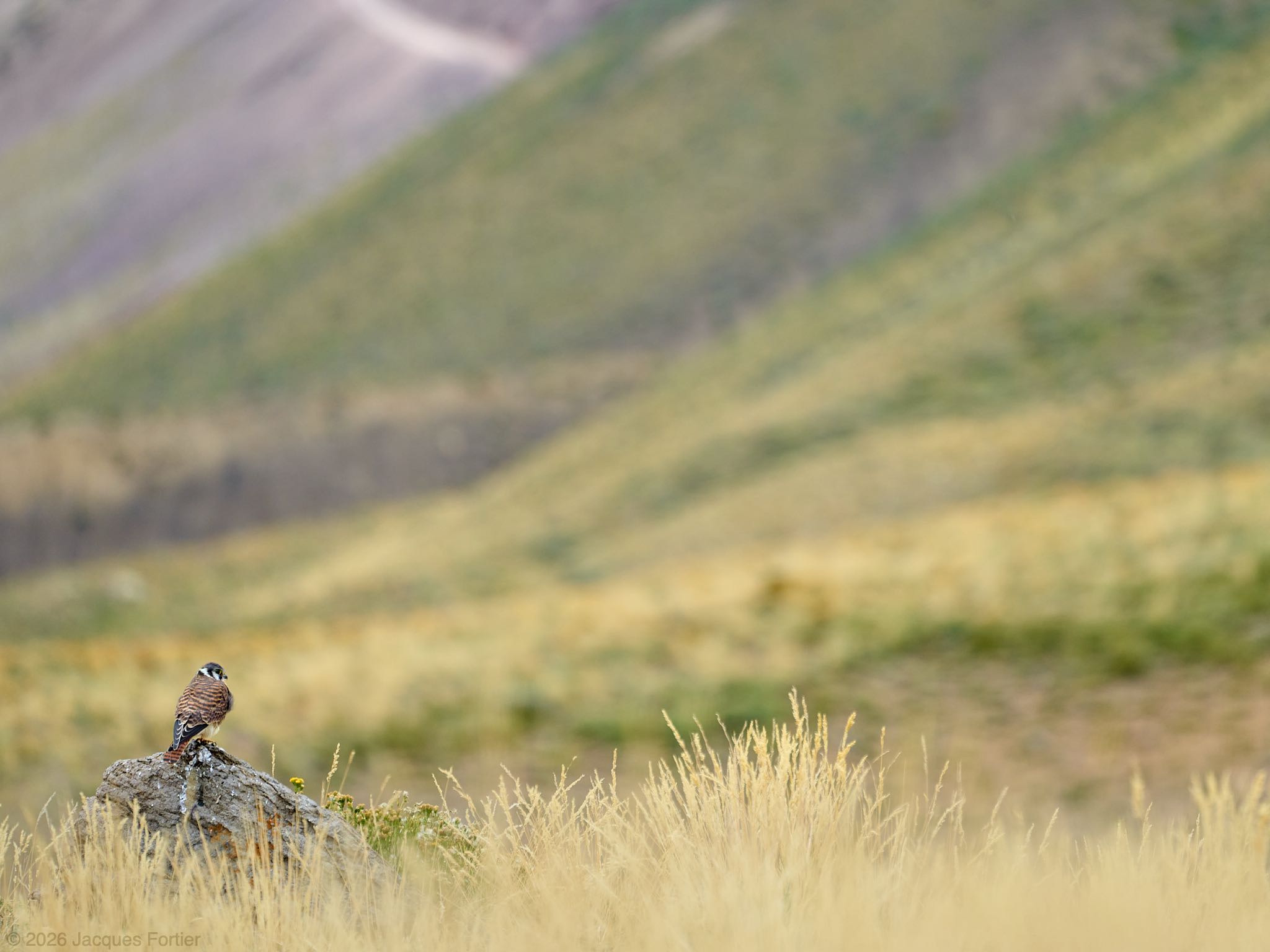
We also had a brief encounter with an American Kestrel. I went as wide as possible to pull in the Andean scenery. Unfortunately, that meant I didn’t notice it looking away when I finally had the composition dialed in. Still, it was a cool shot.
My next night was in a different valley to the north. Claudia, my AirBnB host had been gracious enough to let me leave my car at her house while I was out on my tour. When I stopped by to pick it up, she offered me the use of the bathroom, water, and the shower before I continued on my trip. I was very grateful for the hospitality, and would definitely stay with her if I’m ever in San Jose de Maipo again.
Final Thoughts
The Yeso Valley is a great place to photograph the Diademed Sandpiper-Plover. It should probably be the main go-to for anyone who wants to photograph this amazing shorebird. It’s got a few things going for it.
First, it’s relatively easily accessible. Just 2-3 hours of driving from Santiago. Very little hiking is required.
Next, the birds are extremely tolerant. While I haven’t witnessed it myself, the guides said the plovers in northern Chile are as skittish as you would expect from a typical shorebird. The biggest problem with the birds in this spot was having them rush inside your minimum focus distance.
Equally importantly, the Valle del Yeso has some great landscapes to serve as a backdrop for the birds.
The biggest challenge for this location is the hours. You can’t enter the park where the plovers are typically found during the periods with the best light. While we were lucky enough to have some clouds during our visit, you can’t count on that in the summer in this kind of climate. (In the winter and spring, the area isn’t accessible at all because it’s covered in snow.)
However, while the gate is closed outside of 8 am to 8 pm, there is a workaround. You can camp in the area. Car camping or camping in a tent next to the car should both work. I didn’t do this myself, but I did see other people doing it. There are limited facilities (toilets). You’d need to bring shelter, food, potable water, and toilet paper for the toilets.
The one thing I’m not sure of is whether the birds will be active near sunrise and sunset. At another location, they weren’t active (or I couldn’t find them) near sunset, but I did see some activity at sunrise at that location. I would be surprised if they weren’t active at at least one of those times, however.
Next time I’m in Chile, I will definitely give the car camping approach a try.
I don’t do a lot of landscape photography, but I was inspired by a hike yesterday in the Mount Tamalpais Watershed.
I’m training up for a 5 day backpacking trip in Yellowstone this fall. Unfortunately I almost immediate injured my Achilles tendon, so I’m stuck at 500-600 ft elevation gain hikes while I rehab it. This was the first hike in a while where I felt like I could go a lot further.
It had been a few weeks since my last significant photography outing. A visit to Point Reyes, my favorite place in the world, was in order. I would have been happy just to spend some time outdoors, even if I didn’t manage much photography. Instead, I was rewarded with one of the most magical days of wildlife photography I’ve ever experienced.
The day started typically enough. I spotted some Tule Elk bulls feeding near a ridge line. The bulls are just starting to regrow the antlers they shed earlier in the winter. I worked my way around to put them right on the ridge. After a few minutes, some younger bulls arrived to join them. I was waiting for everyone to line up so that I didn’t have overlapping animals, when the local ranchers’ domestic cows arrived to see if I had food for them. Not wanting to fend off a small herd of cows, I headed onward.
I spent the next hour checking out Burrowing Owl spots. Most of the owls appeared to have departed for the spring migration, but I found a couple of owls that were still enjoying life on the seashore.
As I continued my day, I ran into a friend parked by the side of the road. I pulled up to say hi, and he pointed out that he was watching an American Badger and a couple of Coyotes! The Coyotes had been digging into the badger’s hole earlier. Before I arrived, the Coyotes had given up and settled in for a nap. I didn’t get to see any interactions between the animals, but it was still cool to witness.
A light rain started, prompting the badger to disappear into its hole. My friend headed off to look for Bobcats. I took the opportunity to get into position and wait for the badger to re-emerge. Before too long, it did just that.
I even got to witness the badger remodeling its hole. Sadly some grasses got in the way of that perfect claw shot.
I also got some good looks at the Coyotes.
It started clouding over again, and the badger headed back into its hole. That was my cue to depart and check out another part of the park.
I knew of some owls that could sometimes be seen near a popular walking trail. I headed over to look for them, and was pleased to find them sitting right next to each other in some willows. Unfortunately, one of them was hidden in the branches. A tour group saw one of them regurgitate a pellet right after I turned away!
As I continued along the trail, I heard the distinctive buzzy call of a Marsh Wren. Marsh Wrens are easier to hear than to see, so I was very excited when I spotted it clambering around on some dead marsh grasses. I was even more excited when it flew out into the open! Unfortunately, it landed on an ugly metal fence post. Even on a magical outing, not everything goes quite your way.
After finishing on the trail, I got back on the road. I quickly came upon a car stopped in the travel lane. I looked out the window and saw a Coyote in the field. Since I was stopped behind them anyway, I took a quick photo. When I got home, I was surprised to find the Coyote was heterochromatic, with one blue eye and one brown eye. I’ve photographed blue-eyed Coyotes before, but never a Coyote with differently-colored eyes. Both eyes appeared to be working, so I think it might have been born this way.
At the time, I hadn’t realized how special this Coyote was, and my attention was quickly diverted when the other driver mentioned there was a Bobcat in the opposite field. Surprisingly, they didn’t go to photograph it. Maybe they had noticed the Coyote’s eyes and wanted to throw me off the scent. In any event, I was happy to pull over and see what I could make of the Bobcat.
I noticed that the Bobcat was working its way towards my right, nosing around for gophers. I got ahead of it and crouched down behind a fence. Just a few minutes later, the Bobcat sprang into action. I’m not sure if something on the road spooked it, or if it was hastening to find a gopher, but I was rewarded with a rare shot of a Bobcat running towards me. Normally if you see a Bobcat running it’s because it wants to get away from you or another large mammal like a Coyote.
In short order, the Bobcat stopped running and stalked up on a gopher hole. After coming up empty-handed from its pounce, it gave me that classic feline look that says “this is all your fault.”
The Bobcat decided to settle down for a brief nap, so I took the opportunity to make a wide circle to get the sun at my back. I got down low on the ground and waited, hoping the Bobcat would come my way. I think something on the road startled the Bobcat, because it sprang up and headed right my way! It kept coming closer and closer as I kept my camera low to the ground and fired away. The Bobcat veered off at just the perfect distance to give me a beautiful frame-filling shot of a Bobcat mid-stride. You don’t get that kind of opportunity on every outing!
After the Bobcat walked by me, I just looked up and marveled as it continued on its way. I decided against following it. It didn’t seem to mind me too much, but it also had been disturbed a few times by some of the noisier traffic on the road. I gave it a wide berth and headed back to the road, where a passing tour group was kind enough to give me a photo of myself watching the Bobcat.
I watched from a distance as the Bobcat hunted and devoured a gopher, and then moved on for one last opportunity before sunset. I headed back to the badger spot to see if I could get a few more shots. Being careful to stay downwind, I settled in a respectful distance from the badger’s hole, and waited in silence.
After a while, I heard a shout from behind me. “Hey buddy! There’s a Coyote coming right towards you!” Naturally, I was thrilled to hear this news. I turned slowly to avoid alarming the Coyote. From his tone, the Good Samaritan thought I was a nutcase. “It’s at your 9 o’clock! Your 11 o’clock! It’s right on the trail!“
Finally, I spotted the Coyote, which was in the process of finding a spot to lie down. I gave the driver a thumbs-up, he gave me a confused look, and then he drove off. I couldn’t believe it: a Coyote had curled up to nap on a ridge not too far from me. It clearly didn’t want anything from me. It just wasn’t going to let an annoying human deter it from its chosen resting spot for the night.
The Coyote curled into a tight ball, which was a little bit unfortunate from a photographic point of view. The ridge was beautifully positioned for a panoramic shot, but unfortunately the Coyote didn’t raise its head again until the light was all but gone. So, here’s a panorama featuring a furry lump.
As the evening stretched on, I was faced with a dilemma. Keep watching this sleeping Coyote, or turn back to watch for the badger. After a bit of reflection, I remembered that I didn’t have good shots of a howling Coyote. Surely with sunset there would soon be chorus of howls and yipps. So I settled back down and waited. And waited. The sun set. And still I waited. Finally as it was getting hard to see, I stood up and started to slowly walk away. I had only made it a few paces when I heard it: a Coyote howling on the other side of the ravine. Three or four Coyotes joined in, including the one that had been napping near me.
The light was gone and I was no longer in position for a pleasing composition. I made a quick decision to put my camera into video mode, got down on a knee, and did my best to hold it steady. This is not exactly Animal Planet quality footage, but it was neat to capture such an up close view of the Coyote’s family life, and a final record of one of the best days of wildlife photography I’ve had at Point Reyes.
I’ve been trying out a new creative direction: short films about being out in nature. This one is my second attempt. The first attempt had too many technical issues to be worth posting.
I took a 10 mile hike at Tomales Point in Point Reyes. In the rain. It was a very moody and atmospheric day, but the views were a little tough at times. There was not a lot of wildlife out and about, but I did see a Tule Elk herd right on the trail.
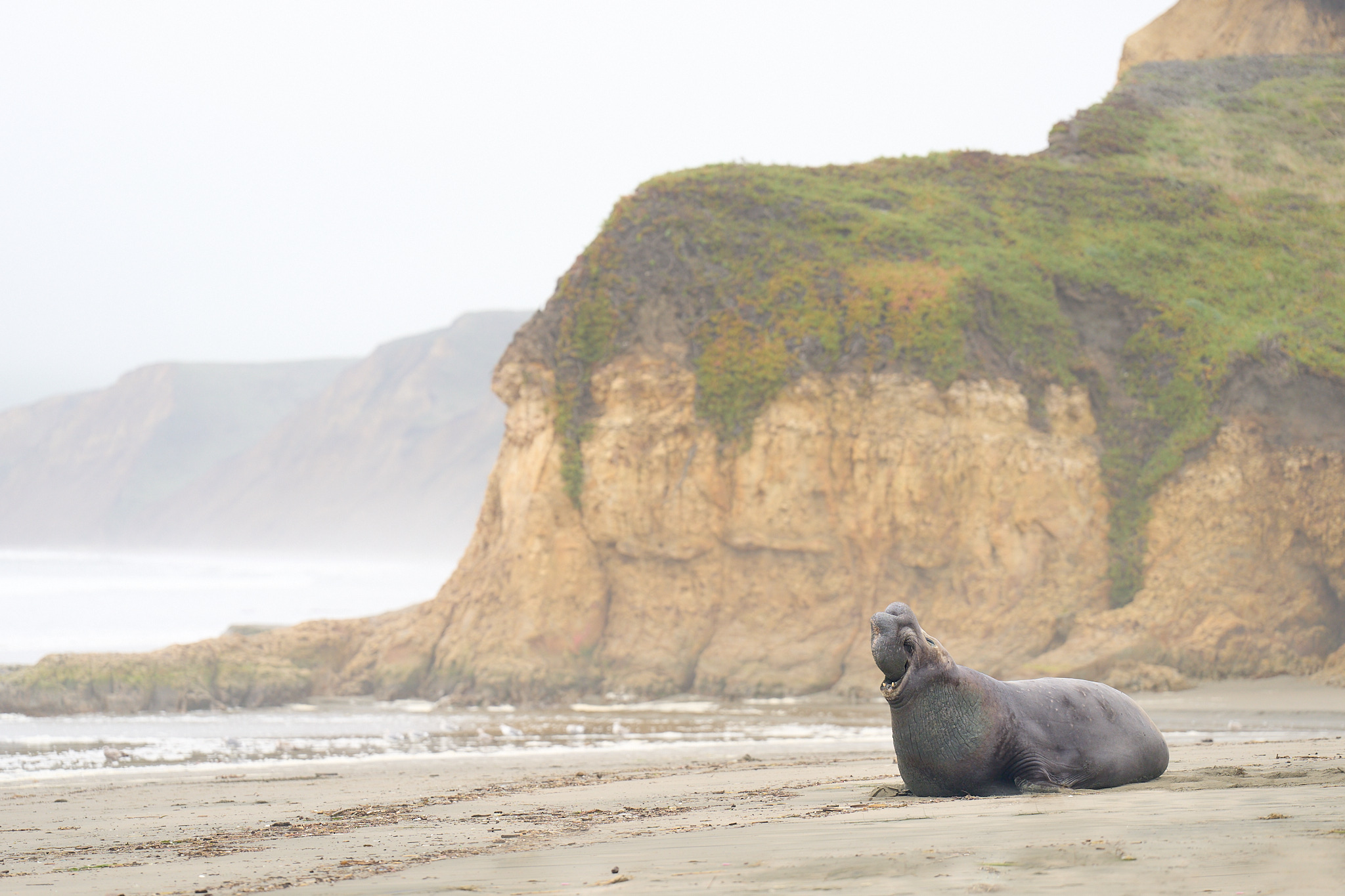
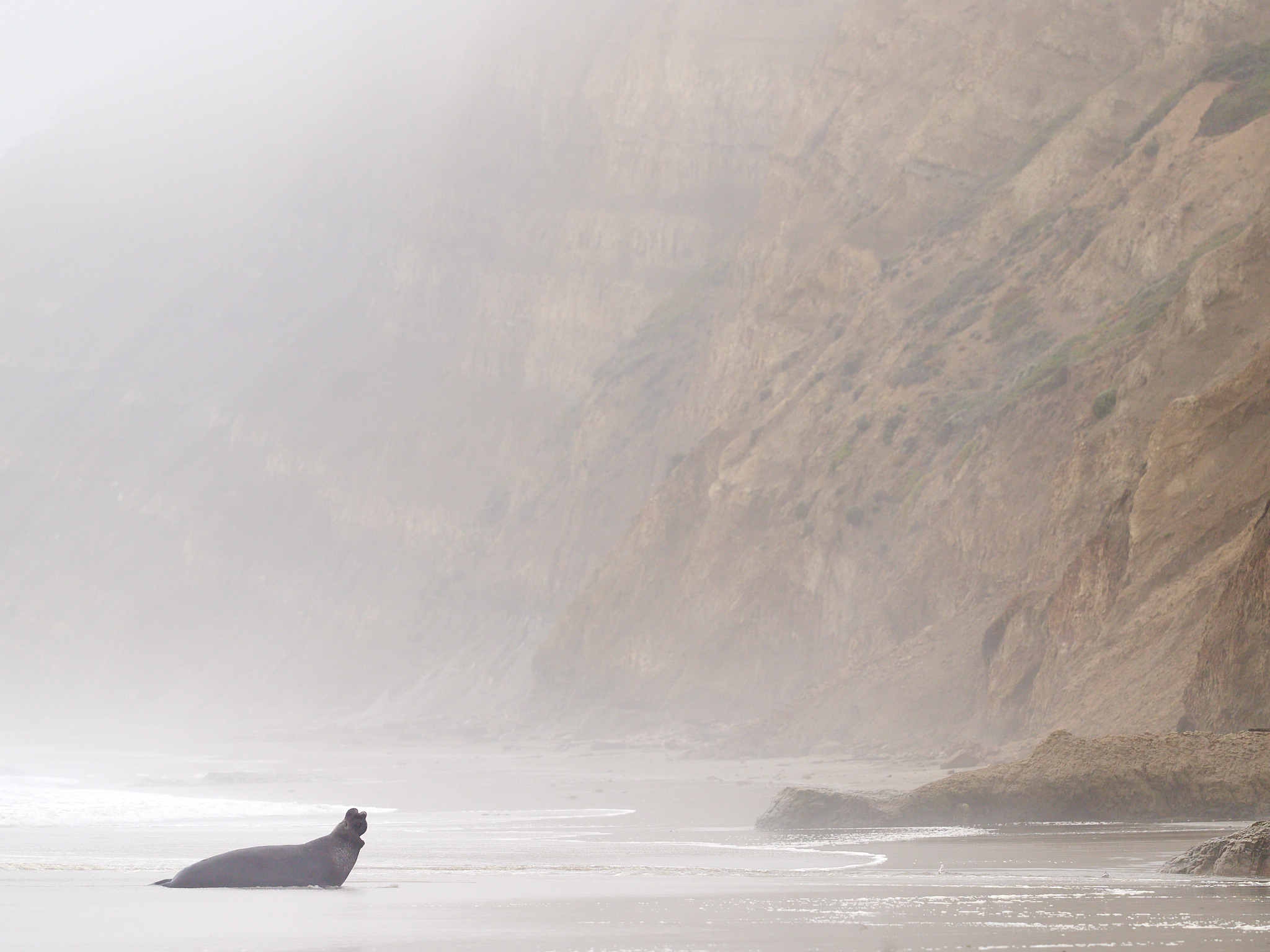
I went to the beach to photograph Northern Elephant Seals. It was a foggy day in between two storms. Another photographer I ran into called the conditions “hopeless”. I was beyond excited to have some moody weather to show off the seashore.
The elephant seals put on a great show for me.
In between breaks in the elephant seal action, I also got the opportunity to work on shorebird landscapes, including Marbled Godwits and Long-Billed Curlews. I loved the way the fog simplified the landscape behind the birds.
One of the curlews had an antenna sticking out from its back. This is from a satellite transmitter used to track birds’ movements and migration for scientific studies. The Smithsonian Zoo and Boise State (probably among others) have both done studies to track curlew migration. One of the cool things about these birds is that, while they’re considered shorebirds, they actually breed inland in grasslands. They come to the coast outside breeding season for the mild winter weather and plentiful food.
The one shot I really wanted to get was a bird in flight in front of the cliffs. By the end, I was thinking “just give me a bird, any bird!” Thankfully, a gull (I believe a Western Gull) was up to the challenge!
I’ve wanted to photograph American Pikas for a while now. If you aren’t familiar with them, pikas are close relatives of rabbits and hares. They prefer cold climates, which means living at very high altitudes (often above 10,000 ft) in the United States. Unlike many other cold climate mammals, pikas don’t hibernate. Instead, they spend most of the summer gathering hay piles from the meadows surrounding their burrows so that they have food for the long winter. Their preferred habit is rocky talus slopes, which gives them lots of nooks and crannies to create burrows in.
There are a few classic pika shots. It’s always fun to capture a pika peering down intently from a rock as it broadcasts its adorable high pitched squeaking call. Because of their unique hay collecting behavior, a pika carrying a big bundle of wildflowers is also a classic shot.
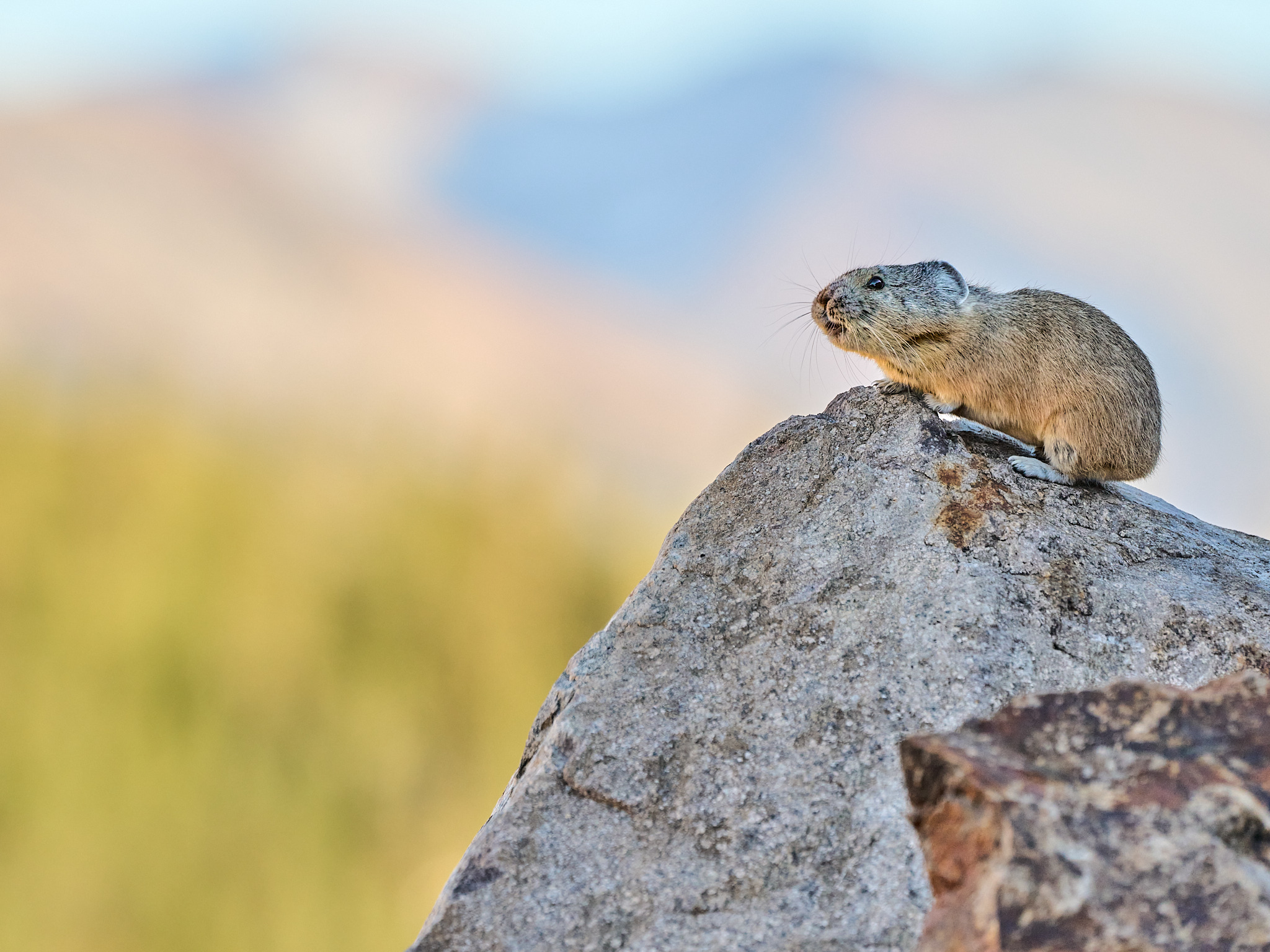
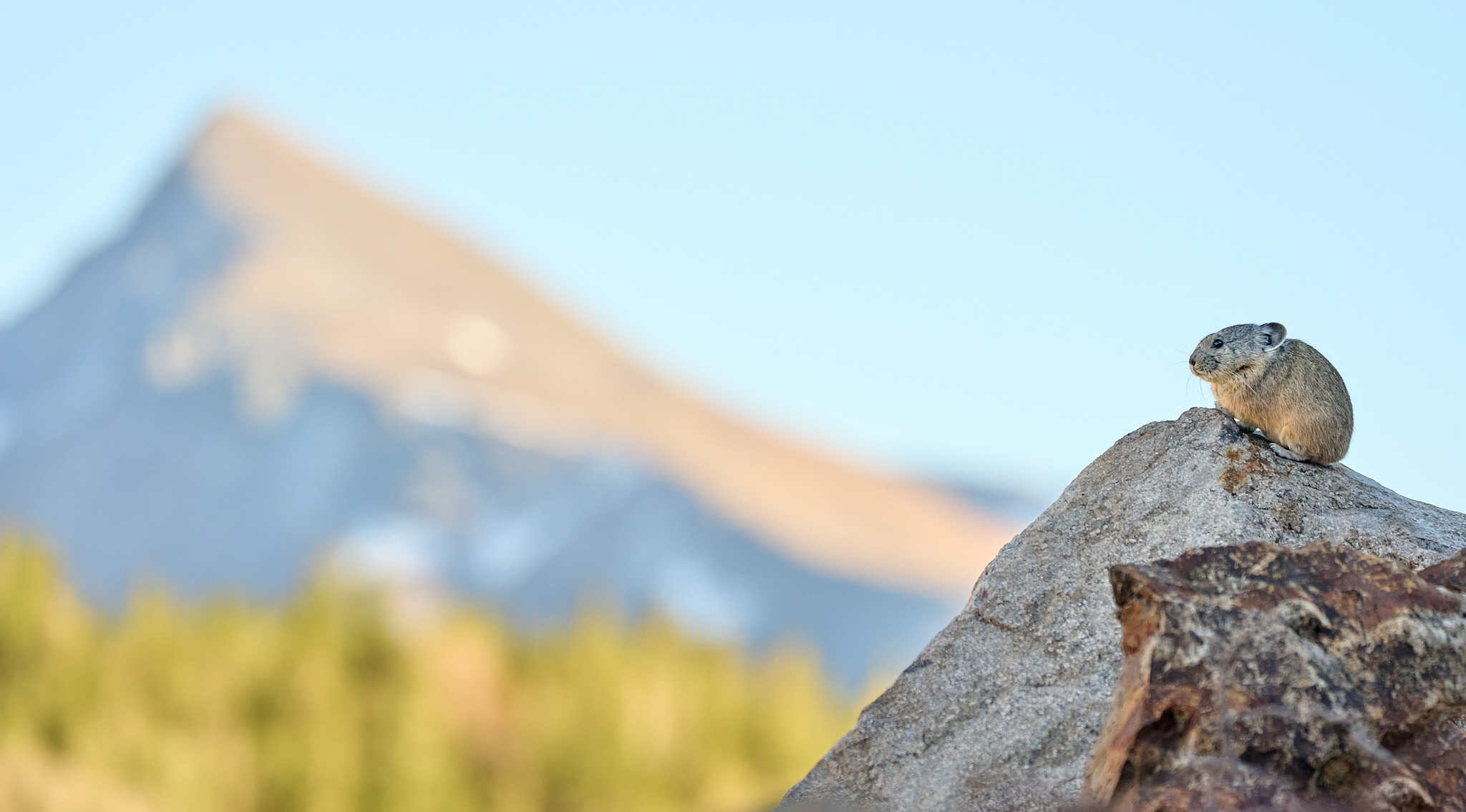
My goal was to do something a bit more unique: a scenic photo of a pika showing off its high alpine habitat. I haven’t seen many photos like this. A search on Instagram only turned up an epic photo by Deirdre Rosenberg, the undisputed queen of American Pika photography, and a great wide angle iPhone shot Ray Hennessy snagged on a whim. With most photographers focusing on portraits or action shots, there was room for me to stand out with a scenic shot.
Everyone I talked to about American Pika photography suggested a particular lake in Yosemite National Park. This was the go-to place for Bay Area wildlife photographers to shoot pikas. Everyone also warned me that the hike was a bit strenuous, ascending fairly steeply up to 10,000 ft.
I’d never been to Yosemite, and I’d never been up to 10,000 ft, so a plan came together. I’d spend a couple nights camping in Yosemite Valley to avoid doing the entire 10,000 ft elevation shift in one go, and then I’d spend a few nights at a hotel in June Lake to get access to the High Sierra. I’d never been camping before, so the Yosemite Valley portion of the trip was also an opportunity to learn how to camp in preparation for a trip to Alaska in 2025.
Yosemite Valley went pretty well. I stayed at Curry Village, which was much more glamping than camping. It was much too crowded for a truly satisfying nature experience. But, it didn’t take long to hike away from the crowds.
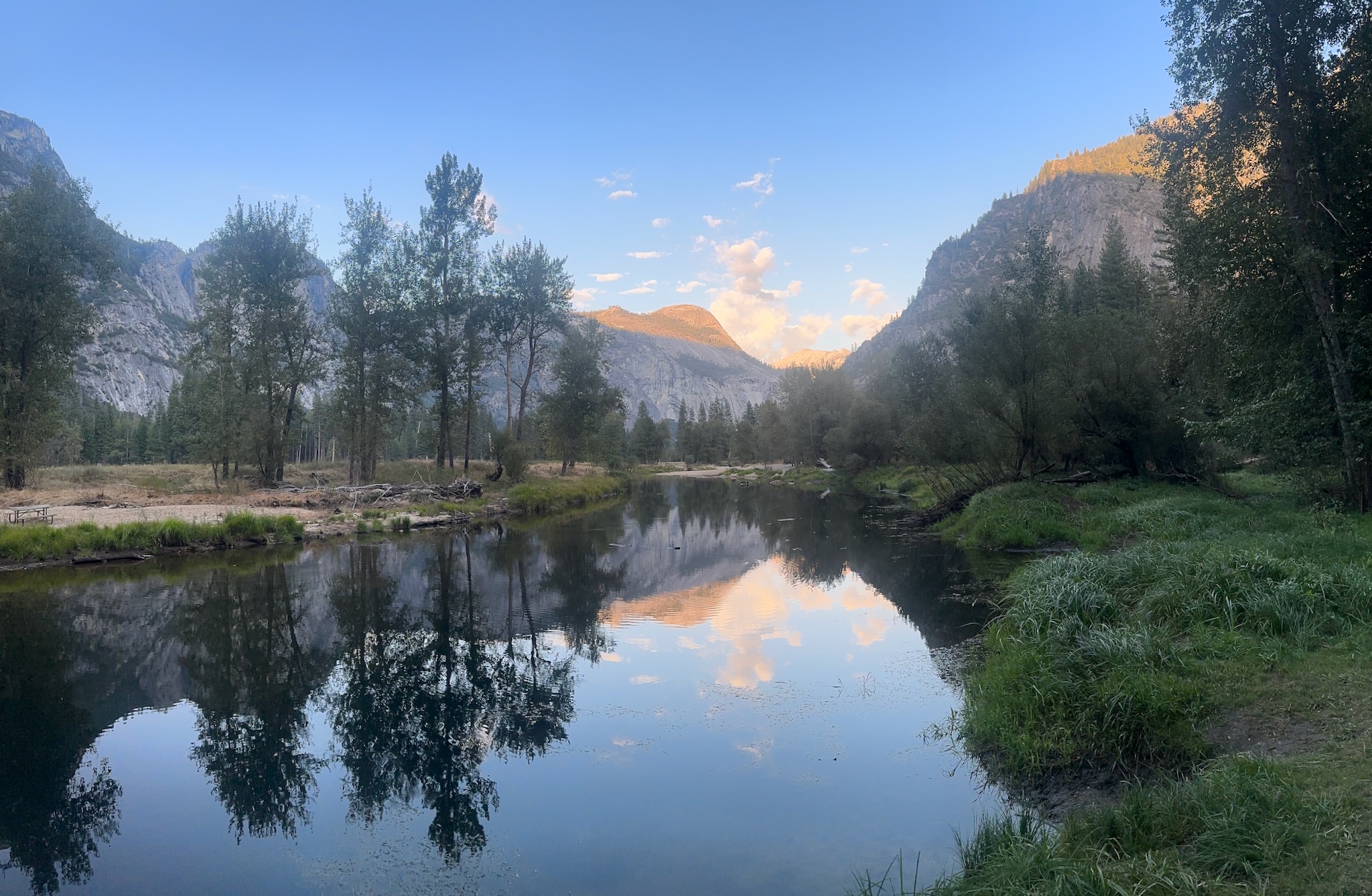
I got a few classic landscape shots, like the Merced River at sunset…
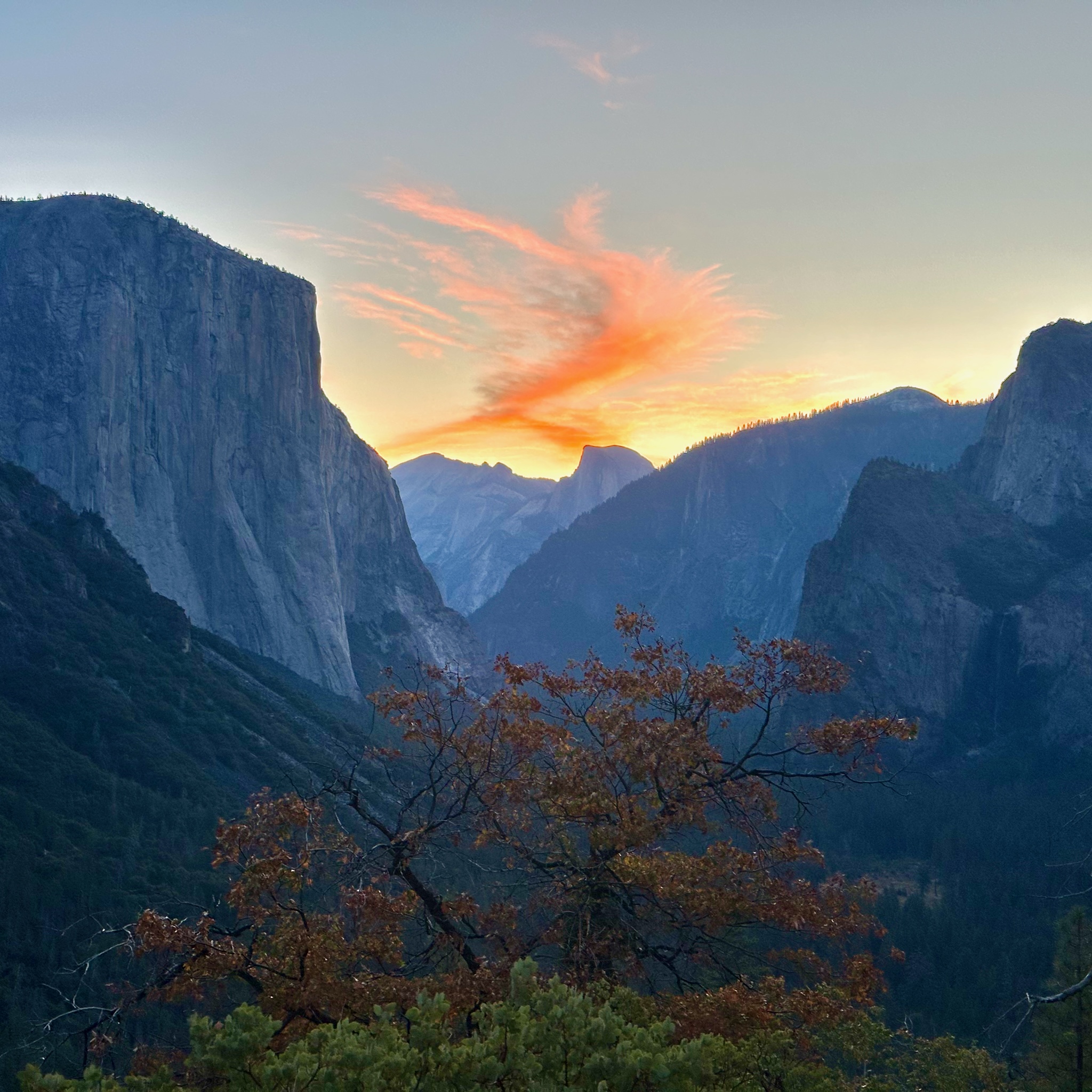
And a riff on the classic Tunnel View photo at sunrise, taken from a vantage point on the way up to Artist Point…
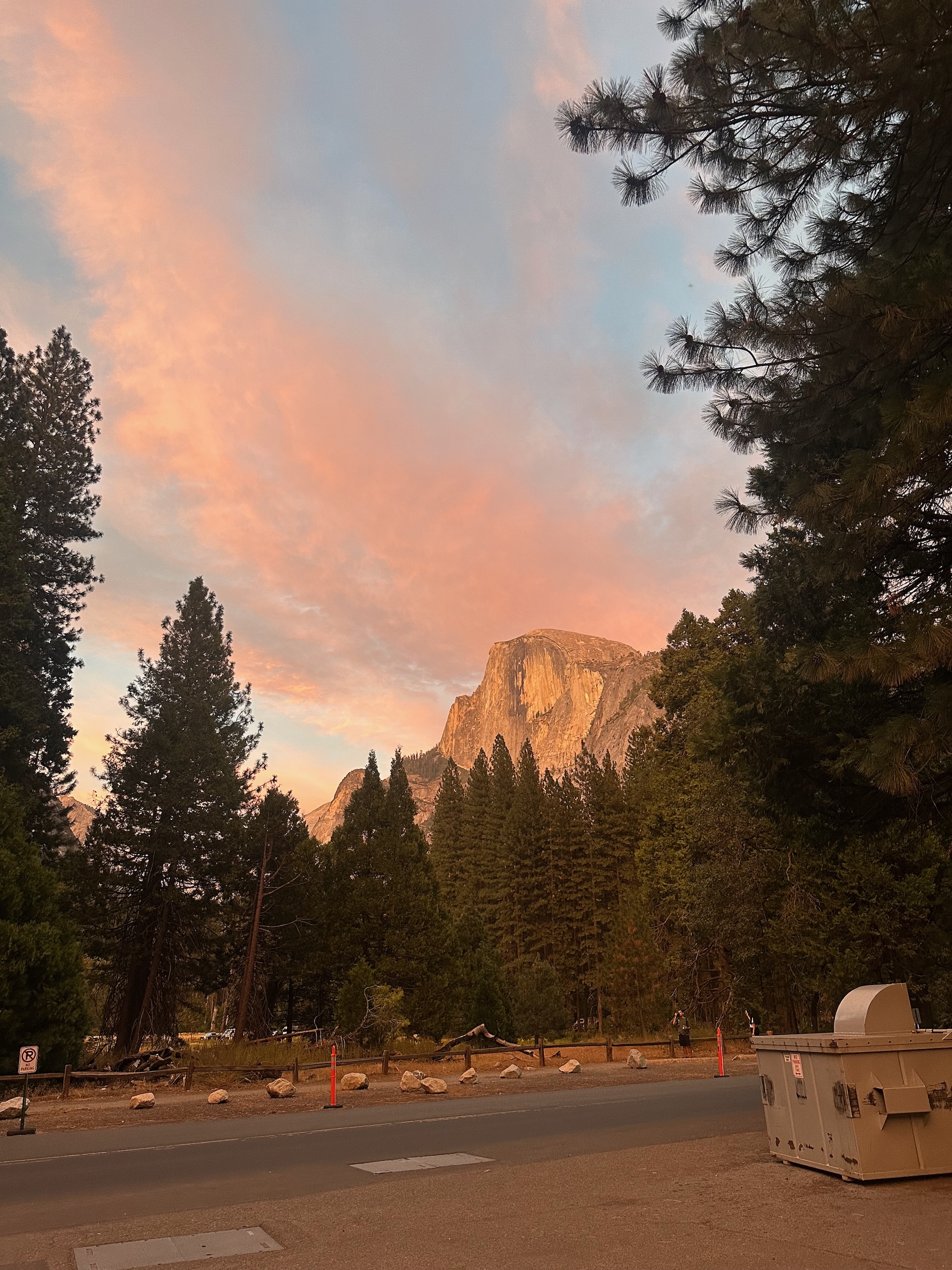
I’m not much of a landscape photographer, but if you spend enough time in Yosemite you’ll eventually manage to point your camera in the right direction and make a good landscape photo. Before I got too carried away, this photo of a “scenic dumpster” reminded me that you have to put a bit more thought into your compositions.
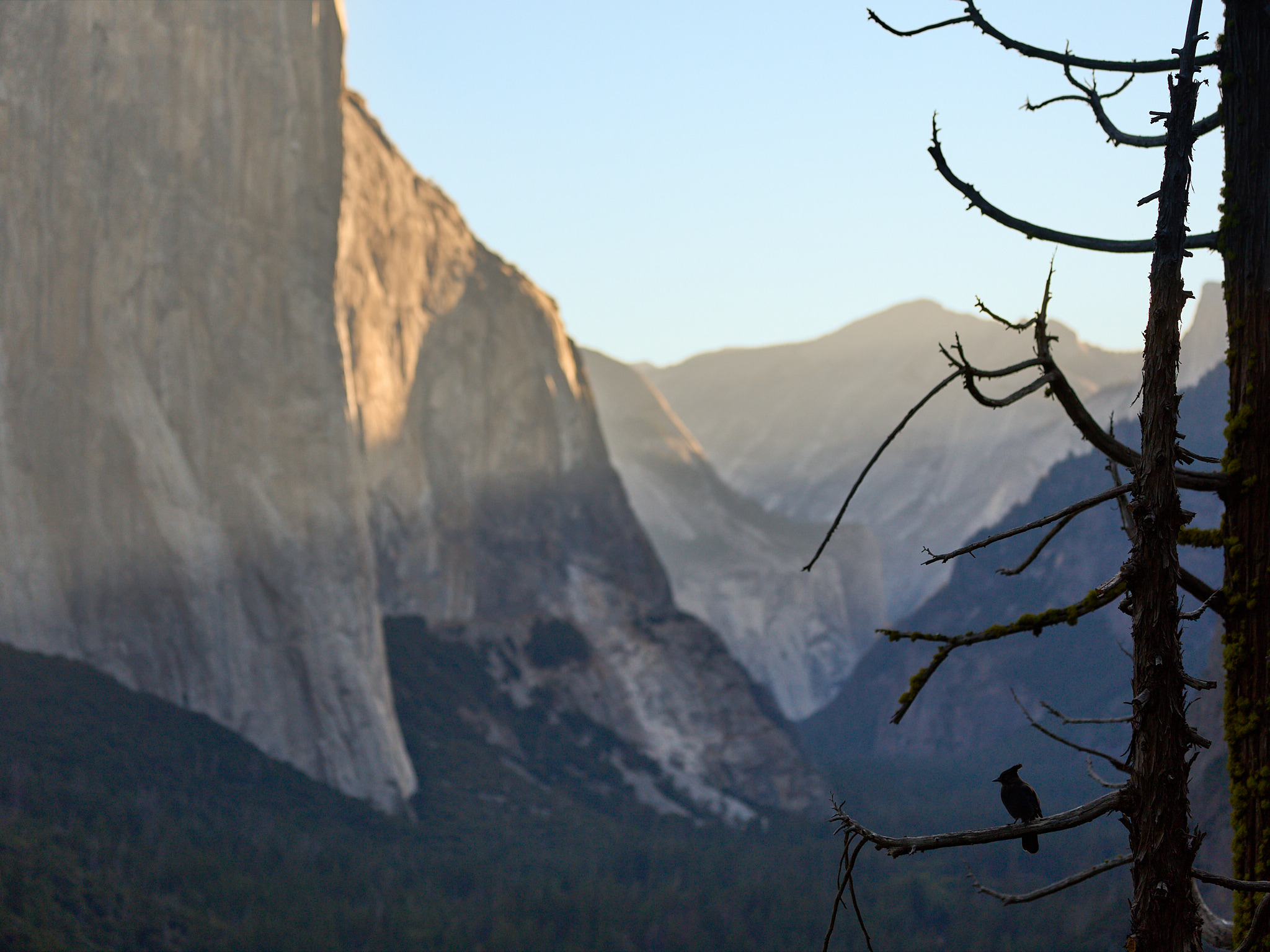
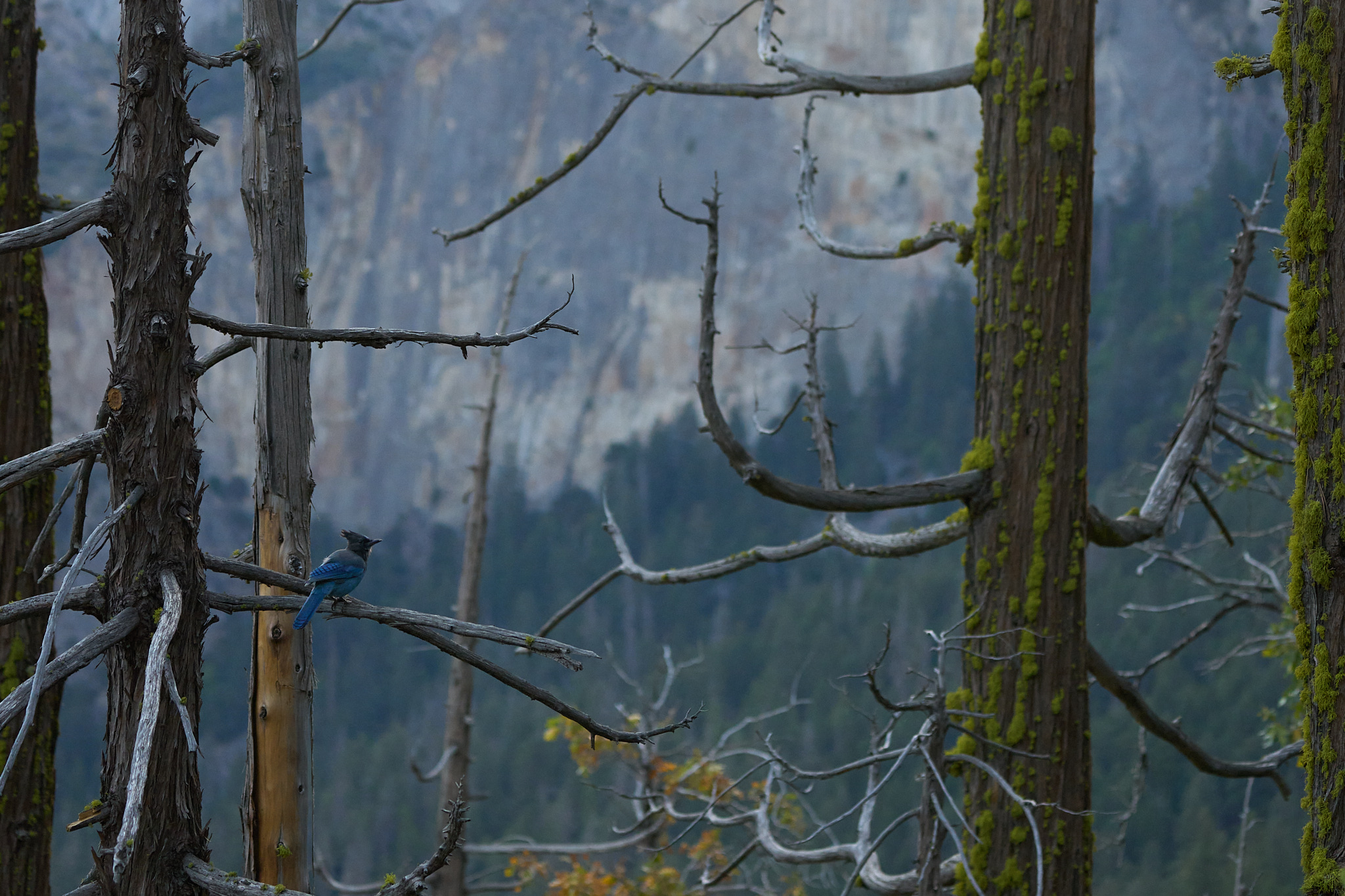
I didn’t see a lot of wildlife in the valley. I spotted a Black Bear running into the woods with a cub, a few mule deer, some Stellars Jays who didn’t fully cooperate with my plan to photograph them in front of Tunnel View, a very shy Belted Kingfisher, some hummingbirds, and that was about it.
After a couple of days at Curry Village, we packed up and drove to the east side of the park via Tioga Rd, and then onward to June Lake to set up our home base in the High Sierra.
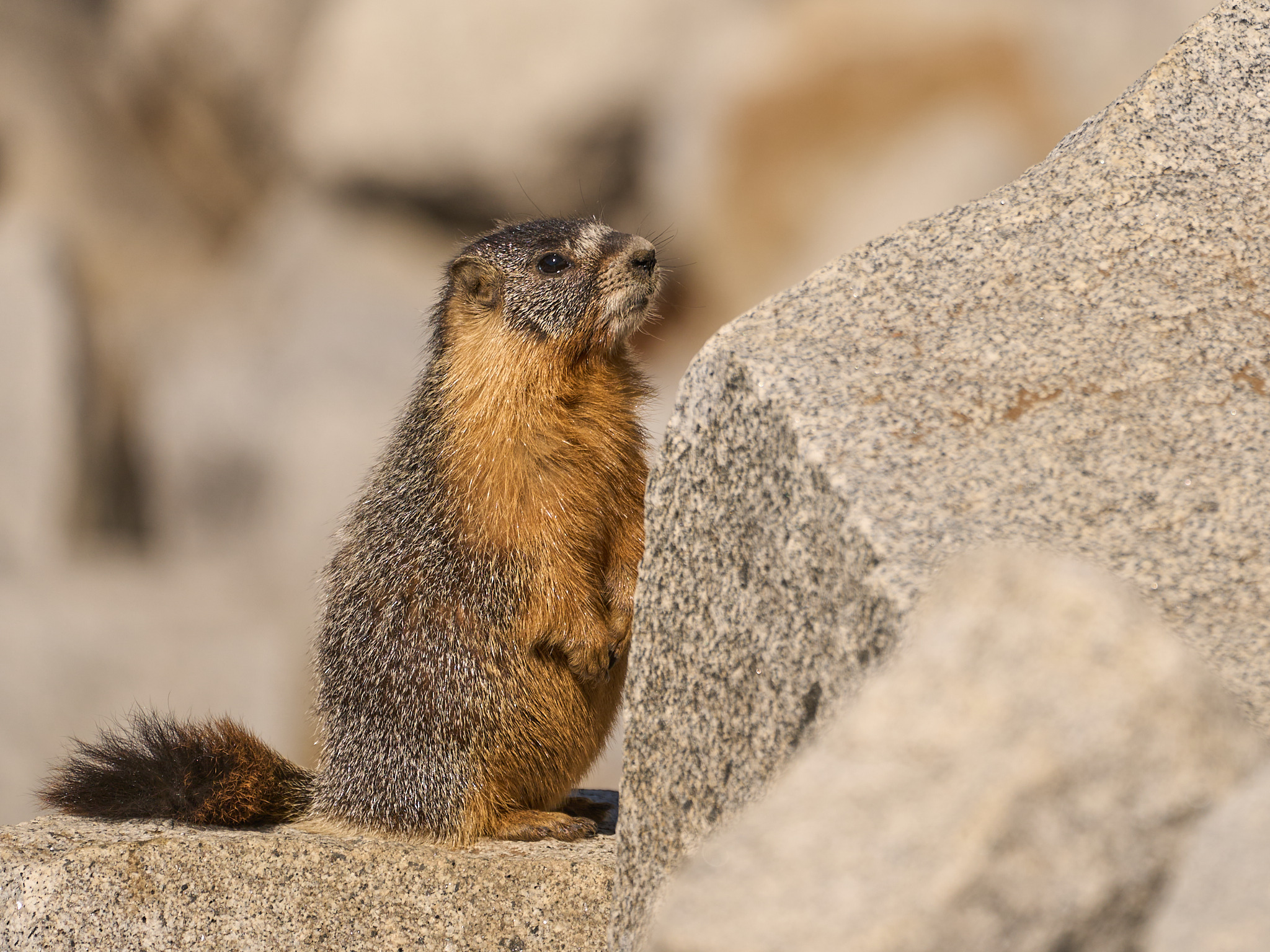
Along the way, we stopped at an overlook where I saw a Yellow-Bellied Marmot for the first time. I just got a quick snapshot, but I’ll have to spend some time with them the next time I’m in the Sierra.
As soon as we checked in in at June Lake, I grabbed my camera and set out for the pika spot. Alltrails described the hike as “moderately challenging” and suggested I’d need about 90 minutes to complete the round trip.
The hike absolutely kicked my butt. It took me 90 minutes just to make it through the first quarter, albeit the part with almost all the elevation gain. Starting at 10,000 ft and ascending 600 ft in a half mile (average grade 22%) was too much to ask for my first evening at high elevation. By the time I made it to the top, I was completely out of gas. I looked around for the pika for a bit, but I quickly realized I needed to descend soon. I was exhausted, sunset was near, and walking down a steep unfamiliar trail in the dark with legs that wanted to give up on me was a recipe for injury. So, I marked my location on the map and headed back down, determined to return the next day more acclimated to the altitude and with more time to make a gradual ascent.
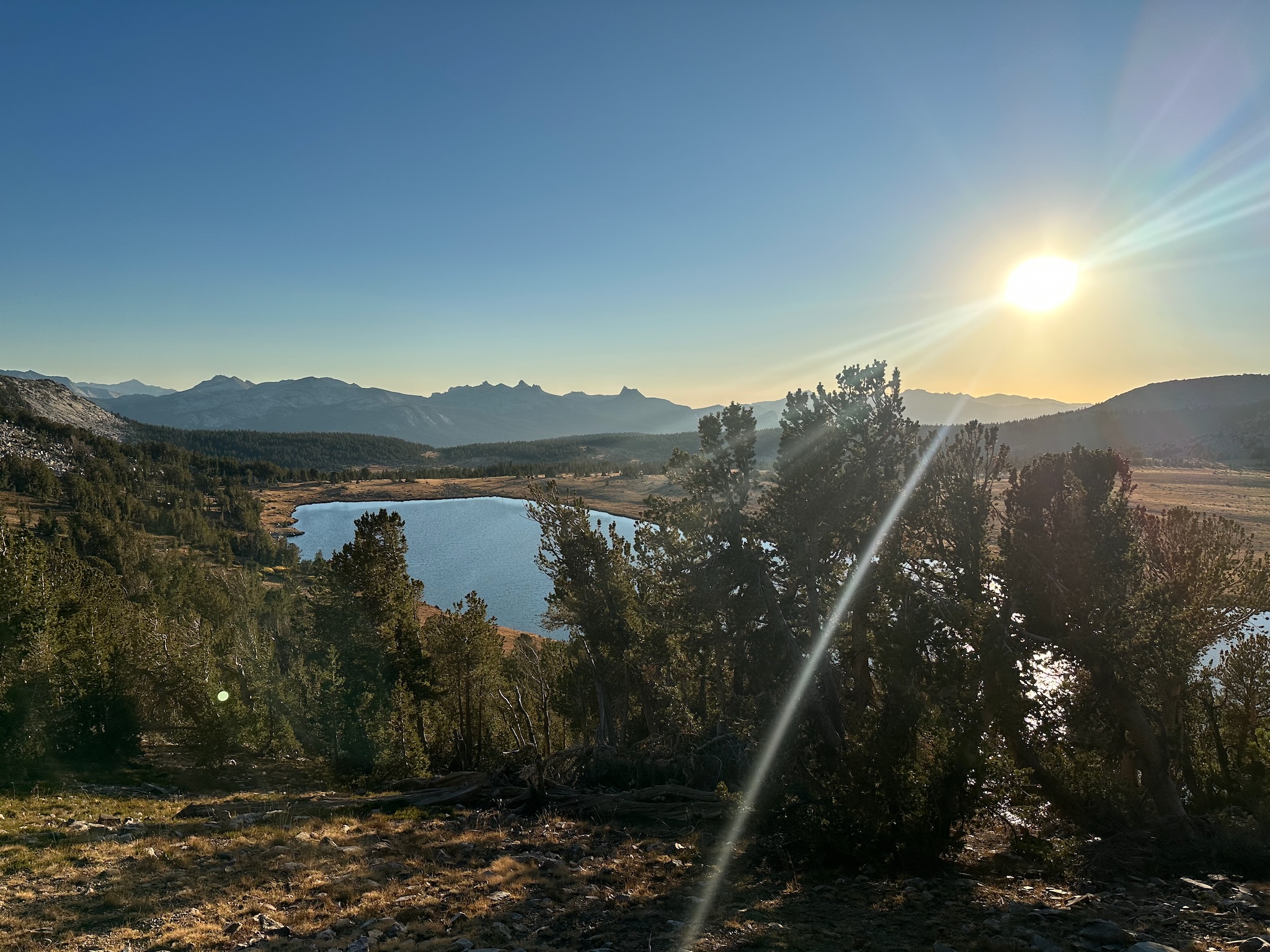
Before leaving, I got a serviceable iPhone shot of the lake. I also realized this wasn’t a great spot for the scenic pika photo I was after. With the way all the talus fields sloped, there wasn’t a good place to line up a pika in front of the landscape.
When I got back to the hotel, I found out I’d stopped about 200 yards from where most people spotted the pikas. I was so close when I turned around! It was still the right decision though; if I had pressed on to find the pikas and then stayed to photograph them, I’d have done the hike back in the dark, a very poor idea given the shape I was in.
That night wasn’t fun. I developed a splitting headache, which is an early sign of altitude sickness. My symptoms didn’t progress further, so I slept it off figuring that I’d already descended 2,000 ft from the trailhead to the hotel. But, when I woke up the next morning, I didn’t feel ready to do the hike again. So, I did some research and found a spot that looked likely for pikas where I could pretty much drive to their elevation and do a flat walk out to their habitat.
The new plan went much better. I drove to the trailhead, parked, walked 15 minutes, found some good pika habitat where the talus was mixed in with vegetation, and stopped to listen. Within a few minutes, I heard a pika call. This was a different call than I had heard during my research, consisting of a pair of descending notes instead of a single squeak, but it was clearly a pika.
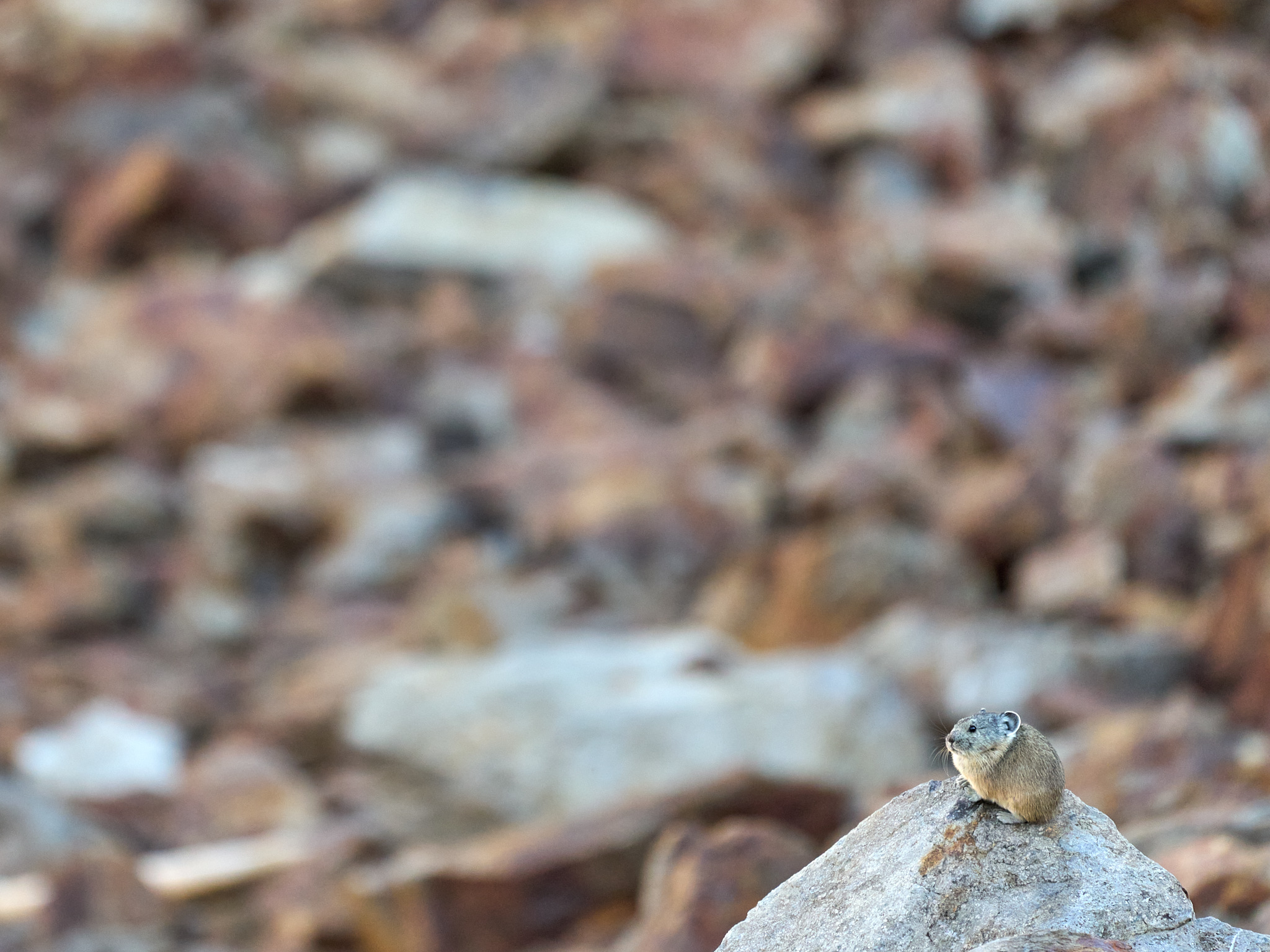
As I scanned the area looking for pikas, I took note of a prominent boulder on a small ridge. The boulder had a triangular profile and a great view of the surrounding mountains. If a pika were kind enough to perch on that boulder, I could line up exactly the shot I was after.
The first challenge was spotting a pika. A call would ring out every minute or so, but whenever I swiveled toward the source, I’d see nothing but rocks. This is pretty typical. Everyone I talked to said I would hear the pikas before I spotted them.
The calls seemed to be coming from up hill, so I scrambled up the talus slope, sat down, and waited for a pika to show itself. It took close to a half hour, but I eventually spotted movement nearby. My first pika sighting! The pika was carrying some freshly gathered Purple Mountain Heath to add to its hay pile.
I watched in amazement as the pika made its way down the slope, heading right towards the boulder I had spotted earlier. After making a quick detour to deposit the harvest in its hay pile, the pika popped up on the prominent boulder!
Because I had climbed up higher when I first heard pikas upslope, I was no longer positioned to get the scenic shot I was after. My plan was to wait for the pika to make another foraging run, and then move into position while it was distracted.
After waiting for five minutes, it became clear the pika was settled in for a lengthy rest. So, I started a slow descent, making small moves down the slope with a couple minute pause between each move. I didn’t want to disturb the pika off that perfect perch. With each move I got a cleaner background behind the pika.
Just as I was finally easing into position for the scenic shot, the pika got spooked and disappeared into the talus. When it emerged a minute later, it returned to the ridge, but no longer on the prominent boulder. I was able to crouch down and line up the mountains in the distance, but the pika didn’t stand out from the rocks the way it had when it was on the boulder.
I waited an hour as the pika made a couple of forays towards me and back towards the ridge, but it never returned to the boulder. Finally, the sun set, and the pika disappeared into the talus for the night.
I made the short walk back to the car and a slightly hair-rising drive back down to 8,000 ft elevation after dark with mixed feelings. On the one hand, I’d succeeded at my goal of photographing an American Pika in a scenic setting. On the other hand, I knew an even better shot was possible. Fortunately, I had one more day to go in the Sierra.
The next day started with an exploration of a different lake. I heard pikas, but I didn’t see them. This was probably due to the presence of a fellow pika enthusiast Long-Tailed Weasel. Pika colonies are regular hunting grounds for weasels.
In the evening, I headed back to the spot with the scenic boulder. It all happened right on script. With the assistance of photos I’d taken the previous evening, I found the spot where I’d lined up the shot, sat, waited 30 minutes, and was greeted by my pika friend emerging from the talus.
I waited patiently, and 15 minutes later the pika returned to the boulder. I wasn’t surprised. That boulder was the first place the pika perched the previous time I saw it. With a commanding view of the talus field, it’s a natural place from which to watch for predators or encroaching neighbors while enjoying a crisp early fall evening.
I had already figured out the composition I wanted, with the pika’s boulder echoing a distant mountain peak. As soon as the pika perched, I zoomed out, focused, framed, and got the shot I’d been visualizing for months.
I camped at Mojave National Preserve for the first time the week before Thanksgiving. This post is a companion to my Exploring Mojave National Preserve post, which focused on the photographic aspects. I did this trip at the end of November, the weekend before Thanksgiving
To maximize my time in the backcountry, I left San Francisco Friday evening after work and got a hotel halfway between the city and the preserve. I opted to stay in Wasco, which is home to a state prison and not much more. The Best Western did not have a lot of recommend it. It was clean and safe, but very noisy. Doors started banging at 5 am. At 6 am, a central bathroom fan system kicked on. The fan motor happened to be right above my room’s ceiling, which ended all hope of sleeping. So, I filled up on fuel and hit the road.
There are two options for camping at the preserve: staying at an official campsite, or camping at one of the dispersed campsites. The official campsites are Hole-in-the-Wall, which is easily accessible via a paved road, and Mid Hills, which requires a nine mile trip down a dirt road. (There’s also a group campsite across the main road from Hole-in-the-Wall, but it’s basically the same campground). Hole-in-the-Wall was fairly busy when I visited at the end of November. Most of the campsites appeared taken, but there were some free sites.
I chose to do dispersed roadside camping. This is a bit of unique option for a National Park Service property. Before the establishment of the Preserve in 1994, campers would pull off the road and set up camps in informal sites allowed under BLM regulations. These campsites disturbed the fragile desert ecosystem, so while NPS doesn’t allow backcountry camping in general at Mojave National Preserve, they continue to allow allow it at existing disturbed sites.
Dispersed camping is on a first-come, first-served basis. There’s no signage, you just have to find an existing site (look for packed soil and a fire ring). Doing that can be a challenge if you arrive after dark. I did a few hours of internet sleuthing to come up with a list of about 20 possible sites.
I arrived at noon on a Saturday and found most campsites unoccupied. I think most people arrive in the evening, set up camp, and then move on in the morning. I did see a few sites that were occupied by RVs that appeared to be on multi-day stays. My first choice was a mile off a main road, and it was unoccupied when I arrived. I had rented a Jeep, so it was pretty easy for me to access a campsite secluded from the main road.
While water is available at Hole-in-the-Wall campground, it doesn’t taste very good. Packing in your water is highly recommended, but it’s good to know there’s a backup option if you need it. I brought two gallons of water per day, which was more than I needed in November, even when doing multi-hour hikes.
There are obviously no bathroom facilities at the dispersed sites. It was easy enough to schedule my major calls of nature for a quick drive to the Hole-in-the-Wall visitor center (much nicer than the vault toilets in the campgrounds). Bringing a camp toilet is also an option. Using a cat-hole is a last resort: most of the soil is very rocky. The washes are easier to dig in, but pooping in a wash just seems rude, despite all the animal dung littering the preserve. If you go with the cat-hole option, pack out your toilet paper. It takes forever to break down in the desert environment, as can be observed from all the petrified animal dung.
Wind was a major factor. I only camped for two nights. The first was very windy, and the incessantly intermittent flapping of my tent kept me awake. I ended up retreating to the back of the Jeep for the remainder of the night. The second night was calmer and I slept without a problem. November is considered a relatively low wind month. Next time I go, I will probably leave the rainfly off the tent to see if that helps with the wind. Or just resign myself to sleeping in a car.
The Preserve is bracketed by I-15 and I-40, and traffic was visible from my campsite about 10 miles from Hole-in-the-Wall. It wasn’t audible, however. With Las Vegas less than 100 miles to the north and Los Angeles 200 miles west, commercial flights crisscrossed the preserve pretty regularly. Still, light pollution was limited to a few distant glows and the night skies were quite enjoyable.
Hiking was pleasant in late November. It was cold in the morning and more than tolerable at mid-day. I hiked one of the few established trails. The trail wasn’t always clear, but it was well-signed. Next time, I’ll try exploring off trail.
My original plan was to camp for four nights. On my second morning in the Preserve, I ran into car trouble when my Jeep wouldn’t start. I was lucky enough to have parked near Hole-in-the-Wall campground when it happened, and got help from a more prepared Jeep driver who had jumper cables. It would have been a much bigger hassle to have had that happen at my campsite, a mile off the main road on 4×4-only unmaintained roads. I had enough food and water to not be in major danger, but it would not have been fun at all. As it was, I decided against staying in the desert with a flaky car and cut my trip short. Next time I visit, I’ll bring jumper cables and a jump starter.
While it was a challenge, I had a great time at Mojave National Preserve. If you haven’t camped in the desert before, it’s totally doable. Start with a visit in the cooler months, and come over-prepared. You’ll be rewarded for the hassle with a relatively solitary experience in a unique and beautiful ecosystem.
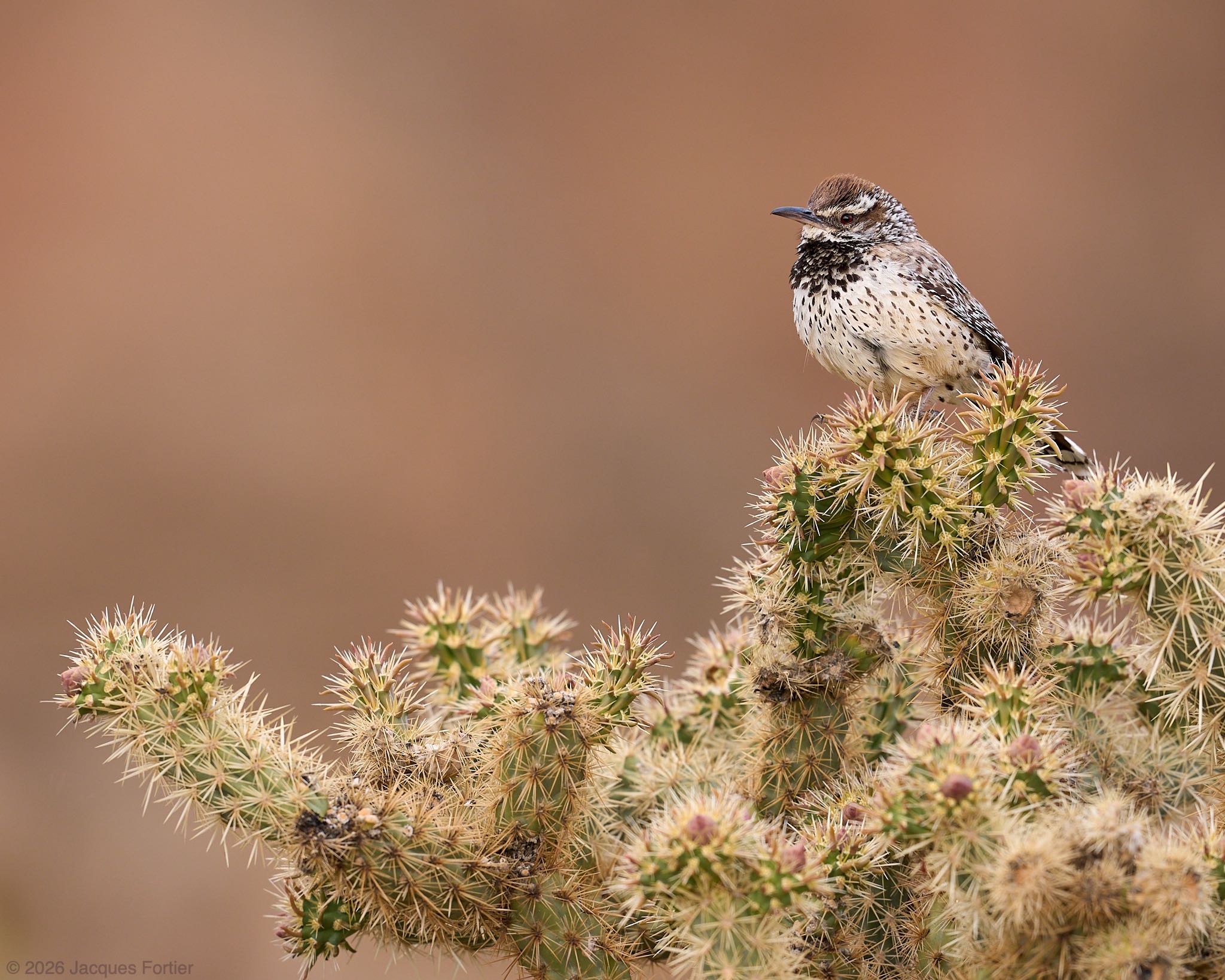
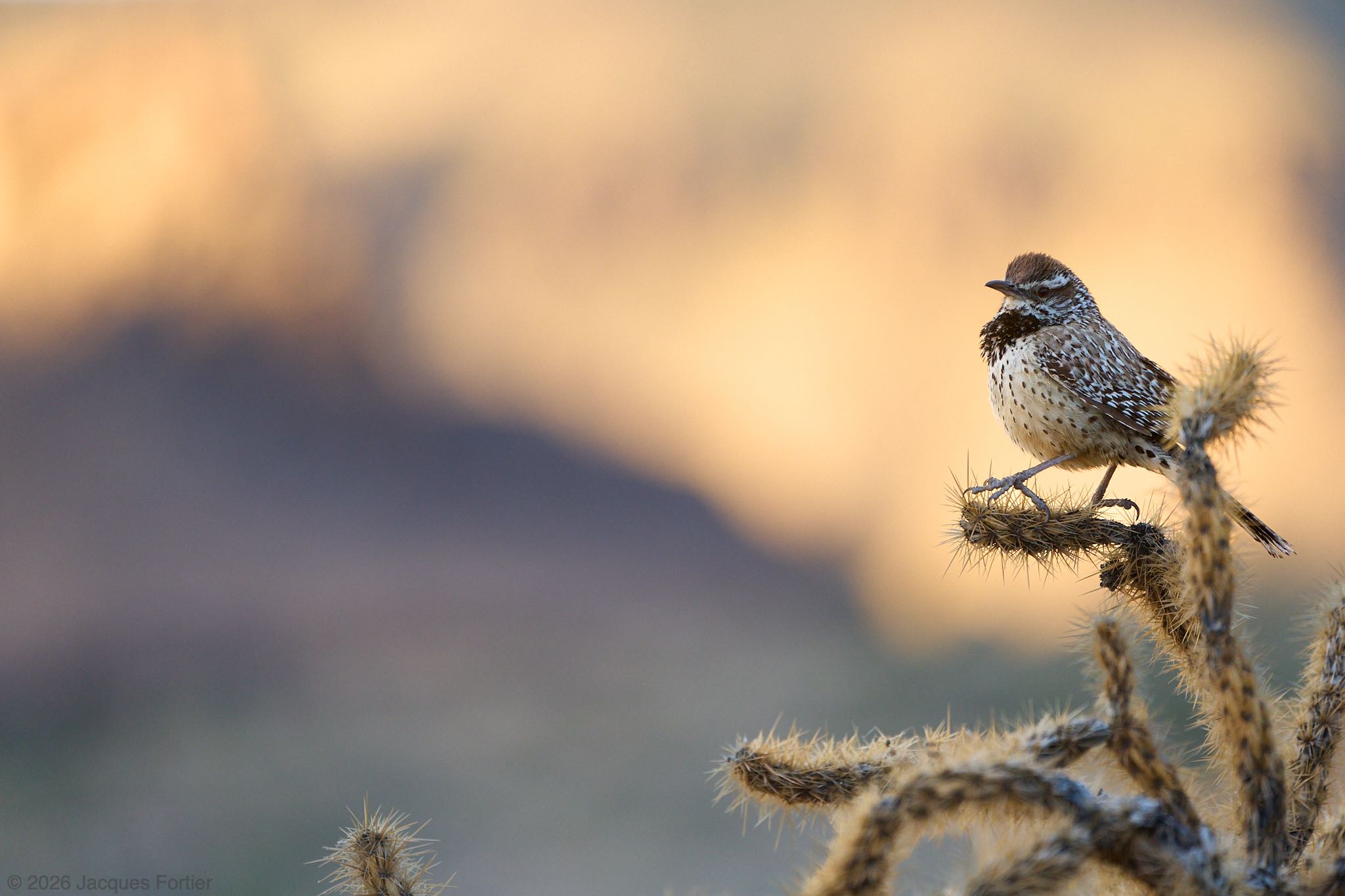
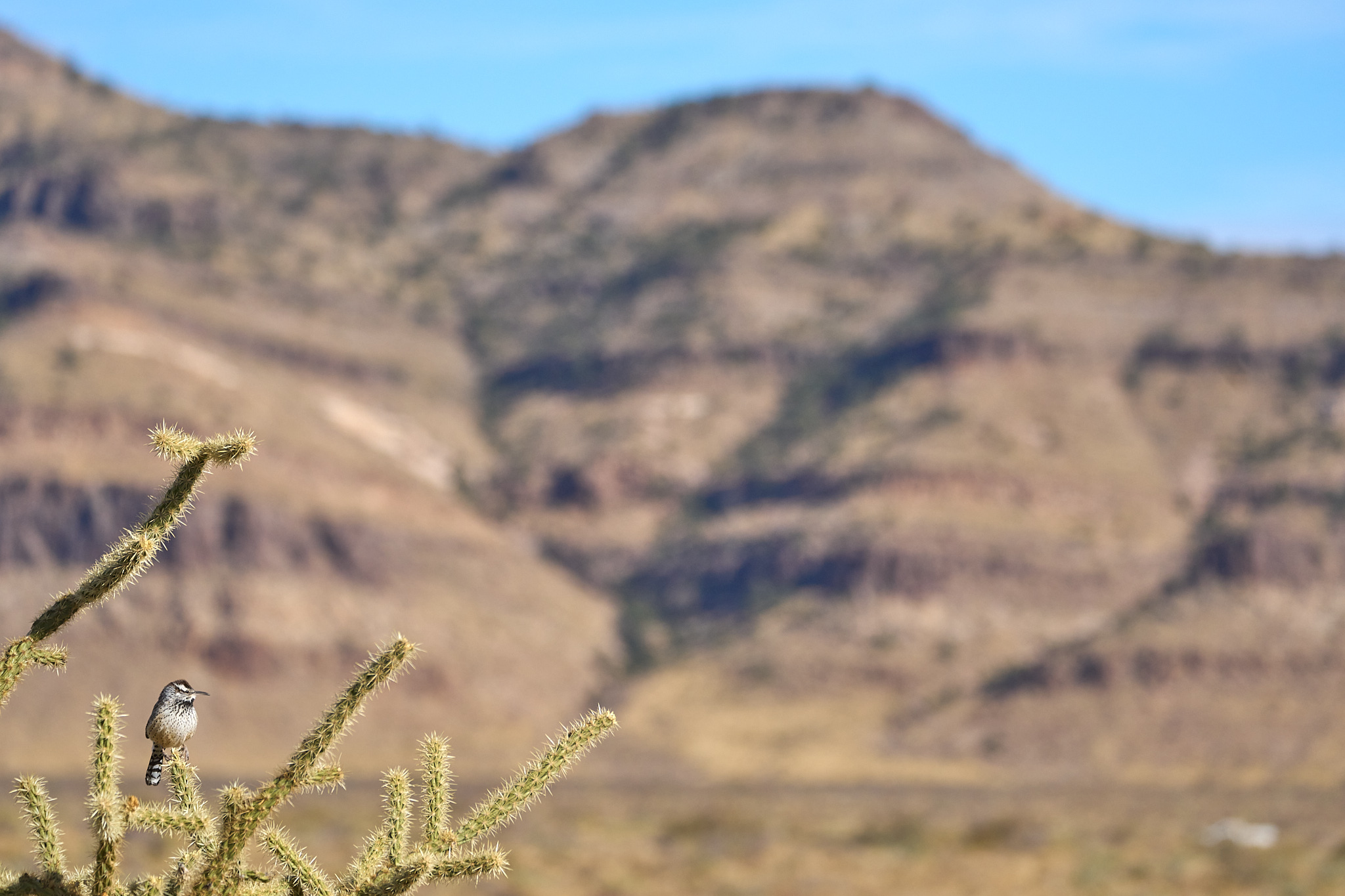
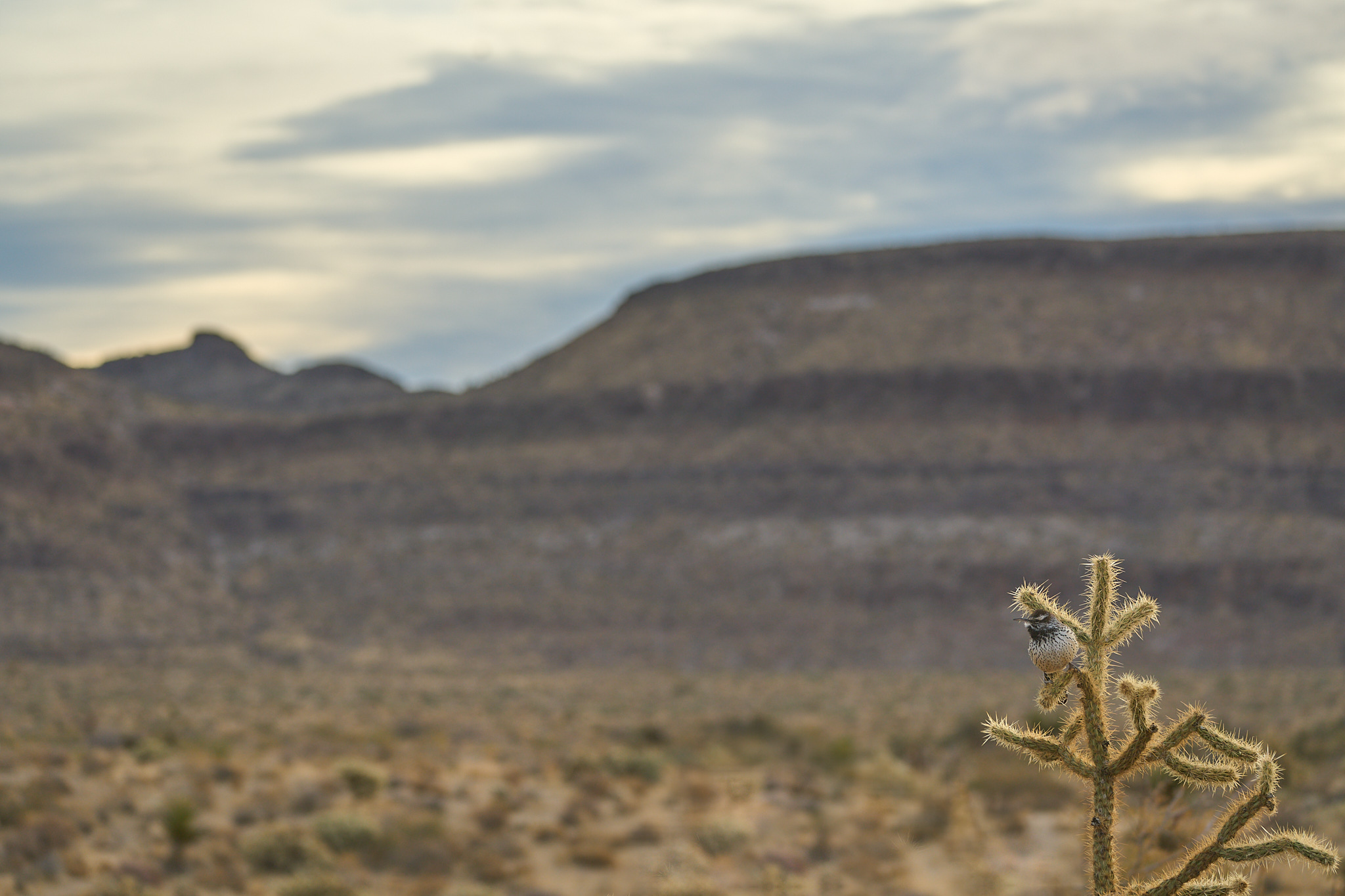
Lately, I’ve been connecting my photography more with adventures. Ever since I visited Joshua Tree National Park at the end of last year, I’ve wanted to return to the Mojave to try to capture Cactus Wrens in desert vistas. When I saw a photo by Adam Elliott of Mojave National Preserve, I knew I had to find a way to add birds into those amazing lanscapes.
So, at the beginning of my Thanksgiving week break, I loaded backpacking gear into a rented Jeep and headed out to the preserve.
As I’d been led to expect, the preserve was vast and mostly empty. There are two campgrounds with a few dozen spots. There are also a number of unofficial dispersed campsites that predate the establishment of the preserve in 1994. The Park Service allows continued use of the existing dispersed sites; camping in undisturbed areas is not allowed. I’d mapped out a couple dozen potential sites, and found my first choice unoccupied when I arrived around noon.
After setting up camp, I headed to my first photography spot. I found the vista I was after, and a fair number of cholla cacti, but no Cactus Wrens. There were horses wandering around. Given how friendly they were, I suspect they belonged to the ranch across the road from the wilderness area.
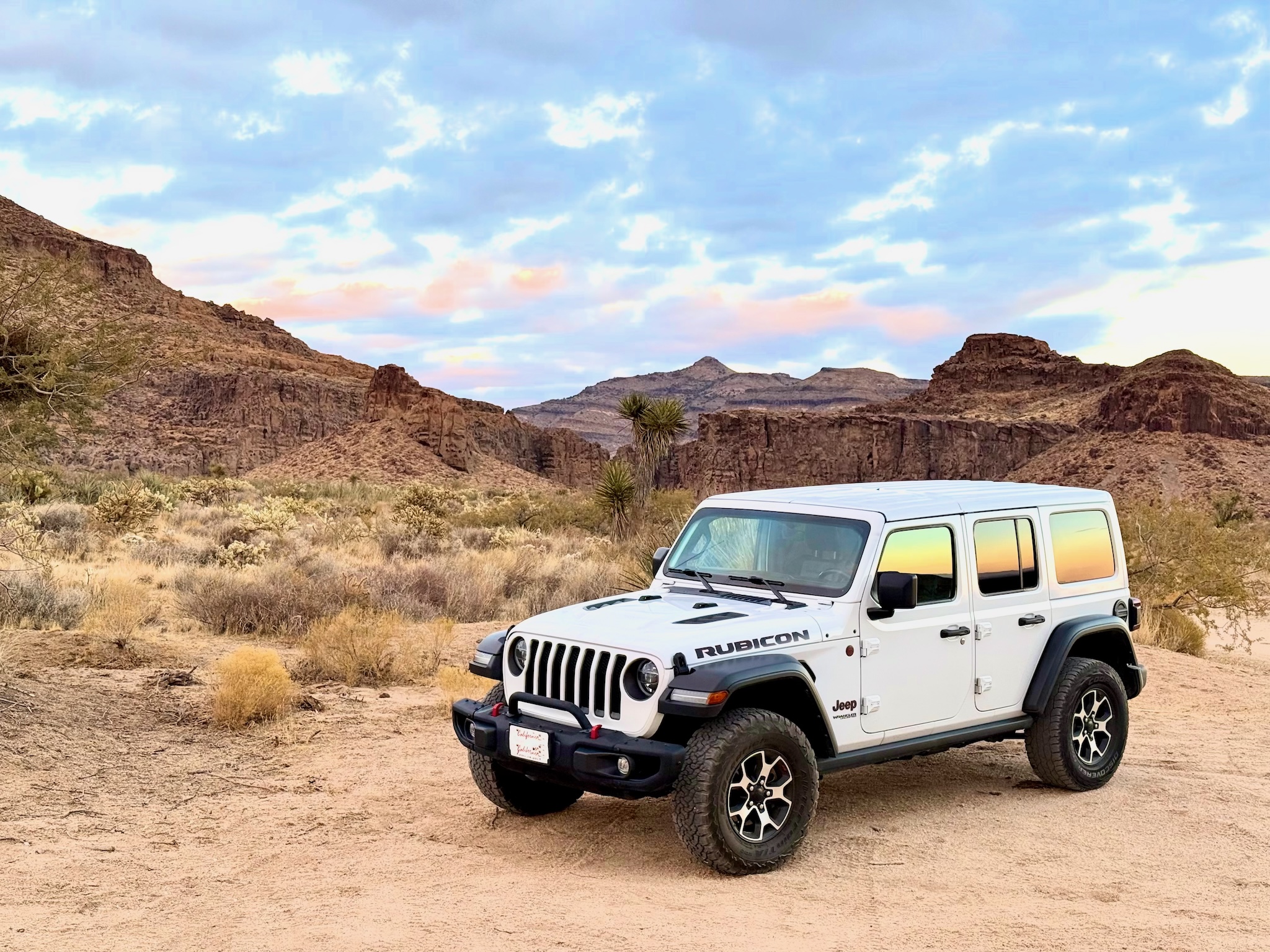
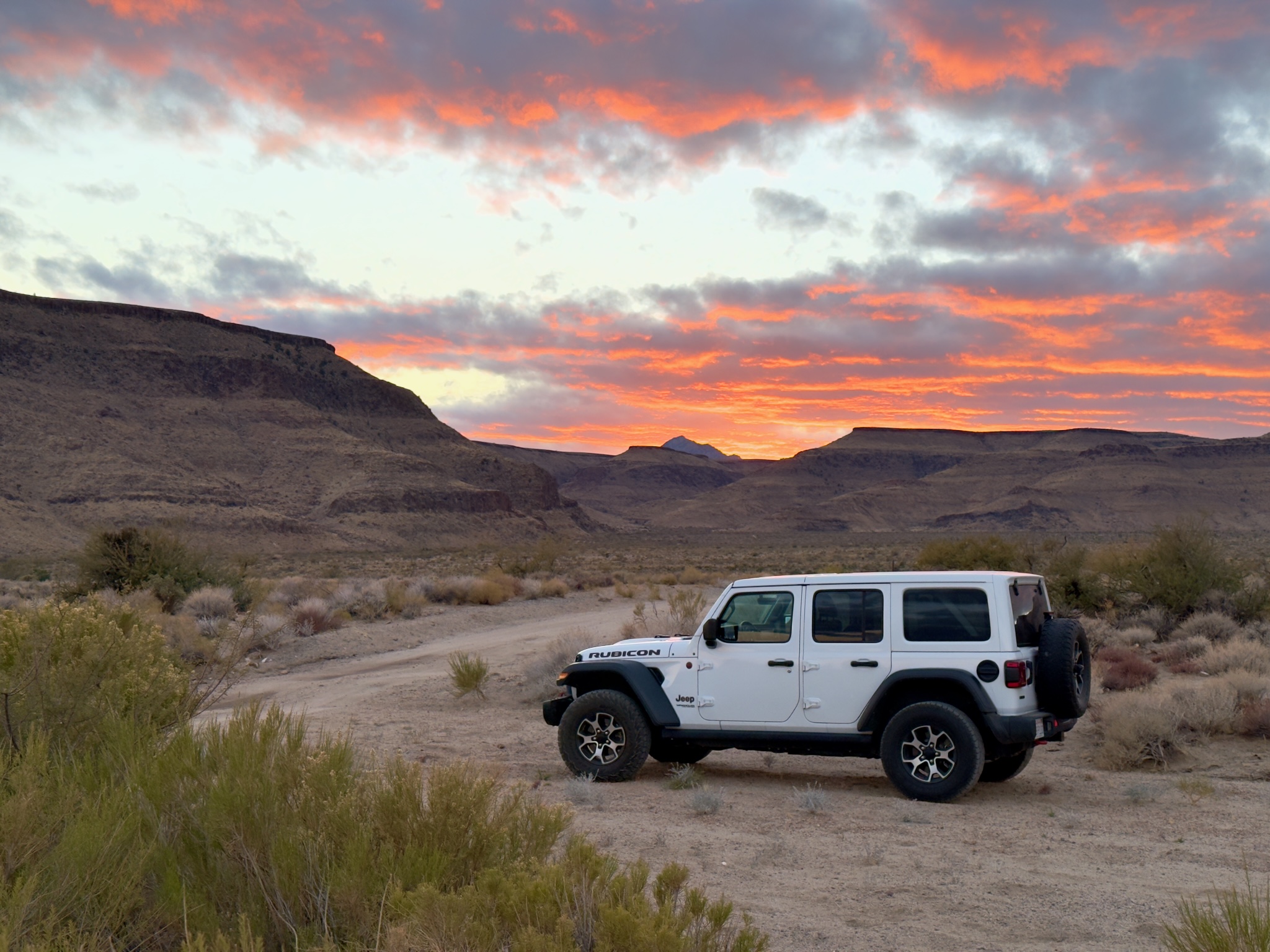
With the sunset popping off and no wildlife deigning to pose in front of my lens, I ended up switching to Jeep photography.
After sunset, I headed back to camp, made dinner, and then tried to sleep in the howling wind. Around midnight, I gave up trying to sleep with the tent flapping nonstop and moved into the back of the Jeep.
The next day, I did a 6 mile hike to try to track down better wildlife spots. Right at the outset, I found a Bewick’s Wren and a Cactus Wren, but they were very shy. I saw a number of Ladder-Backed Woodpeckers, but I’ve yet to figure out how to work with them, so I snapped some quick photos and kept going.
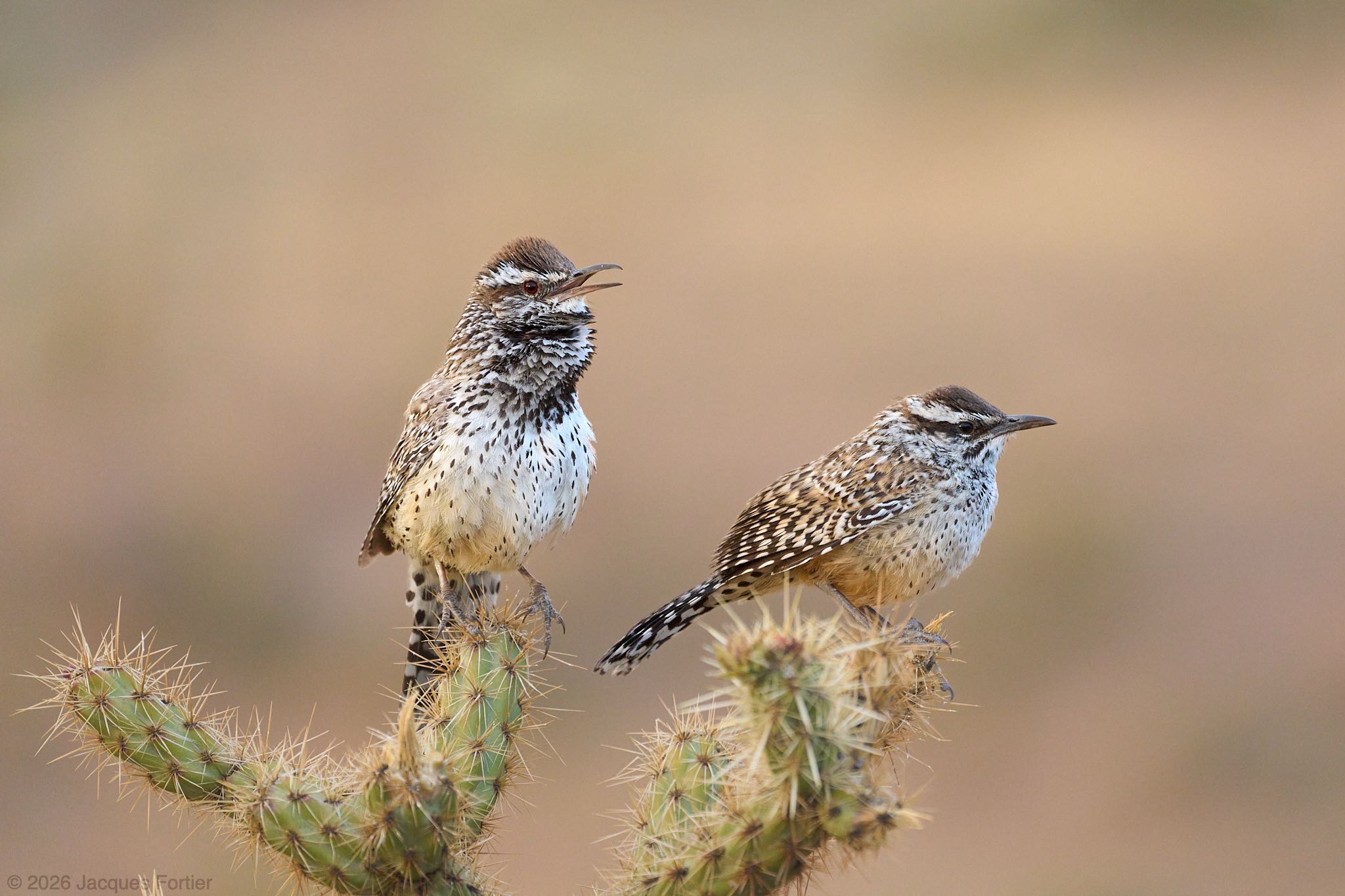
After a few hours, I came across a couple of Cactus Wrens in a spot with some promising landscapes. I had a feeling, being a pair, that they would exhibit classic wren curiosity and territory defense. Sure enough, they hung around and gave me a few good looks. The light was very harsh, but there were good possibilities for a future shoot.
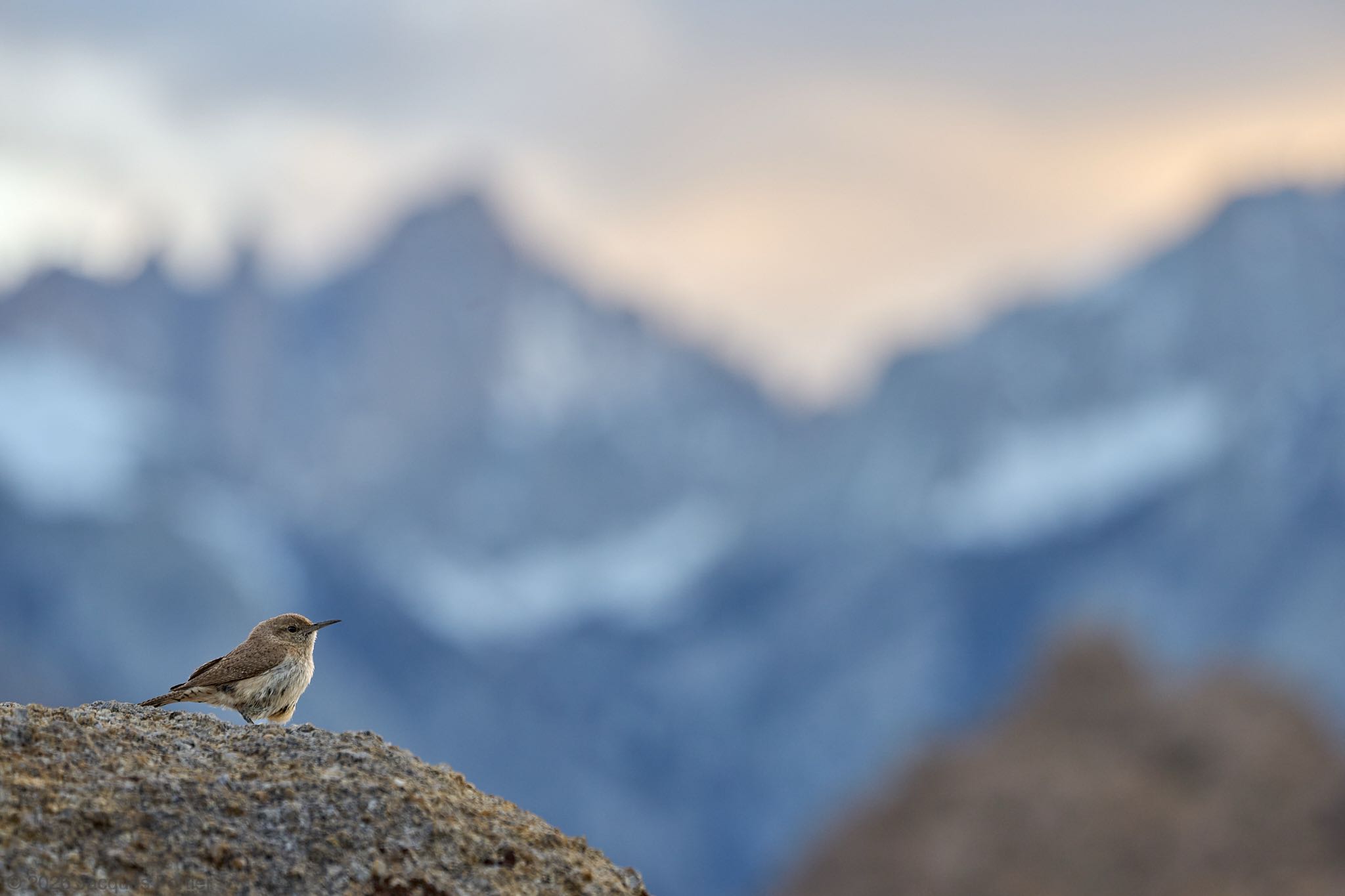
Towards the end of the hike, I heard the ping of a Rock Wren’s call. It was at a perfect spot, with a collection of boulders to perch on and a distant vista. I resisted the urge to do portraits, put on my 24-105 mm lens, and worked on bird landscapes.
This might be the first time I’ve photographed birds at 70 mm. It felt like a good initial attempt, but there are definitely things to improve. For one thing, my natural instinct was line up a distant background and rely on distance to clean up any distractions behind the bird. That works great at 400 mm. At 70 mm, there’s only going to be so much blurring, so it’s better to pick a cleaner near background than a messier distant one.
Those clouds behind the wren looked poised to pop off at sunset, but with a ways to go on an unfamiliar trail, I opted to keep going instead of waiting for the really good light.
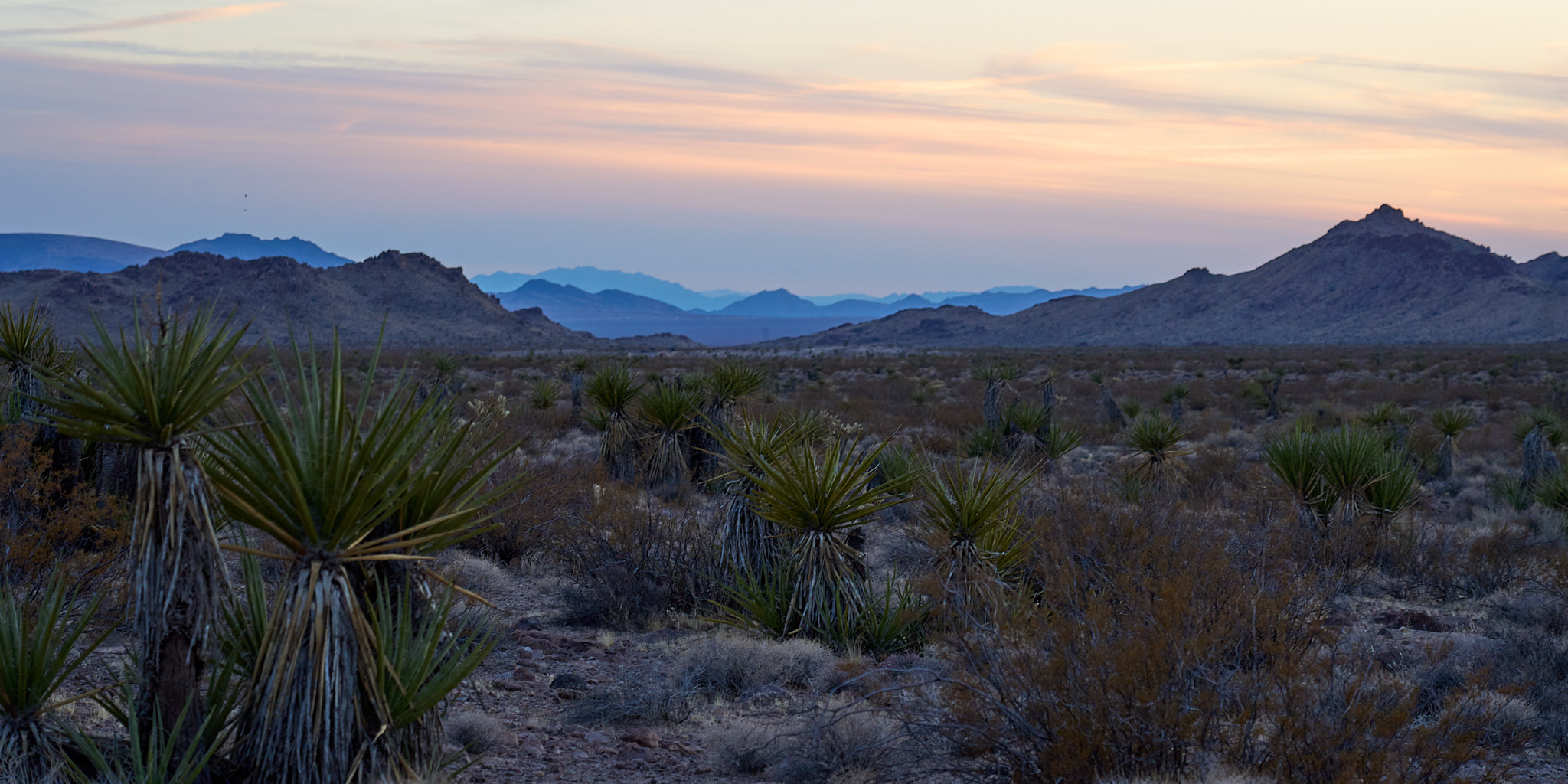
I heard plenty of cactus wrens towards the end of the hike, but the scenery wasn’t all that inspiring. After a full day of hiking and bird photography, I got back in the Jeep and headed back to camp. I made a quick stop on the way to photograph some distant mountains in the glow of blue hour. Just look at those layers!
I made a big mistake on my third day. After a couple nights without a ton of sleep, I checked the forecast, saw it called for a cloudy day, and decided to sleep in. When I was awakened 20 minutes before sunrise by a warm glow filtering into the tent, I realized my blunder. Clouds are rare enough in the desert that it’s worth being up at sunrise even on a cloudy day on the off chance the sun pokes through and creates some rare dramatic light.
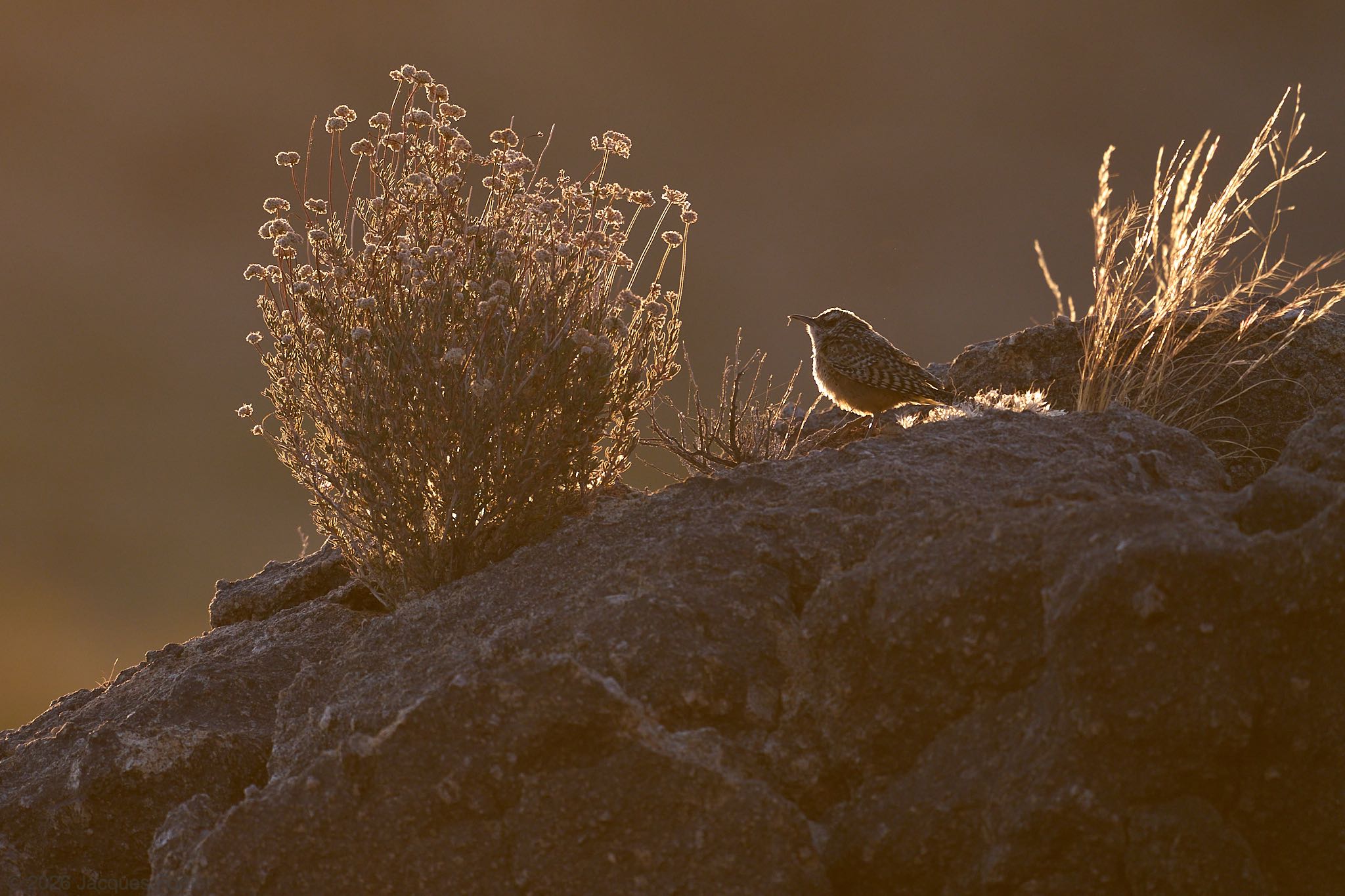
I jumped into the Jeep and raced off to the Rock Wren spot. By the time I got there, the last colors were fading from the sky. I quickly looked around and spotted… wait a second, this isn’t a Rock Wren!
Apparently the wrens were on an exchange program that morning, but order was eventually returned to the universe as the Cactus Wren alighted on some Buckthorn Cholla. Sadly, it didn’t choose the top limb of the cactus, making the difference between an okay photo and a great photo.
After about an hour, the wrens got less active, so I headed back to the Jeep to go back to camp and make breakfast.
When I got back to the Jeep, I found myself in a real predicament. For whatever reason, I’d locked the Jeep, and the fob wasn’t working to unlock it. Even worse, the emergency key was an uncut blank, so I couldn’t use it to get into the car either. Luckily I was near a campground, so I was able to get help without too much trouble. As it turned out, the battery on the fob and on the Jeep had died simultaneously. This took a while to figure out, but eventually I combined a jump start with a borrowed fob battery to get the Jeep unlocked and running. A real freak incident that would have been a bigger deal if I’d been in a more remote part of the preserve.
Photography is a great motivator to get myself out of my comfort zone and into new experiences I wouldn’t otherwise try. While I enjoy pushing myself, I’m keenly aware that I’m relatively inexperienced in the outdoors. When that nagging voice in my head lets me know I’m getting in over my head, I always listen. While I had gallons and gallons of water, days of food, and high quality shelter, dealing with an unreliable Jeep in a vast and mostly empty desert was more than I was prepared to handle. So, I drove back to the campsite, left the Jeep idling to make sure I wouldn’t need a jumpstart at my much more remote campsite, packed up, and then drove back to civilization.
While the trip didn’t turn out quite how I’d hoped, it was overall a success. I made it for two nights in the desert, built valuable experience with backpacking-style camping, found some great photography spots, and added a few good shots to my portfolio.