Shortly after I first started doing photography in Point Reyes, I booked a tour with Daniel Dietrich of Point Reyes Safaris. It was a great experience, and I learned a lot about how to find and photograph predators while minimizing the stress and impact human interactions can create for wild animals. I followed up that tour with another one early this year where we focused on Bobcats.
I’ve made dozens of trips to Point Reyes on my own and captured many stunning photos I’m really proud of. But, I’m also aware of just how little I know, how many opportunities I miss from lack of knowledge, and even some unfortunate cases where I have more of an impact on my subjects than I intend. Someone who spends nearly every day with the wildlife of Point Reyes has seen things dozens of times that I’ve never even seen once.
This is all a long-winded way of saying that it was time for another trip to Point Reyes with Daniel. For this trip, I suggested that we focus on understanding and capturing animal behaviors, and on composing more scenic shots that show off the Point Reyes landscape.


Our first stop was with an unusually tolerant Red-Tailed Hawk perched on a fence. I’ve photographed this individual before, doing some basic portraits and landscapes. We started with those same shots. The light was decently soft this morning, giving me better photos than on previous attempts.
Daniel pointed out that the way the hawk was watching the hillside below showed it was hunting, so we settled in to see if we could get some interesting behavior.


The hawk make a few attempts at catching prey. Between the attempts, we got treated to an airshow as it flew back from pounces or tried different perches.
Eventually, the hawk caught its lunch. Because it ate its prey right where it caught it instead of doing takeout, we didn’t get to see the hawk bring its prey back to a perch. From the way it was chasing the prey on the ground, it’s likely it was a snake (a rodent would have scurried away if the hawk didn’t get it on the first try). A hawk carrying a snake would have made for quite the photo, but the important thing is that the hawk got a solid meal. It took it a few minutes to polish the whole thing off.


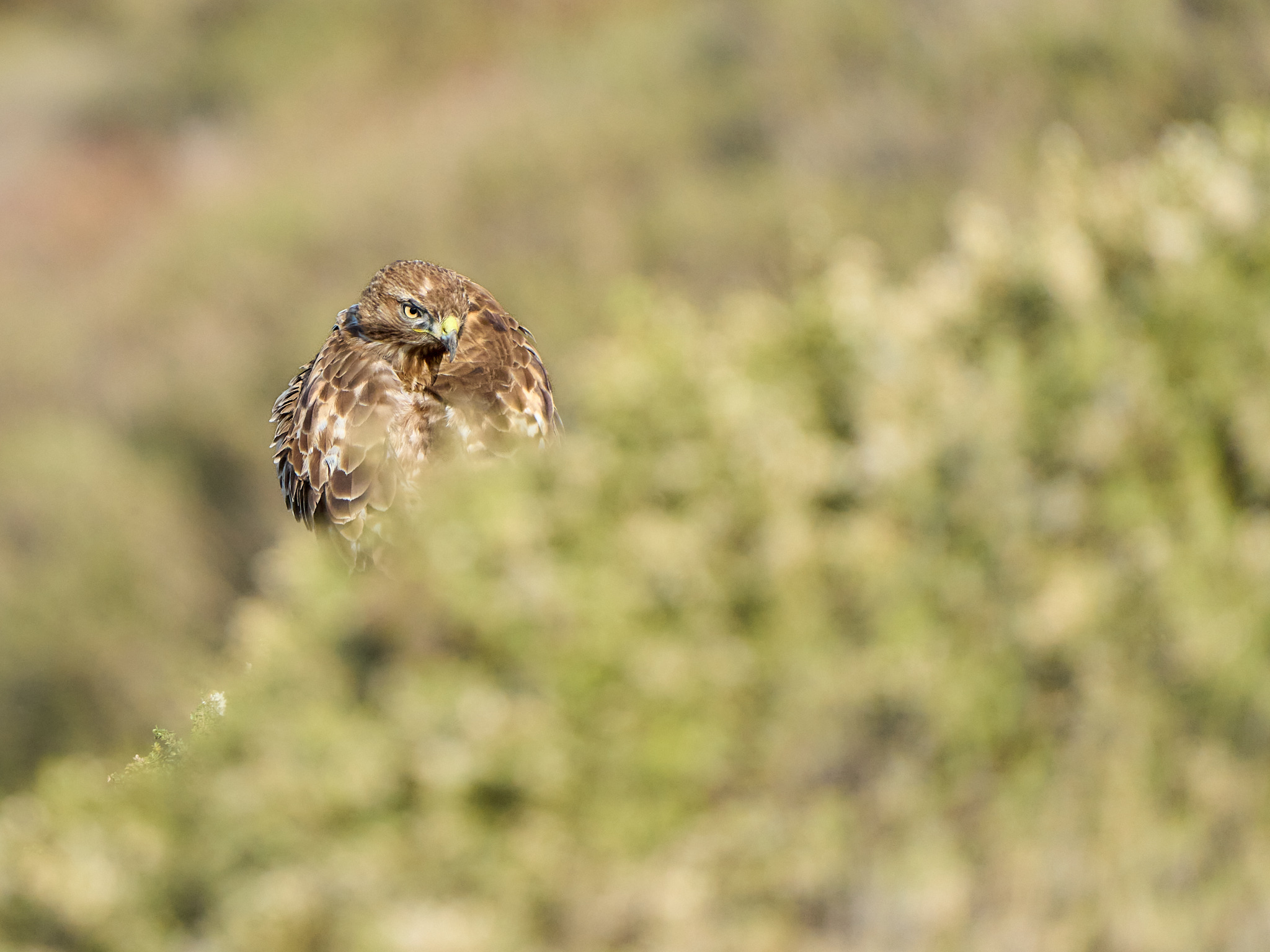
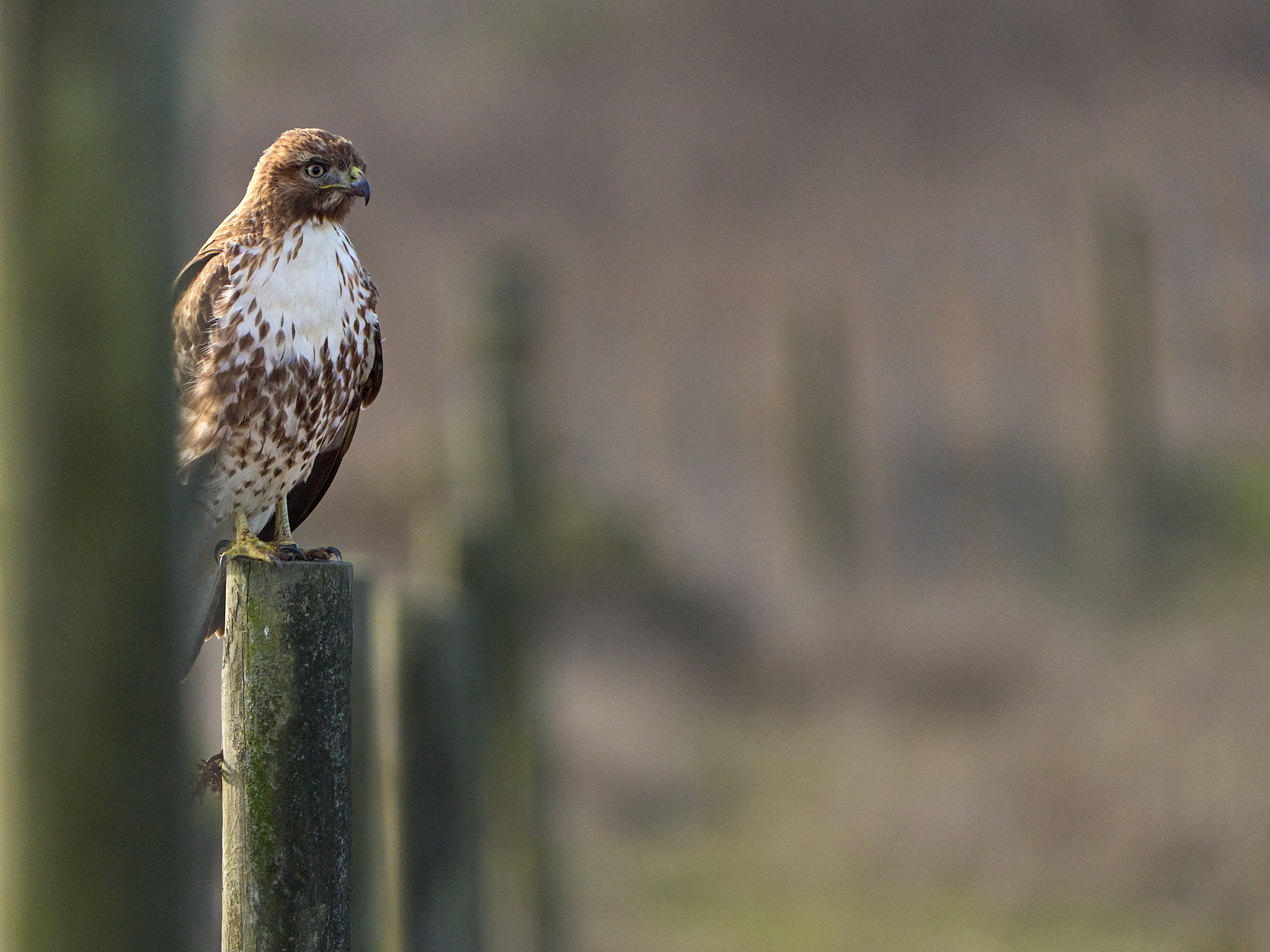
There was a bank right next to the fence and bushes on either side, which allowed me to experiment with foreground. I’ve managed some really good shots of quail at Point Reyes using foreground, but I haven’t done as much of that with hawks and other birds of prey.
I especially like shooting down fence lines. I find it works best when the subject is on the highest post or there’s a big valley to fit it into. In this case I had a very tall post closest to me, and there was a tough balance between making a continuous line of fence posts and obscuring too much of the bird. I want to keep experimenting with this kind of shot because I know there’s an amazing photo to be had when everything lines up just right.
I wish I’d gotten closer to the hawk when it was preening. With bushes, it takes just the right ratio of foreground to subject distance to balance between a busy foreground and one that washes out large portions of the subject. In this case the foreground bushes were too close to the hawk, resulting in a sharper and busier look than I’d like. Moving closer would have made the hawk a little bigger and blurred the coyote brush in the foreground more pleasingly.
Still, it’s good to experiment and try things other than the standard shots.
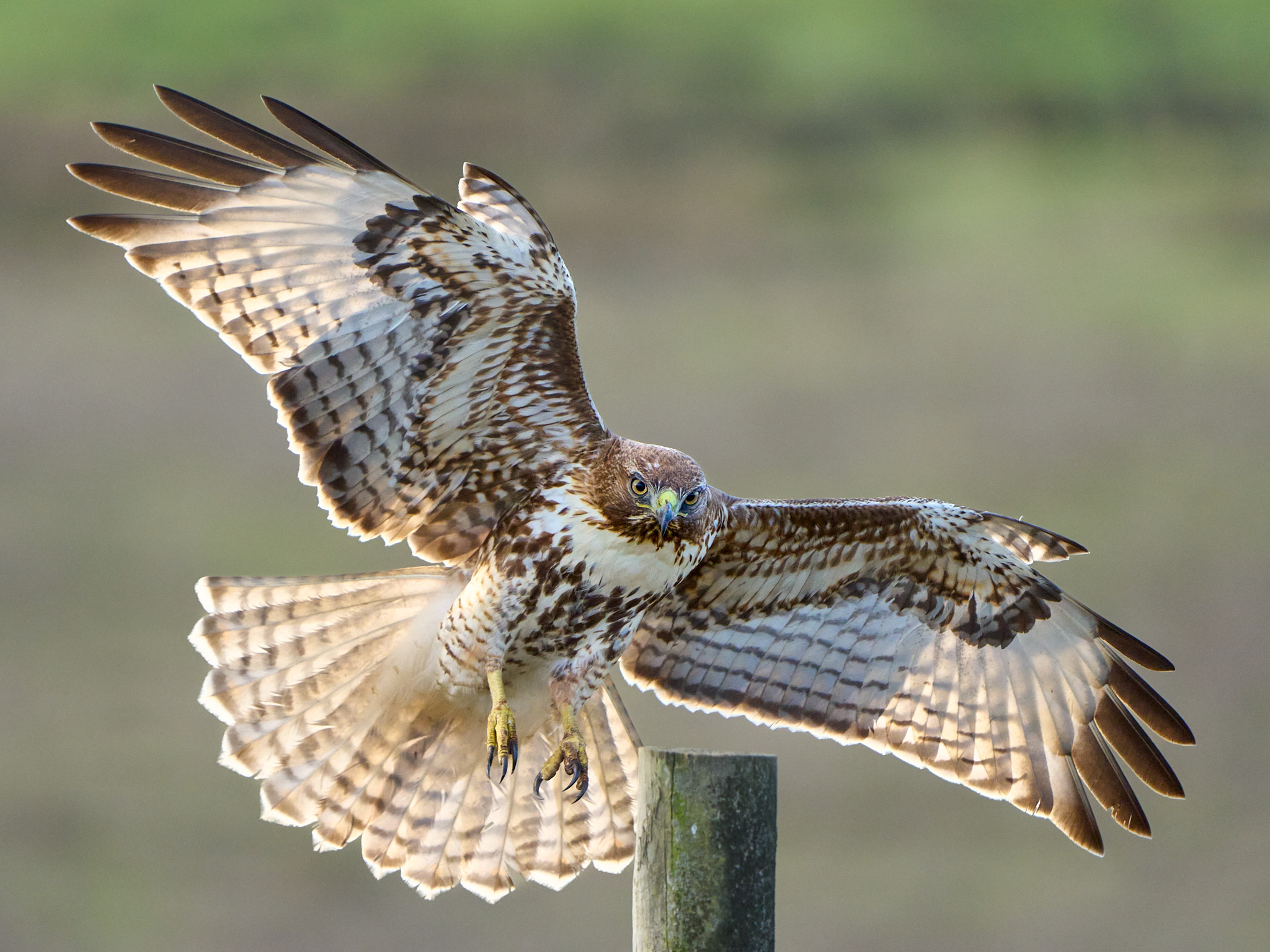


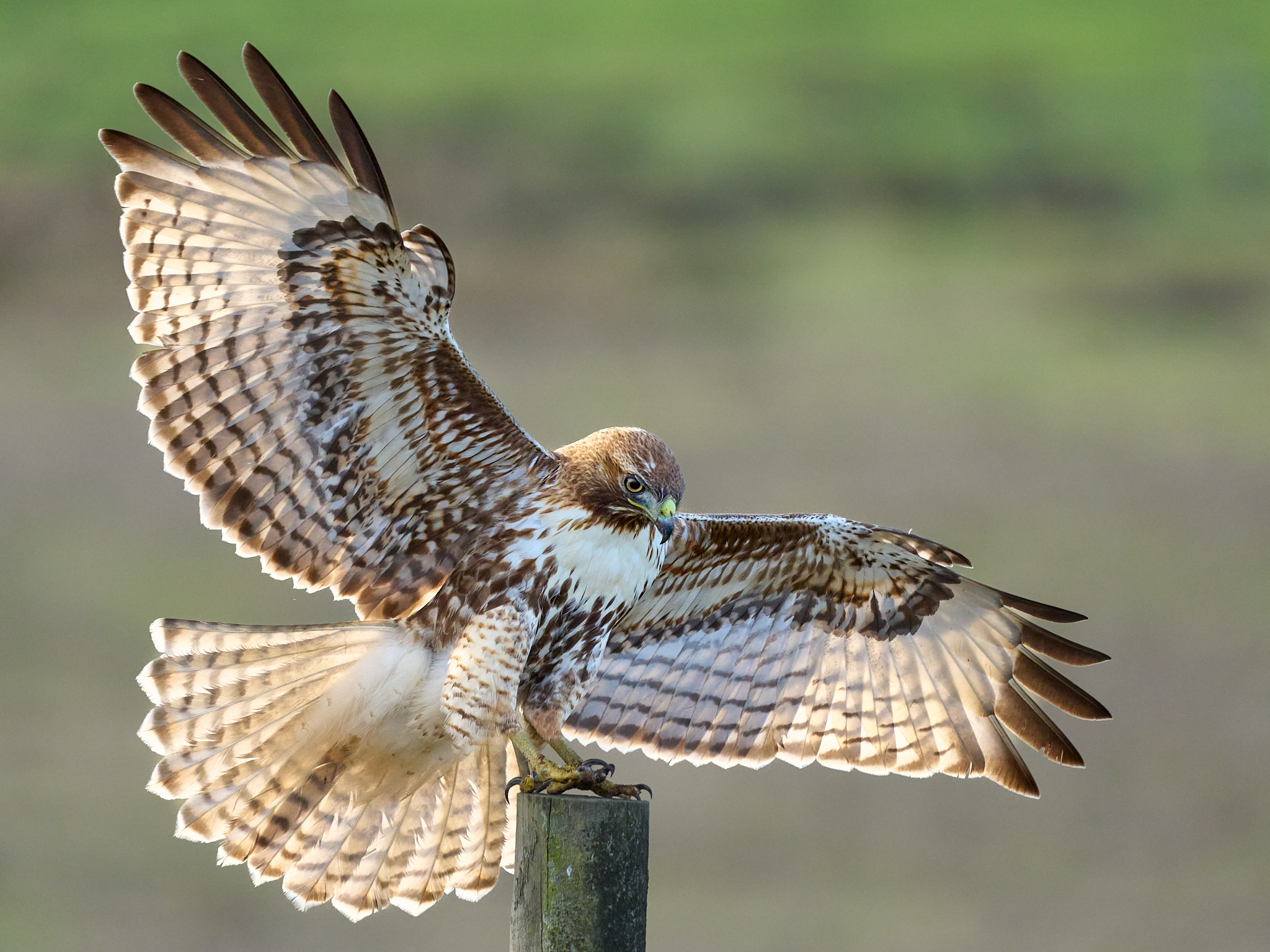
The highlight was definitely the moment when the hawk returned to the fence after an unsuccessful dive at some prey. It flew right towards me, and I was able to track it all the way in, capturing the flare as the hawk landed on a post. Picking the perfect frame from moments like these is always tough. I liked the first one best because there was still eye contact before the hawk focused more on the perch, but that did mean I lost out on the talons extending to grab the perch.
This was exactly what I was hoping for on this outing: an extended session watching an animal go about its day instead of just pushing in for a tight portrait.
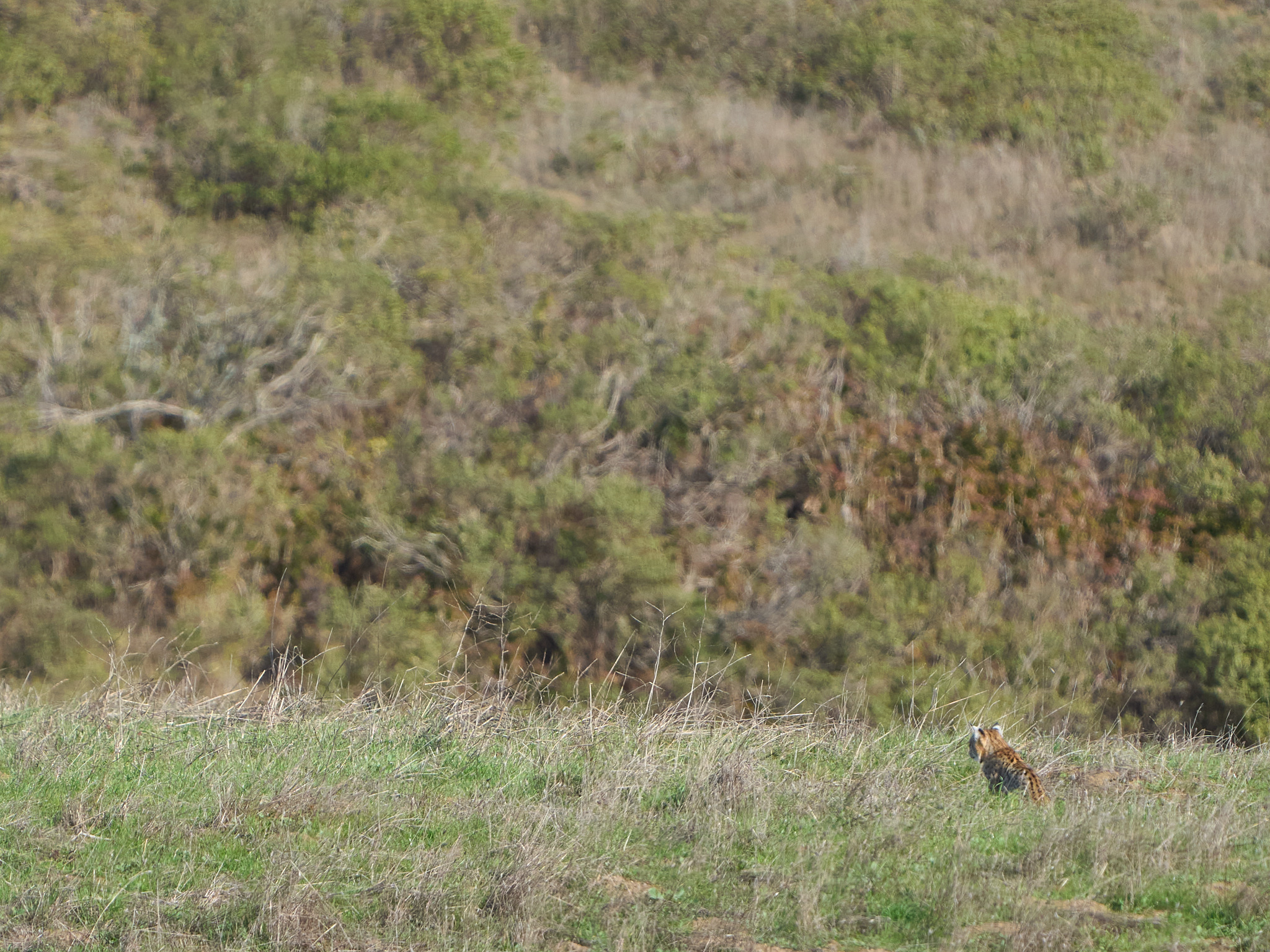


With any trip to Point Reyes, you’re hoping to spot Bobcats. Our results there were mixed. We saw five different Bobcats, which is a new record for me. I probably would have spotted one or two of them on my own. Daniel has an uncanny ability to spot a Bobcat even when it’s blending in perfectly with tall dead grasses.
While we saw a lot of Bobcats, most of them wanted nothing to do with us. There’s no use trying to approach a Bobcat (or any other animal) if it gets spooked even before you get out of the car. You’ll just stress the animal out while frustrating yourself. We left the skittish ones alone once it was obvious they wanted us to keep our distance, and kept looking for more tolerant individuals. We saw one Bobcat Daniel recognized as a tolerant individual, but it caught a gopher almost immediately after we spotted it and then disappeared into the bushes.
More on Bobcats in a little bit.
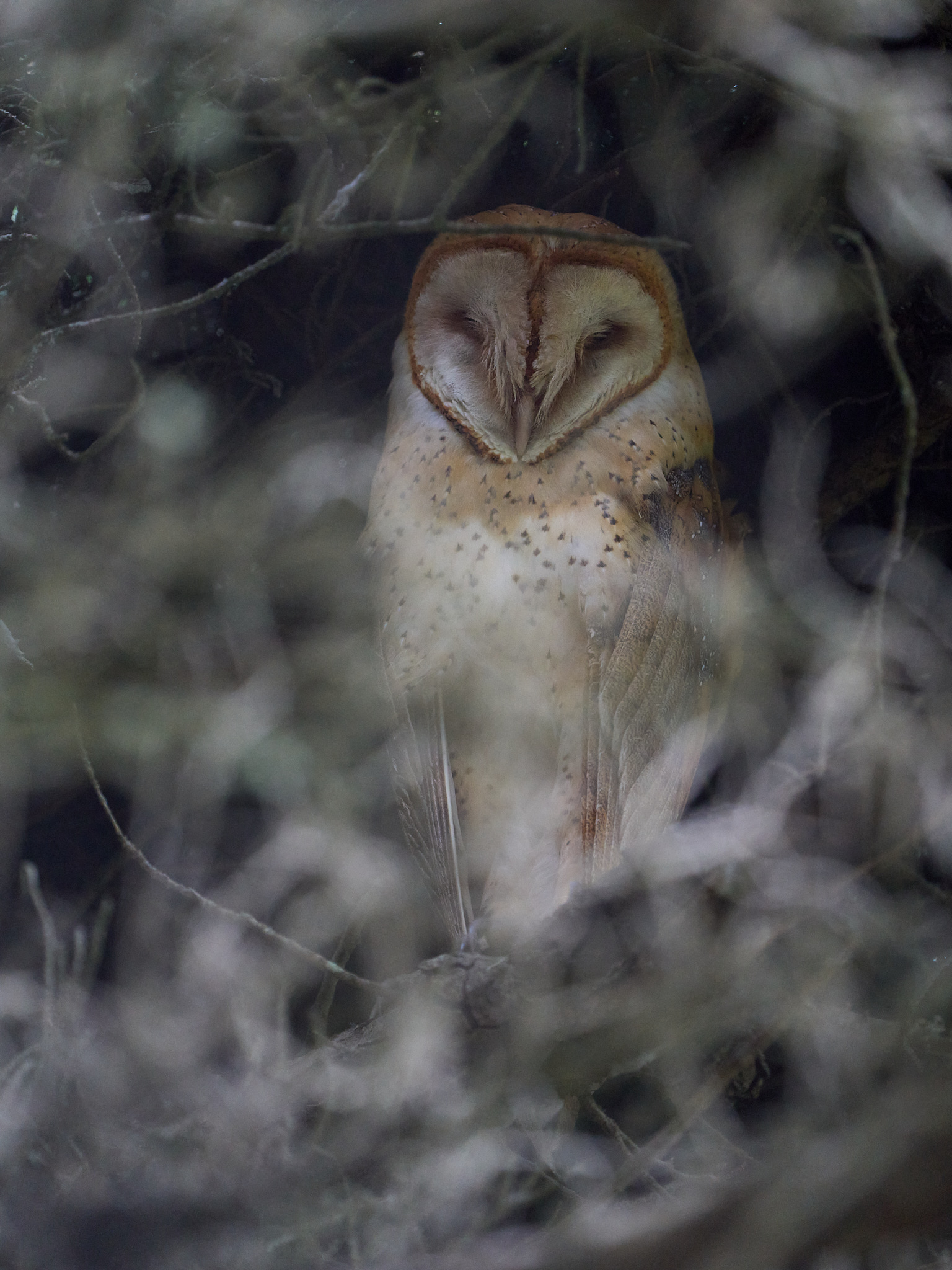
A day with a Barn Owl is always a good day, and Daniel had recently found a roosting spot. They’re very shy birds day and night. When roosting, they do their best to tuck in deep within trees so that it’s as hard as possible for larger predators (like Great Horned Owls) to spot them. If you find one roosting, you can often approach quietly, get a few photographs, and back off before your presence starts to disturb their rest.
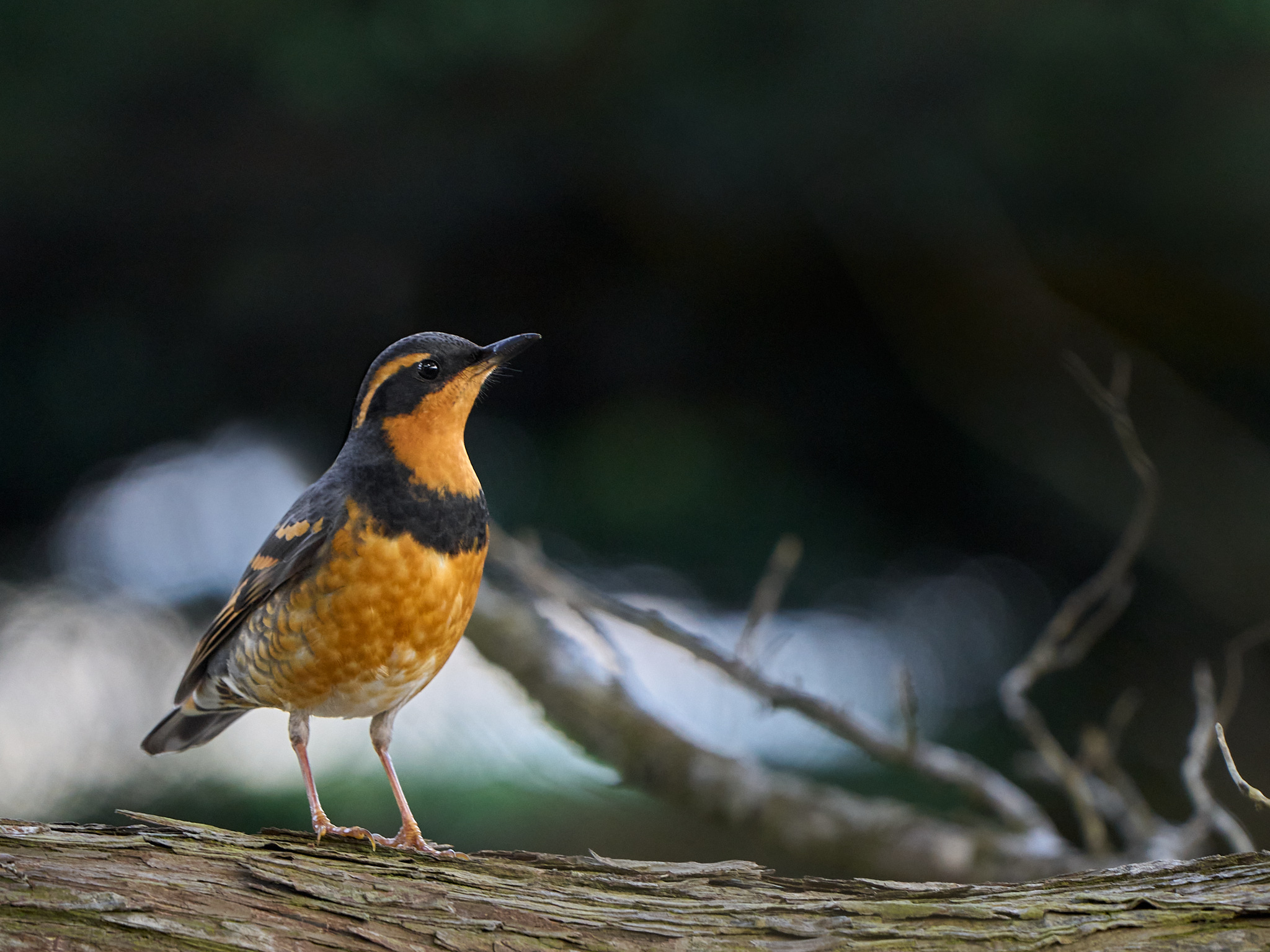
I don’t typically go to Point Reyes to photograph songbirds, but we found a Varied Thrush, which was definitely worth a few moments. These are very skulky birds, and I was lucky enough to see it right out on the open on a branch.


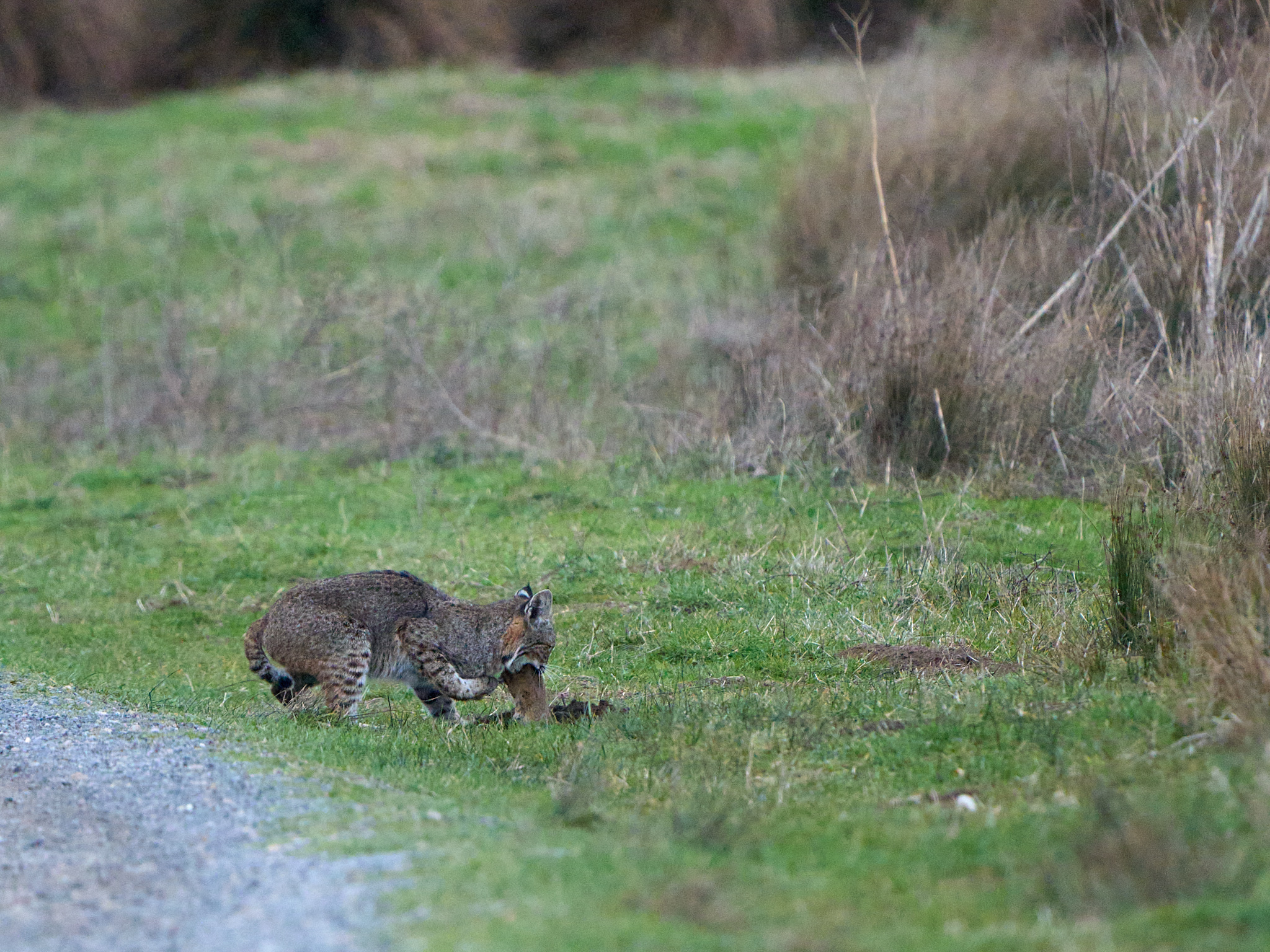
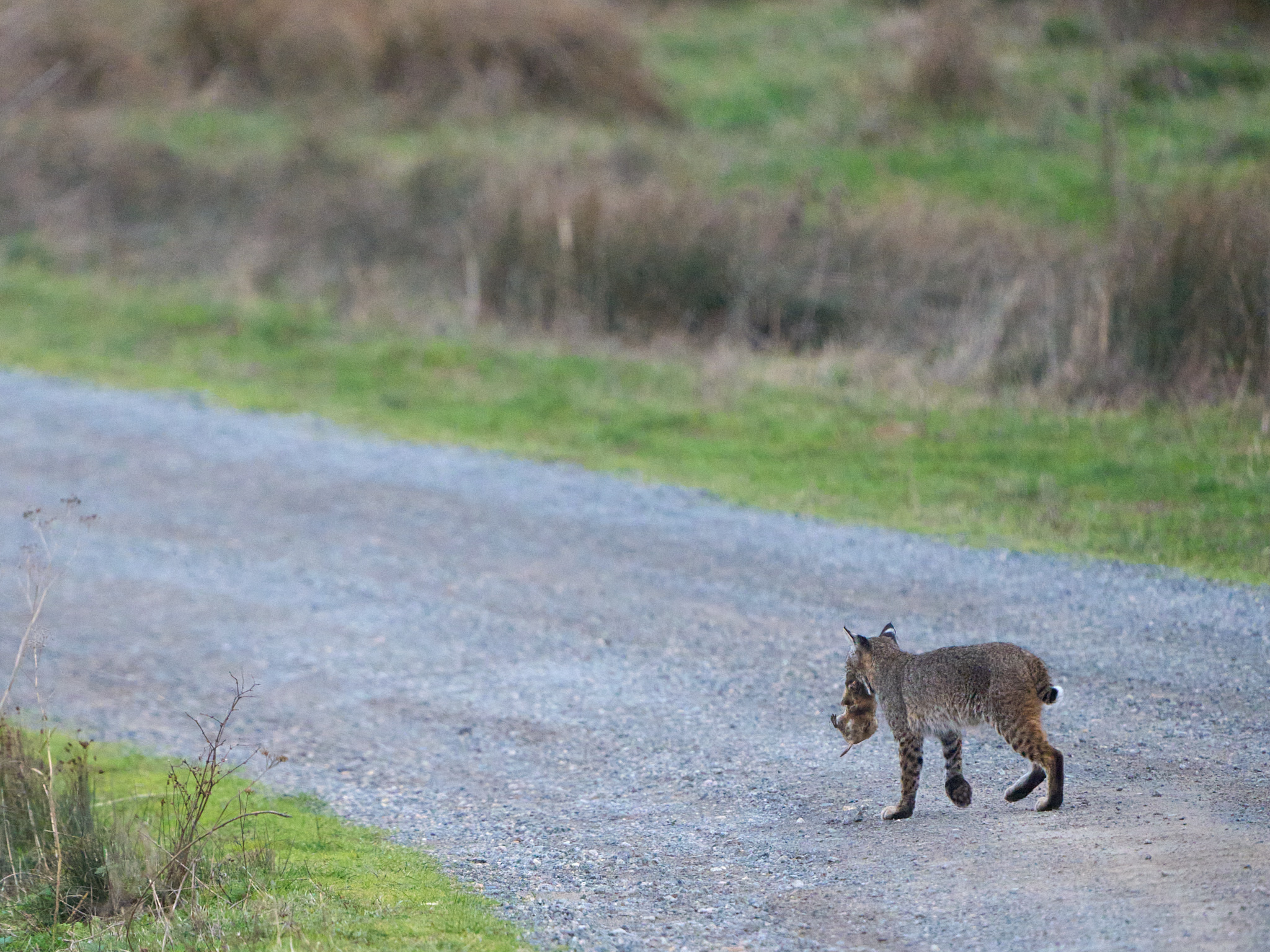
Our final Bobcat sighting was an especially close call. We spotted this one hunting gophers next to the road. Unfortunately, another photographer was already on the scene. At Point Reyes, photographers generally don’t approach other photographers who are already close to an animal. Every additional human makes the situation more stressful. The most likely result of barging in is that the animal gets spooked, potentially missing out on a meal, and nobody gets a photo.
While we had to observe this hunt from a distance, Daniel still did an amazing job observing and explaining the Bobcat’s behavior. Just a second after Daniel whispered “she’s gonna pounce,” the Bobcat leaped forward, and with a spray of dirt, dragged a massive gopher out of its hole.
Firmly clutching her meal, the Bobcat walked almost directly towards the other photographer, passing within a few feet of him. What an incredible opportunity he got.
(Once things calmed down, Daniel explained what he’d seen that told him the pounce was imminent.)
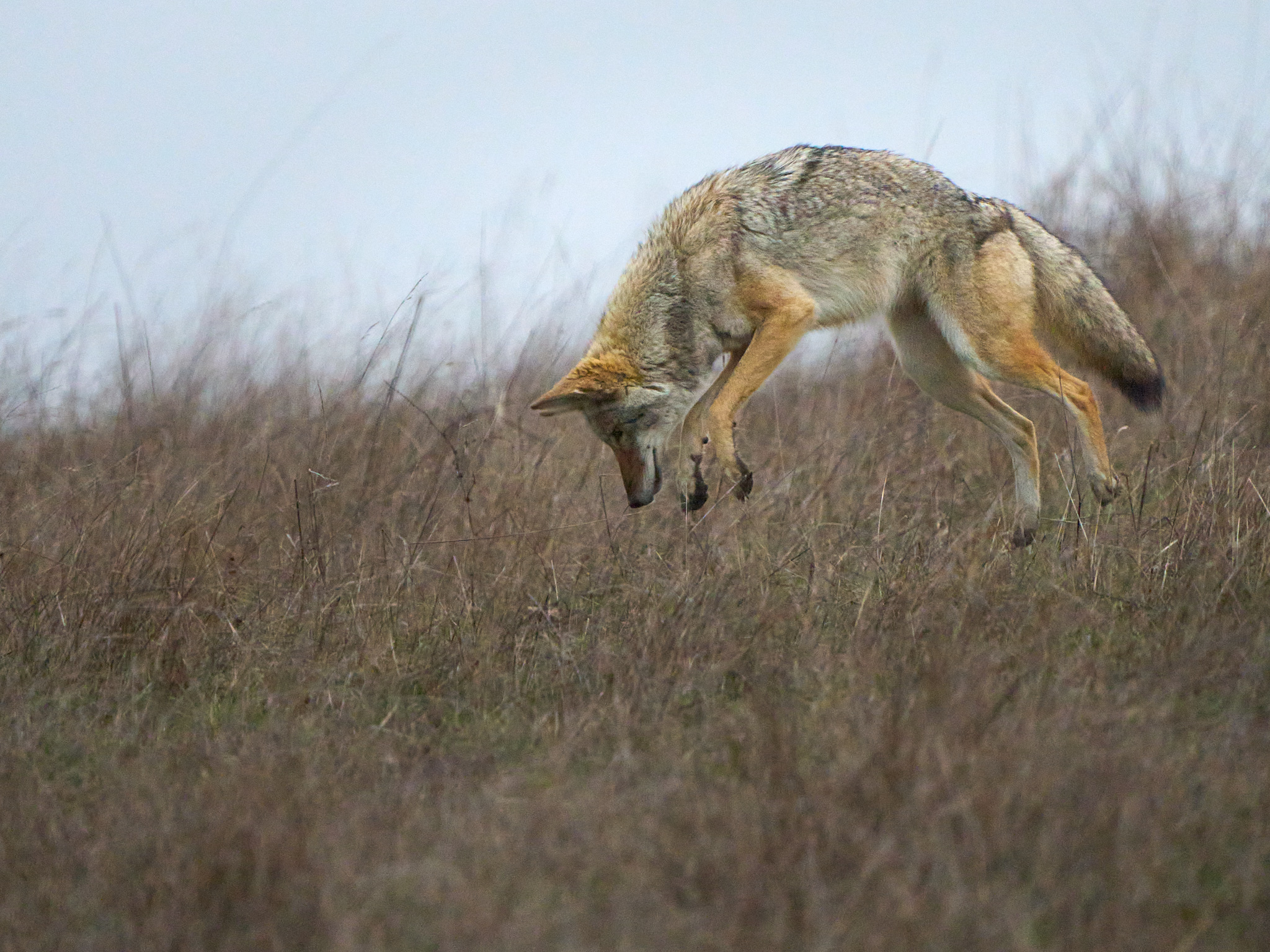
A leaping Coyote is a classic Point Reyes shot. While we’d mostly been skipping Coyotes in our search for interesting behaviors and scenic shots, this one appeared to be hunting intently, so we stopped to watch. Daniel had previously showed me how to see the leap coming when a Coyote jumps down a gopher hole, so I was able to put that into practice. As it turned out, the Coyote did not do the most enthusiastic of leaps, barely getting off the ground, but I got the shot.

We wrapped up the day with another scenic photo of a Red-Tailed Hawk. Unlike the juvenile we’d photographed earlier in the day, this one had that classic bright red tail. Both photos do a good job of showing the full Point Reyes environment, which I’ve been trying to work into more of my photography recently.