
A bundled up Great Blue Heron demonstrates what it’s like to go to the beach in Northern California.
A bundled up Great Blue Heron demonstrates what it’s like to go to the beach in Northern California.

I missed most of the California Quail chicks this year, just catching the tail end when the juveniles were halfway through molting into their adult plumage. I did manage a few good shots at the end of the season, including this QIF. I was lying on a path, photographing adolescent California Quail heading back to their roost for the night when I spotted some motion out of the corner of my eye. I swung my camera over and caught a couple of quail coming in for landing.
Capturing quail in flight is really hard: they take short, fast, and low flights almost exclusively when startled. If you want to do it ethically, you have to hang out for quite a while waiting for something else to startle the birds. In this case, I was low enough to be in just the right position to catch them as they hurried to join the covey.
With fall arriving, hawks are swarming back into Point Reyes and taking over the fence posts. The quail take that as their cue to get much skulkier, and quail photographys becomes much more of a challenge. Hopefully I can catch the full breeding season next summer.

With the arrival of fall, this year’s Coyote pups are grown enough to venture out on their own. This healthy youngster was hunting near the side of the road. Coyote ears always look like satellite dishes, but they look especially large and adorable on pups and adolescents.

A California Quail perching in some coast lupine. Unfortunately, I missed the best part of quail season this year, but I managed a few good shots at the beginning and end of the season.
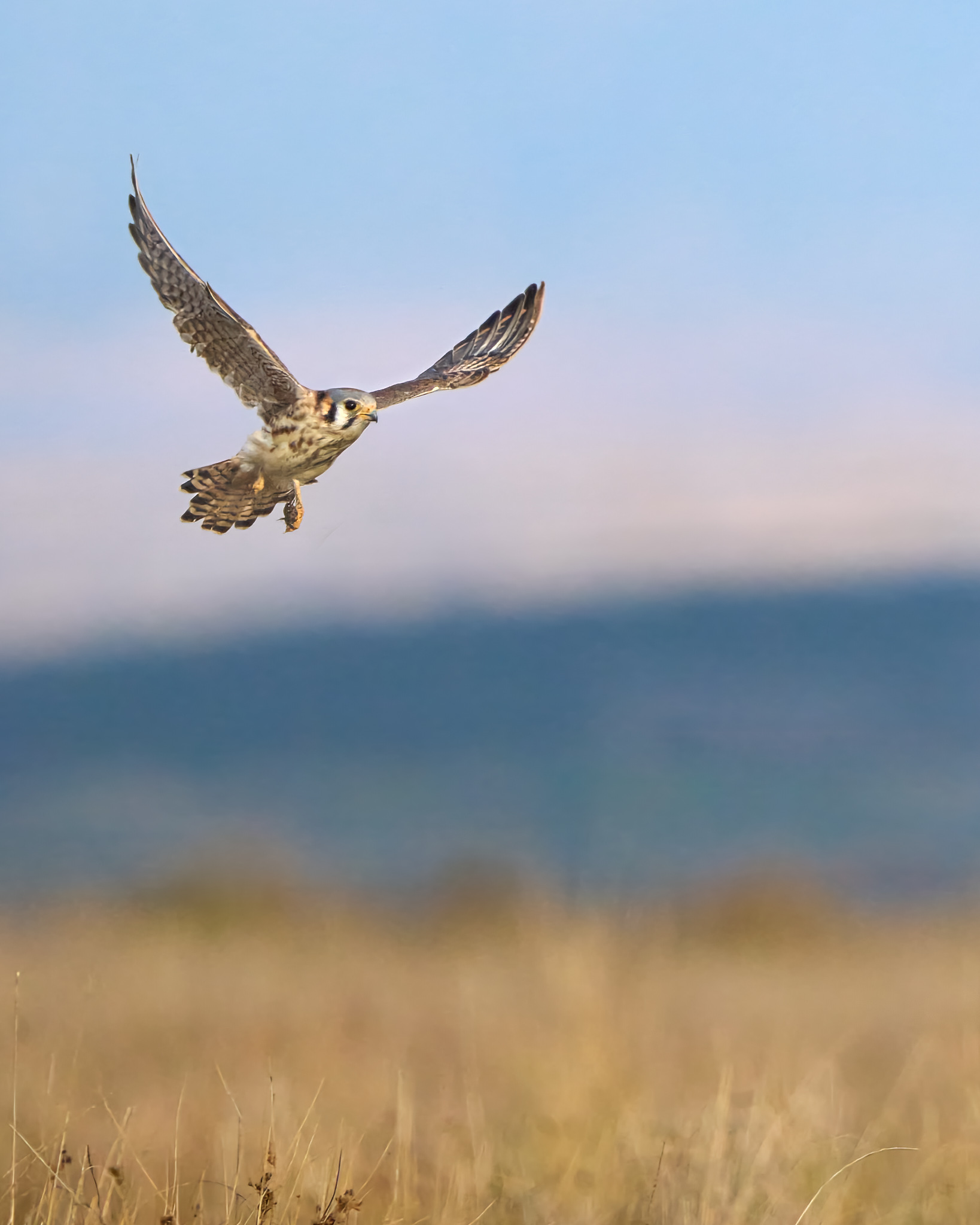
American Kestrel carrying prey up to a perch.
I was really proud of this photo. I love American Kestrels, but they’re such small and skittish birds. It’s like trying to photograph a sparrow with the fear circle of a Red-Tailed Hawk.
I found this one perching on a power line, as they often do. The light was getting really good, and it seemed to be scanning the ground with interest. I noticed a convenient place to park just across the road. I figured it wouldn’t take all that long for it to pounce, and my car would make a good blind in the meantime. After about 10 minutes of waiting, the kestrel was rewarded with a small morsel, and I was rewarded with a kestrel in flight carrying its prey up to a perch for devouring. Subsequent research told me that kestrels on the hunt pounce anywhere from three to fifteen times per hour, and succeed one third to two thirds of the time. Maybe next time I try this it’ll catch something just a bit closer to me.

A Tule Elk bull attends to his harem as the sun breaks through the clouds off the coast.


